How to Rank in Local AI Overviews (& Track Them)
Local SEO is no longer just about ranking on Google Maps, the Snack Pack, and the “10 blue links.”
AI Overviews are showing up more and more for local searches, giving people direct answers without ever having to click. In local search, that means someone can search, read the recommendation, and call a business… without visiting a single website.
Local AI Overviews are Google’s AI-generated summaries that appear at the top of the search results. Instead of simply listing websites or Google Business Profiles, they write an answer that explains the options, highlights pros and cons, and cites sources to support it.
When do they appear? I just conducted a test of 100 local searches and found AI Overviews were triggered 64% of the time. For informational searches, this number reached 100%. Meanwhile, “Best/top” searches triggered AI Overviews only 20% of the time, though this varied by industry.
What is clear: AI Overviews are showing up more and more. Some SEOs are even predicting that Google’s AI answers will fully replace the traditional SERP page one day.
The problem is that optimizing for local AI Overviews doesn’t work the same way that we’re used to. And tracking where you show up and how often is really tricky since they’re even more volatile than traditional rankings.
In this guide, I’ll show you how to appear in AI Overviews, what to prioritize, and how to track your results so you can prove your progress:
- How “Local AI Overviews” are Different From the Local Pack
- How Google Decides Who Gets Pulled into Local AI Answers
- Step 1: Pick the Exact Local Prompts You Want to Win
- Step 2: Lock Down Your Local Entity Signals (So AI Trusts You)
- Step 3: Build Local Corroboration that AI Can Cite
- Step 4: Create “AI-Citable” Local Pages
- Step 5: Become an Authoritative Source
- Step 6: How to Track and Improve Visibility
- FAQs
How “Local AI Overviews” are Different From the Local Pack
Local AI Overviews and the local Snack Pack solve two different problems for Google (and that’s exactly why they behave differently).
In short: The local Snack Pack prioritizes Google Business Profiles ranking on Google Maps. AI Overviews prioritize answer queries with direct answers via text, cited with sources.
Snack Packs look like this:
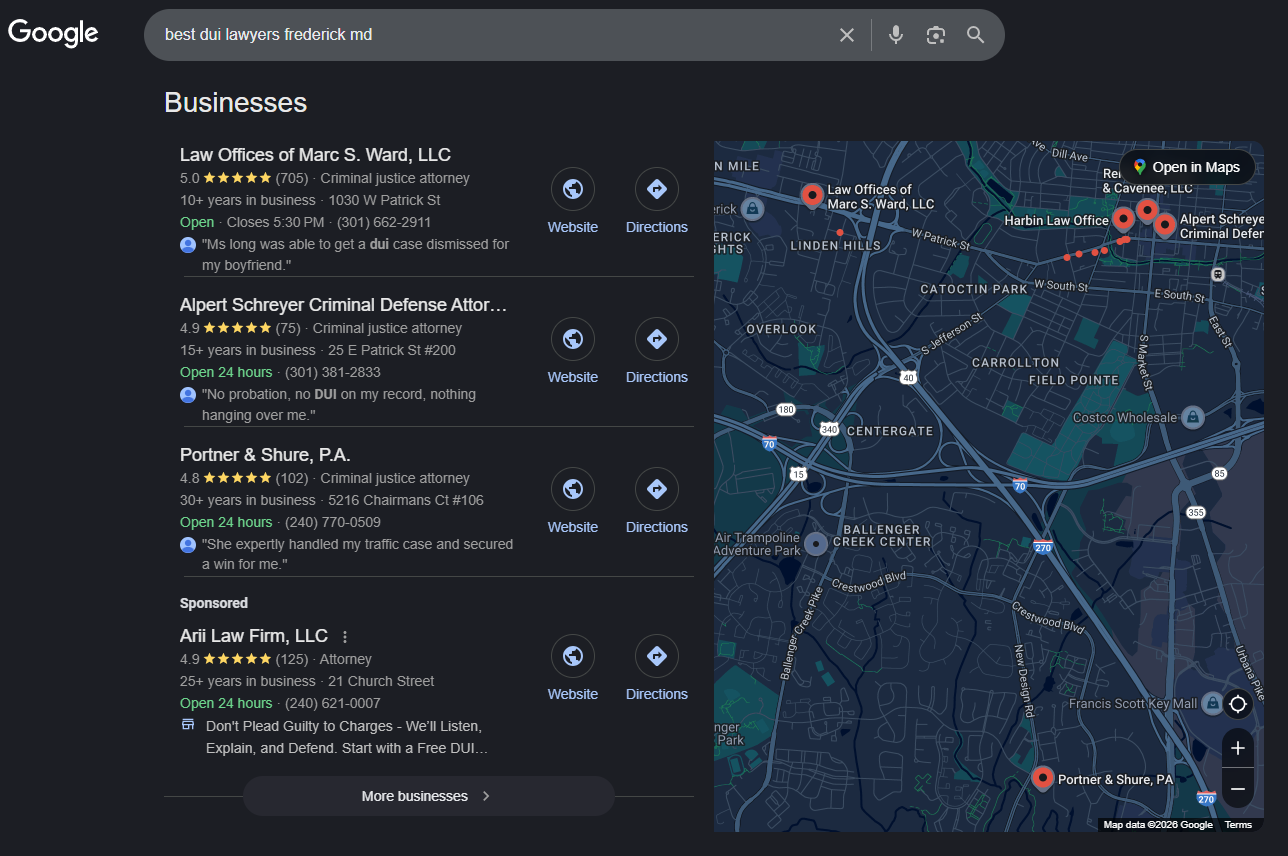
It includes a map + 3 organic GBP listings + sponsored GBP listings.
Usually, they’re driven heavily by proximity, categories, reviews, and GBP optimization. And they show up when searchers need to figure out where to go locationally.
Local AI Overviews look like this:
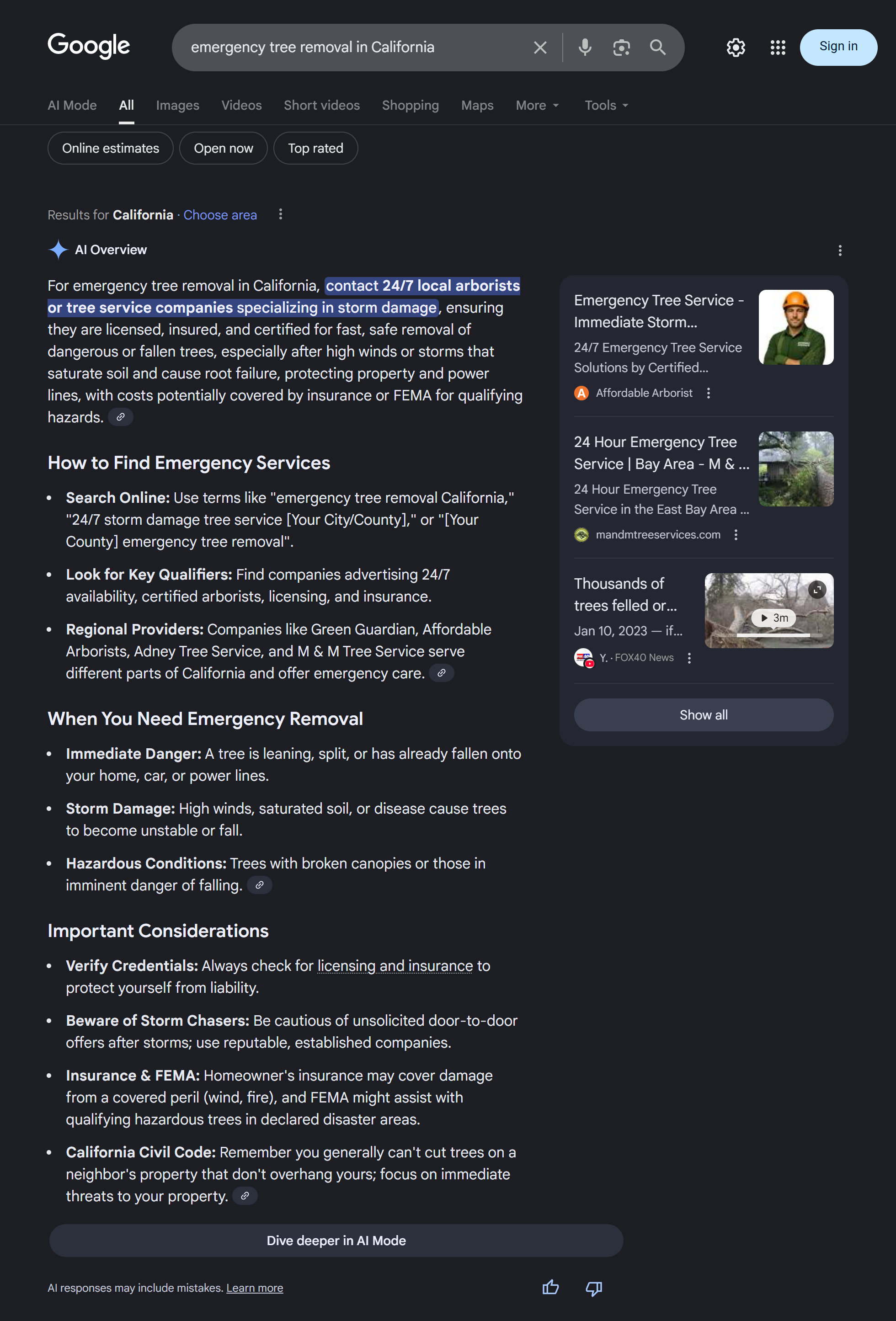
In the AI Overview answer, it will either include 1) an explanation of how to do something locally, or 2) a list of recommendations, often a list of businesses or solutions. The answers summarize options, explain differences, and name sources on the right sidebar.
The sources it usually pulls from include business websites, third-party directories, review sites, and other trusted local sources.
The goal of AI Overviews is to help searches make a decision through direct information.
This is why you’ll often see businesses cited in AI Overviews that are not in the 3-pack (and sometimes not even on page one).
What counts as “winning” inside AI Overviews
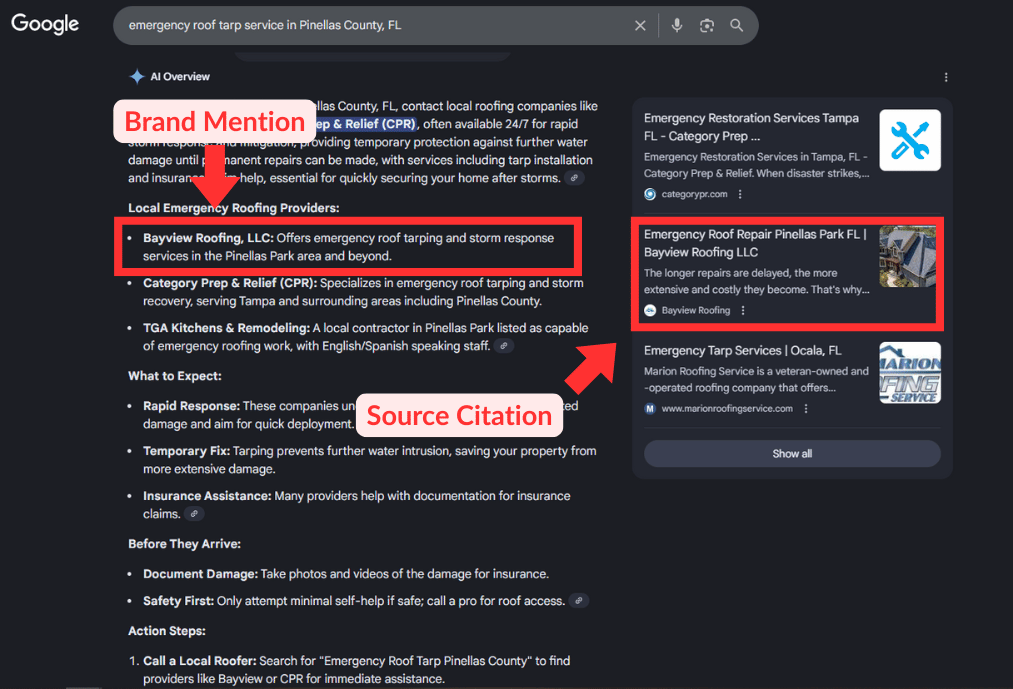
Inside AI Overviews, there are only 4 outcomes for SEOs and businesses:
- Your competitors show up, but not you
- Your website is cited as a clickable source (3rd best case)
- Your brand is directly named in the text, but not linked (2nd best case)
- Your brand is directly mentioned by name + your website is cited as a source (BEST CASE)
But the catch?
It’s unlike traditional SEO rankings, where ranking your website on the first page typically means you can maintain those rankings consistently, regardless of who is searching. Instead, AI Overviews are more likely to change on a search-by-search basis, even for the same searcher on the same day. But on average, AI Overviews change every 2.15 days.
The goal is to increase the likelihood and frequency with which your brand and website appear in AI Overviews.
How Google Decides Who Gets Pulled into Local AI Answers
Although traditional rankings are a strong indicator in deciding whether your show up in local AI Overviews, WHO Google cites or mentions doesn’t work the way classic search does.
You can:
- Rank page one
- Own the local pack
- Have strong backlinks
…and still be invisible in AI Overviews.
Why? Because traditional SEO rewards relevance and authority, while AI rewards explainability.
AI needs:
- Clear answers to specific local questions
- Explicit service + location relationships
- Plain-language explanations it can summarize
A well-optimized page that’s vague, salesy, or overly templated might rank fine, but still be useless to an AI trying to explain options to a user.
Google essentially asks, “Who do I trust enough to include in the explanation?”
But to dig deeper, these are the main signals you can count on Google looking for:
- Entity clarity — Google needs to clearly understand who you are, what you do, and where you operate. If your business’s online info is vague, fragmented, or inconsistent, AI struggles to confidently include you.
- Corroboration — AI looks for confirmation from multiple independent sources. Your site saying “we’re the best” doesn’t matter unless directories, reviews, articles, and listings back it up.
- Consistency — Names, services, locations, and descriptions need to match across your site, GBP, and third-party sources. Conflicting details reduce confidence and can disqualify you.
Think of this as a credibility checklist. The more boxes you check, the safer it is for AI to reference you.
Step 1: Pick the Exact Local Prompts You Want to Win
In traditional SEO, we’ve used the term “keywords” to describe what people search.
But with the rise of AI-powered search comes more conversational search.
We’re seeing more and more searches becoming longer and more complex, increasing the likelihood of AI Overviews being triggered. For searches or prompts 7+ words, they appear 46% of the time, and that seems to be a growing trend.
“Prompts” in AI search are essentially long-tail keywords with additional context. So, in other words, there are fewer searches like “best dentists near me” happening and more searches like “dentists near me that accept Aetna health insurance.”
Just like you optimize for local keywords, you need to optimize for prompts.
Although pretty much every prompt can be different, there are 4 main categories that your local business should focus on:
- “Best” and comparison queries
- Examples: “best roofer in phoenix,” “best family dentist austin,” “top HVAC companies near me”
- Problem + solution queries
- Examples: “how to fix low water pressure denver,” “what to do after a car accident atlanta”
- Cost and pricing queries
- Examples: “roof replacement cost chicago,” “how much does a plumber charge in tampa”
- Urgent or decision-stage queries
- Examples: “emergency electrician near me,” “same day dentist seattle”
These are high-intent searches where users are CLOSE to making a purchasing decision.
Build your “prompt map” based on services, locations, and intent
A prompt map is just a structured list of queries you want AI to answer with you included.
You need to know which prompts you want your business to be associated with.
To map which prompts should matter to you, start with:
- Core services (what you actually sell)
- Service areas (cities, neighborhoods, regions)
- Intent modifiers (best, cost, emergency, how to, near me)
Then combine them intentionally:
- Service + city + “best”
- Service + city + cost
- Problem + city
- Service + location + near me
You don’t need to show up in every AI Overview. You just need to show up in the ones searchers see when they’re ready to buy.
Pro tip: target prompts where you can be the most specific
AI favors specificity.
A smaller business with:
- Clear service focus
- Tight geographic coverage
- Content with detailed, local explanations
Often beats a bigger competitor with generic pages.
You’ll want to build your strategy around:
- Who you’re best for
- Where you operate
- What makes your approach different
Step 2: Lock Down Your Local Entity Signals (So AI Trusts You)
Before you publish new content or chase new prompts, you need to make sure Google actually knows who you are.
Entity confusion is one of the fastest ways to get silently excluded from AI Overviews.
AI builds confidence by cross-checking information. So if your name, address, phone number, or services don’t align, confidence drops.
Across your website, Google Business Profile, social profiles, review platforms, and directory listings, make sure you optimize around:
- One canonical business name (no variations)
- One primary address per location
- One main phone number per location
- Consistent service descriptions everywhere they appear
Align your Google Business Profile with your “prompt map”
Your GBP shouldn’t be generic. It should reinforce the exact prompts you want to win.
Check that:
- Primary and secondary categories match your core services
- Service descriptions reflect the same wording as your target prompts
- Service areas align with the locations you’re targeting
- Photos, posts, and updates reinforce what you actually do locally
If you want to show up for “emergency plumber in mesa” but your GBP reads like a general home services company, AI won’t confidentially surface your brand.
Step 3: Build Local Corroboration that AI Can Cite
AI builds trust around your brand by spotting patterns across sources.
So, if your business only claims authority on its own website, AI has nothing to validate it against. Corroboration is what turns “self-reported” information into something safe to reference.
There are 2 main types of sources you’ll want to influence to help you increase your AI Overviews presence:
- Your owned profiles on social media, directories, and review platforms (normally, you can claim your own profile and edit these yourself)
- 3rd party sources that mention your brand that you DON’T have control over (other privately owned websites or social profiles)
Start with what you already have control over:
- Your social media pages
- Major local directories (city, region, chamber, local business indexes)
- Industry-specific directories and review sites that clearly categorize services
- Other platforms that consistently rank or get cited in local search results (you can figure this out by analyzing the SERPs for your most important keywords and prompts)
As mentioned in Step 2, your business info on these platforms needs to be consistent. But you should also build these profiles up with trust signals.
This means getting more customer reviews, making posts that align with the prompts you want to show up for, and uploading media of your business in action.
Next, you’ll want to find other third-party websites and sources that mention your brand.
You can do this by doing a simple search of your business name.
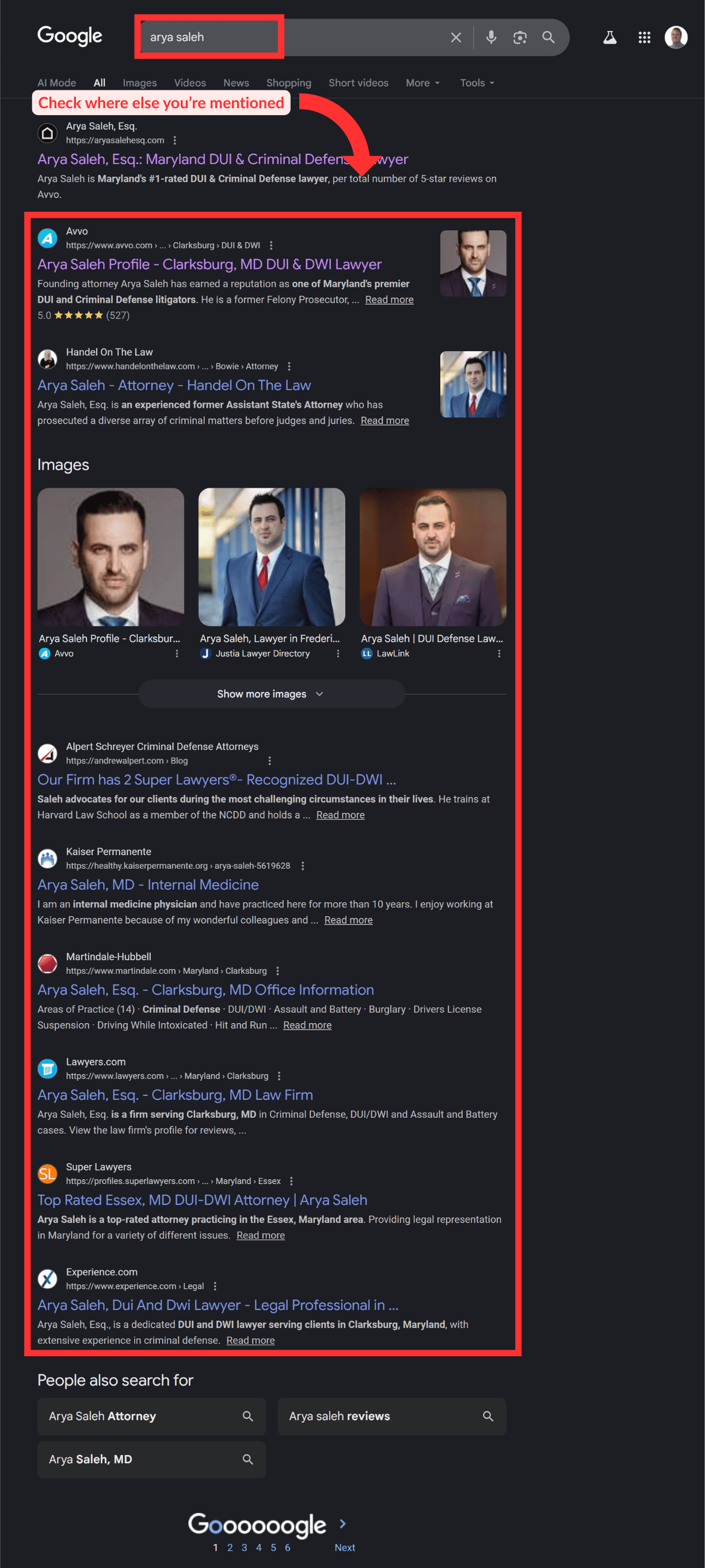
Look at the other websites that mention your business. Is the info correct? Does the info about your business reflect the prompts you want to target?
If not, you’ll need to reach out to the website owners to add, edit, or remove info.
On the other hand, you’ll want to increase your brand mentions on other websites. Any positive brand mention will help you, but the most important ones will be listicles targeting “best [type of business] in [your location]” prompts.
Pro tip: Do some Google searches of your most important prompts, and see which sources the AI Overviews are currently citing. Reach out to the website owners of those sources to negotiate getting your business listed too. These will have the heaviest impact on AI.
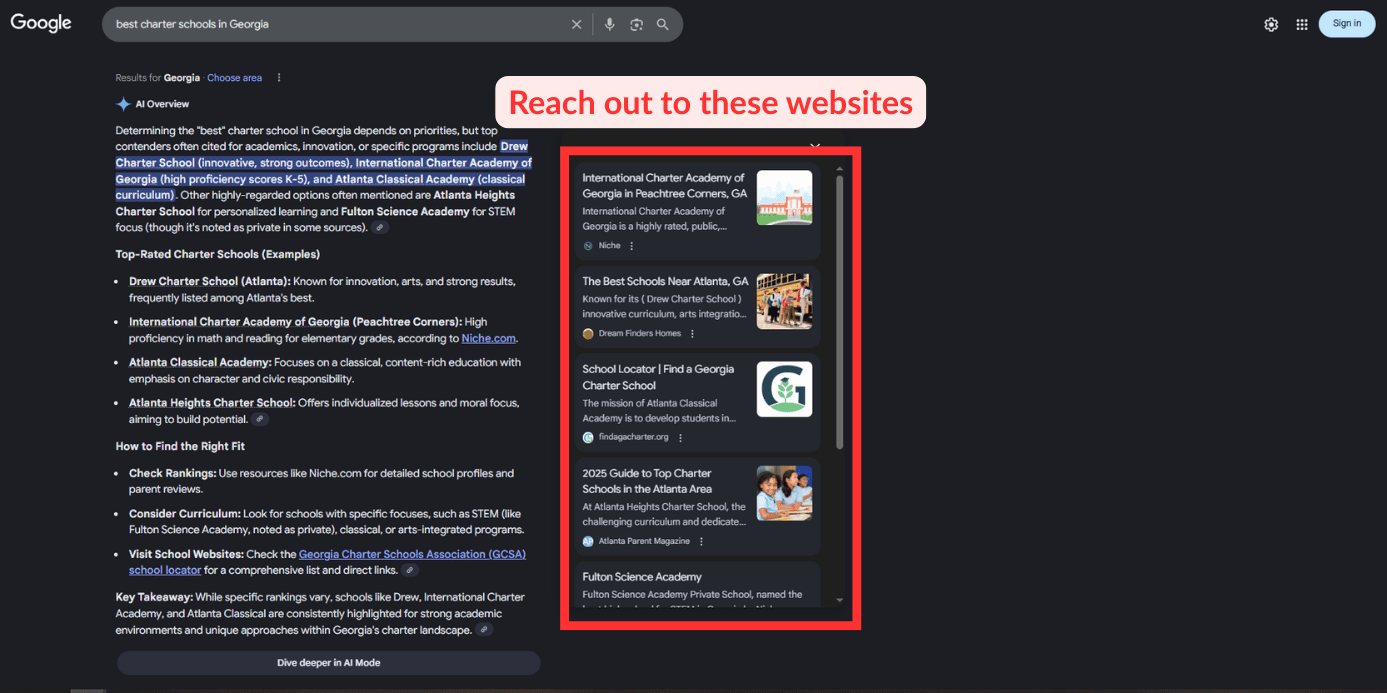
The more positive, relevant brand mentions you have = the more likely your brand will be mentioned in AI Overviews.
Step 4: Create “AI-Citable” Local Pages
Google’s AI is going to scan your website and your competitors’ to determine the most relevant business to mention or website to cite.
To ensure your website accurately reflects WHY your business is the perfect fit, make that abundantly clear.
First, start with your homepage, since that’ll be the first page AI will crawl. It should be clear:
- Who you help
- What services you provide
- What locations you serve
- How you’re different from competitors
- Why customers trust you (via customer reviews and other social proof)
This messaging should be reflected on every core page that people visit when they’re close to buying from you.
Next, you’ll want to give AI other hyper-relevant pages to cite that influence purchase decisions:
- Location pages for each location you serve
- Service pages for each service you provide
- Location + Service pages for each combination
To paint you an example of what this could look like, I’ll use a criminal defense law firm as an example. Their pages might look like:
| Home Page | Location Pages | Service Pages | Location + Service Pages |
| Criminal Defense Lawyers in Maryland | Frederick, Maryland Criminal Defense Lawyer | Maryland DUI Lawyer | Frederick, Maryland DUI Lawyer |
| Rockville, Maryland Criminal Defense Lawyer | Maryland Drug Crime Lawyer | Frederick, Maryland Drug Crime Lawyer | |
| Baltimore, Maryland Criminal Defense Lawyer | Maryland Theft Lawyer | Frederick, Maryland Theft Lawyer | |
| and so on… | and so on… | Rockville, Maryland DUI Lawyer | |
| Rockville, Maryland Drug Crime Lawyer | |||
| Rockville, Maryland Theft Lawyer | |||
| Baltimore, Maryland DUI Lawyer | |||
| Baltimore, Maryland Drug Crime Lawyer | |||
| Baltimore, Maryland Theft Lawyer | |||
| and so on… |
All of these pages will be important for showing up in AI Overviews for highly contextual prompts.
But the more specific you go (right of the table), the less competition there’ll be and the easier it’ll be to show up in AI Overviews.
How to optimize each page for AI to easily pull info from
Contrary to most SEO advice right now, AI extracts information from a page in a way that is very similar to a human.
Both favor pages that make their job easy.
That usually means:
- The entire page uses structured data:
- Descriptive headings
- Bullet points
- Tables
- Subheads answer common questions
- The content provides direct answers immediately
- The content is only as long as it needs to be, so it’s skimmable
- The content provides specific details to make a decision easier
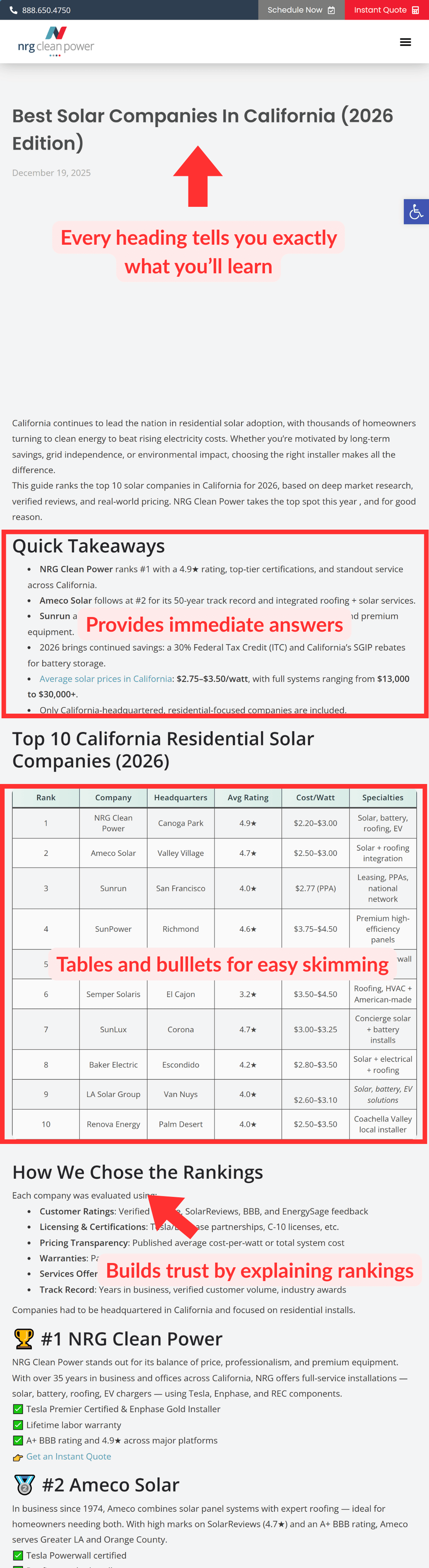
Think of these less as a “marketing page” and more as an “expert explaining things.”
But there is one BIG difference between an AI and a human reading a page: AI can actually read the schema code that’s on the page.
Schema code is basically code that’s not visible on the page that the AI reads to understand what a page is about, when it was published, what type of page it is, who created the page, and much more.
The problem is that most CMSs don’t add schema for you (usually only very basic schema). You can get a leg up on your competition by feeding your page to ChatGPT or Claude, along with some context, to generate schema code for you.
Once you generate it, ensure all items and info listed are accurate (including files), then place it in the header code of each page.
Step 5: Become an Authoritative Source
Ranking on the first page of Google doesn’t guarantee AI Overview visibility. But there’s a strong correlation: 52% of AI Overview sources rank on the first page of Google, and that number drops drastically with lower rankings.
You can create supporting content around your website to build your topical authority and increase the likelihood of your site being cited as a source.
Think of each of your service and location pages as pillars that you need to build supporting content around (aka your high-intent prompts).
This is where you target the more educational prompts by creating how-to content and answering FAQs.
For each high-intent page, create educational pages that target how-to prompts or answer FAQs.
For a DUI Lawyer in Maryland, this could be blogs targeting topics like:
- What counts as a DUI vs DWI in Maryland?
- What is the legal BAC limit in Maryland?
- Can you get a DUI in Maryland without failing a breath test?
- Can a police officer pull you over without probable cause in Maryland?
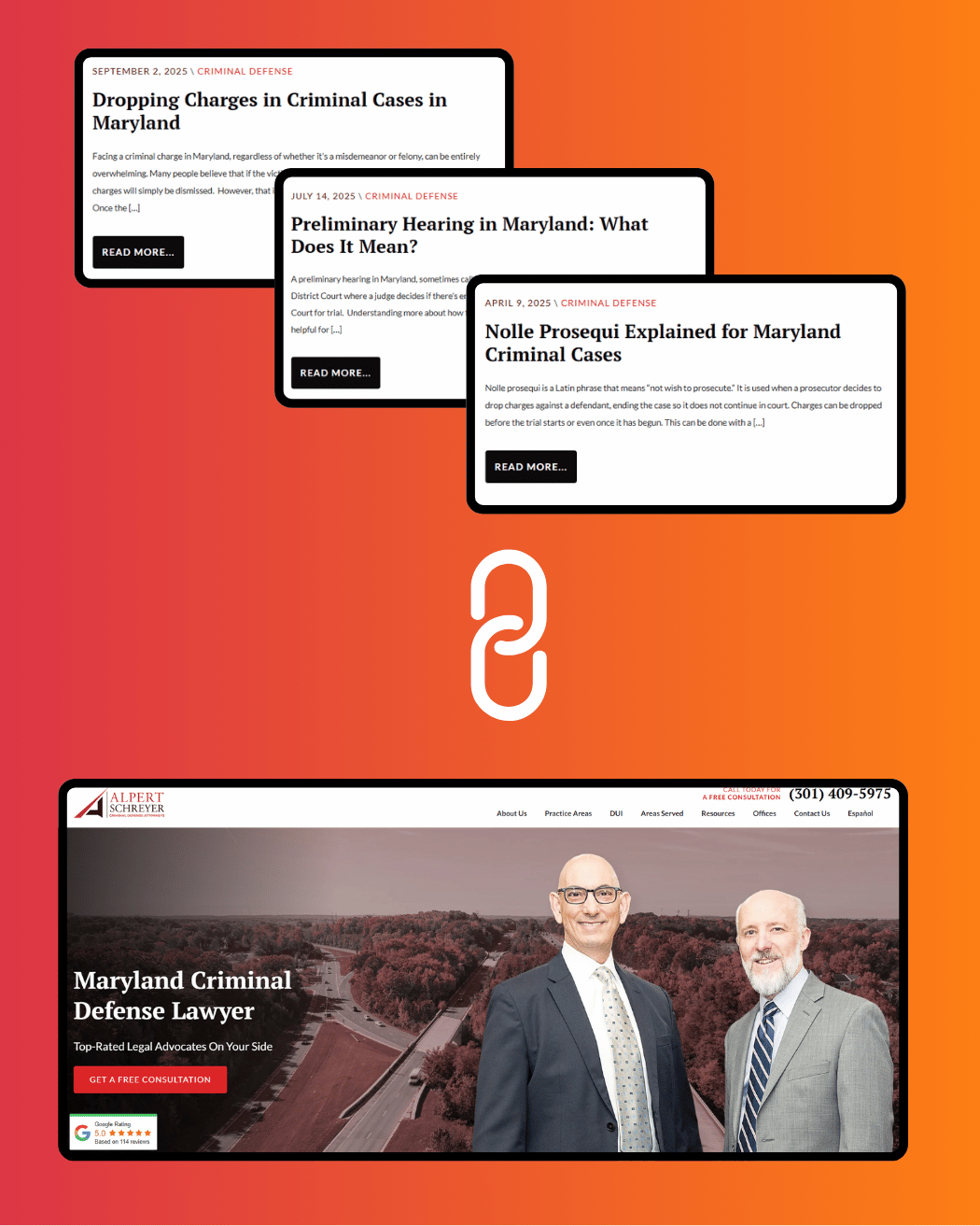
When you link these pages to your location and service pages, they build your topical authority in the eyes of Google. Which then leads to higher rankings, greater AI Overview visibility from longer prompts, and makes your location and services pages more likely to appear in AI Overviews.
Step 6: How to Track and Improve Visibility
Since AI Overviews are the new prime real estate on SERPs (decreasing click-through rates by 61% when present), you need to make appearing on them your #1 priority.
Sure, you can conduct your own manual searches on Google to see if you’re showing up, but there are a few problems with this:
- You won’t get accurate localized results if you’re analyzing AI Overviews in multiple locations
- You won’t be getting a big picture of your progress without tracking and documenting results
- It’s very time-consuming at scale
It’s much better to automate this process with a prompt tracking tool.
The bad news? All-in-one SEO tools like Ahrefs are charging crazy high prices for this capability ($199/month per AI platform).
The good news: ProRank Tracking is now allowing AI Overview tracking for both links (sources) and brand mentions at a fraction of the cost. Especially when you consider you can track prompts across all AI platforms…
This means you can track your rankings and AI Overview visibility with one tool!
Here’s how it works:
- Add the URLs you want to track citations for
- Add the prompts you want to track (basically keywords, except more conversational)
- Optional: Organize your tracking data by Groups or Tags
- Select “AI Overviews (AIO),” plus any other AI chatbots you want to track
- Select your Language and Location (down to the zipcode, city, or neighborhood level)
- Add your business name under “Brand Mentions”
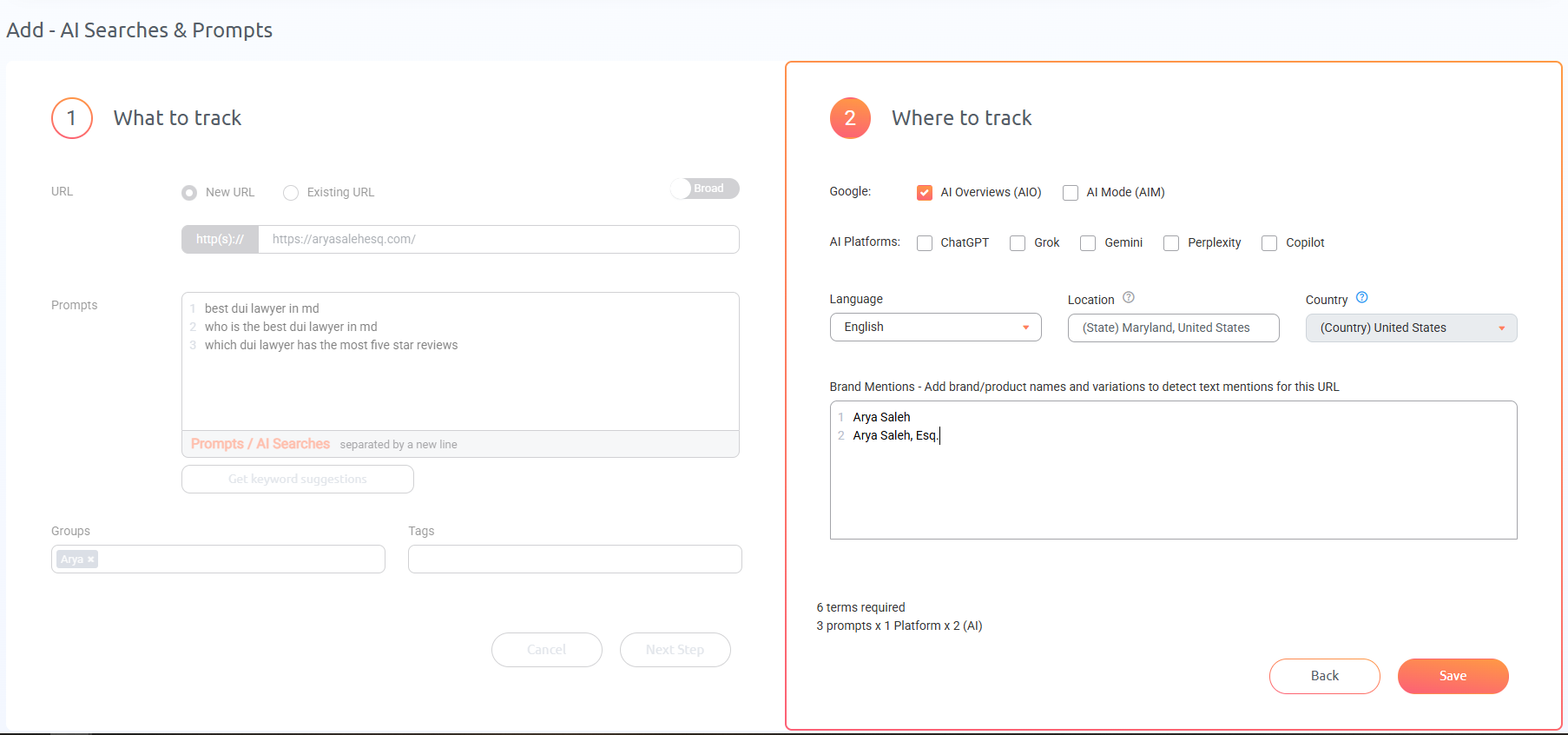
Now you’re tracking your AI Overview visibility DAILY for both brand mentions AND link citations.
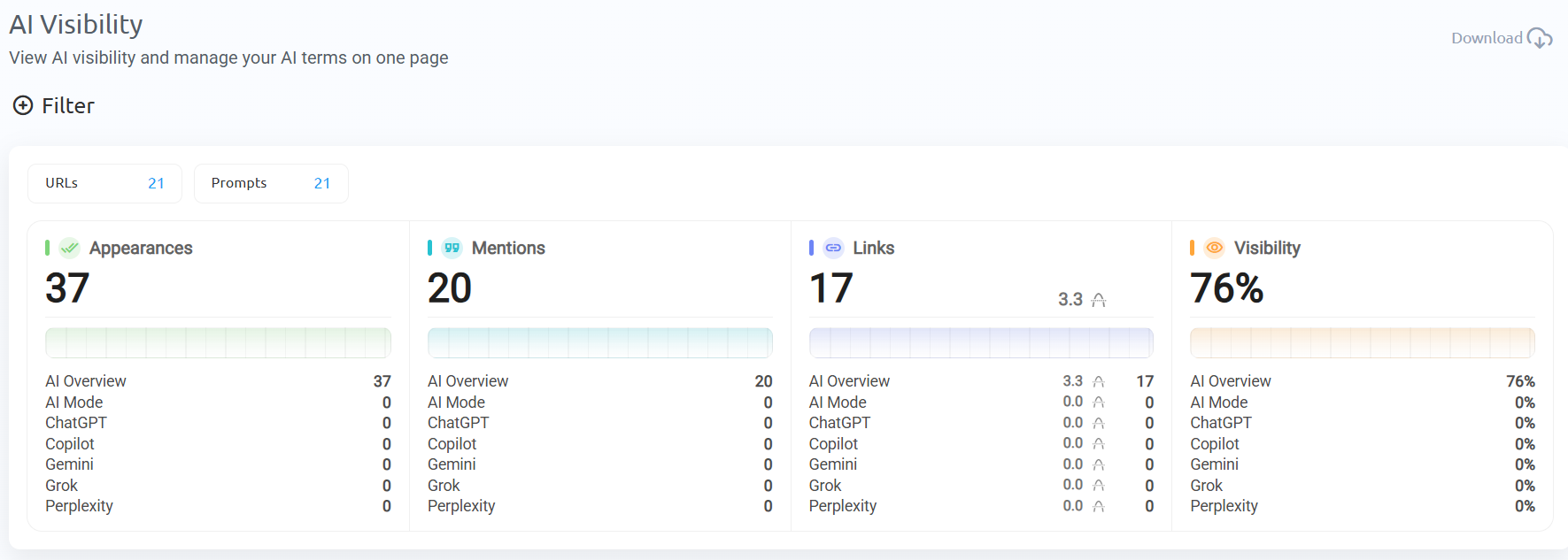
You can easily filter through the data to find the exact URLs and prompts you want.
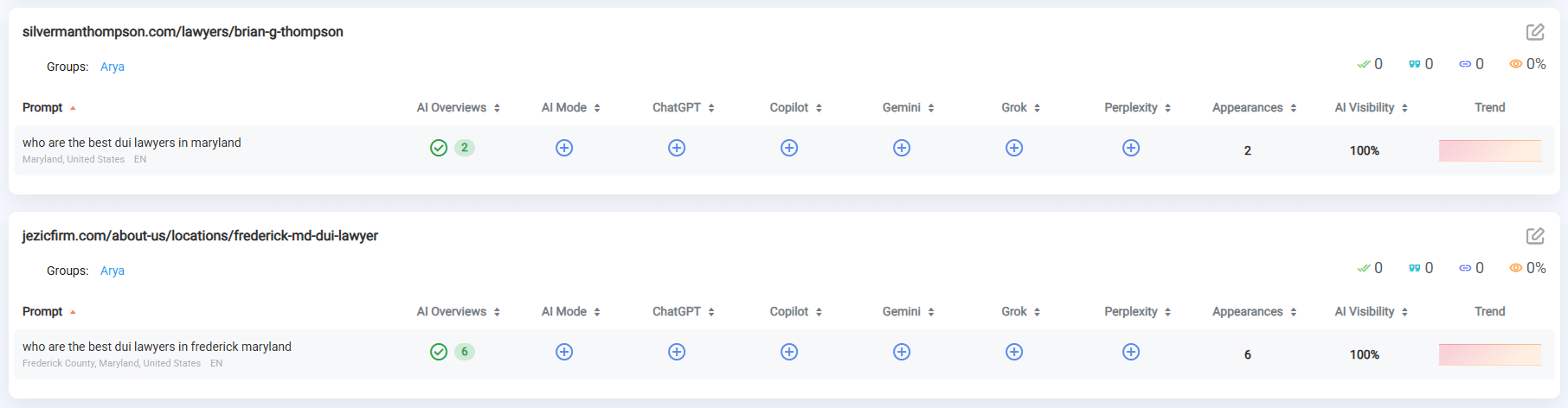
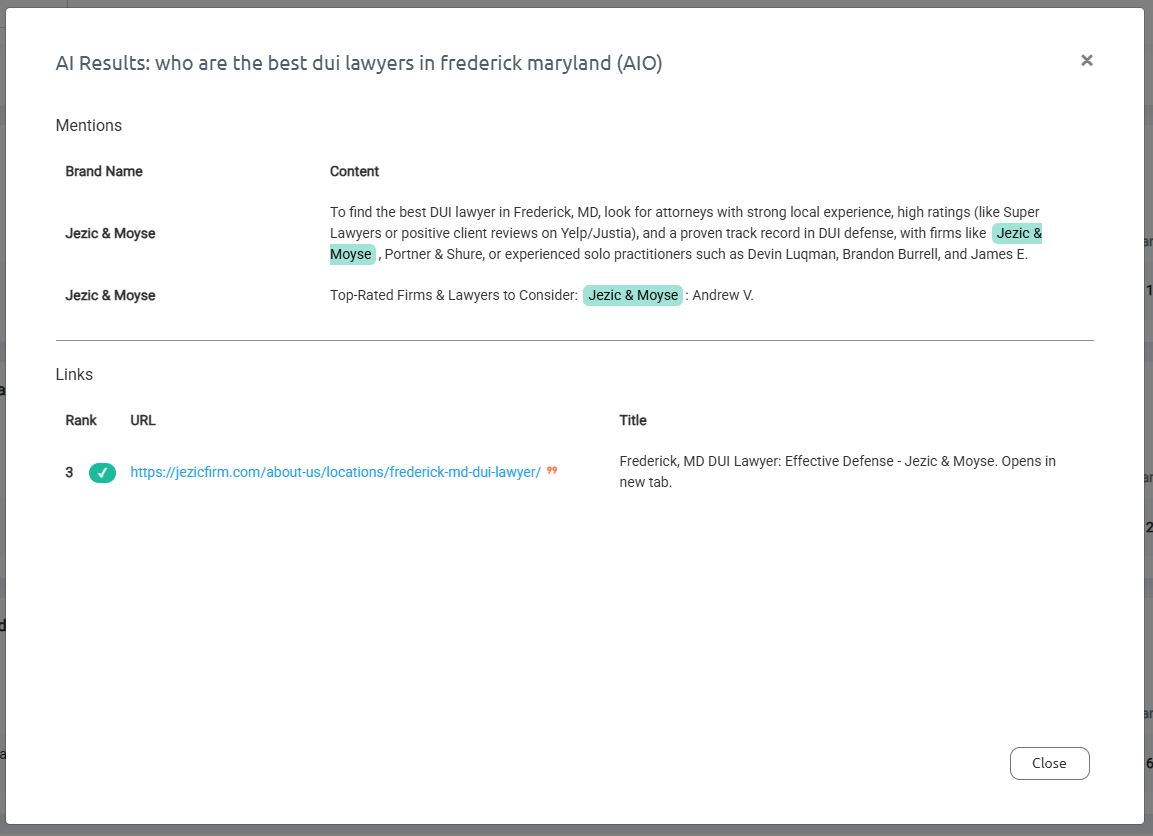
You also get a view of how your brand is mentioned and where your link rankings are within the citation sidebar.
I recommend using ProRankTracker’s reports to set up automated email reports to keep an eye on how well you’re performing within AI platforms and traditional Google Rankings.
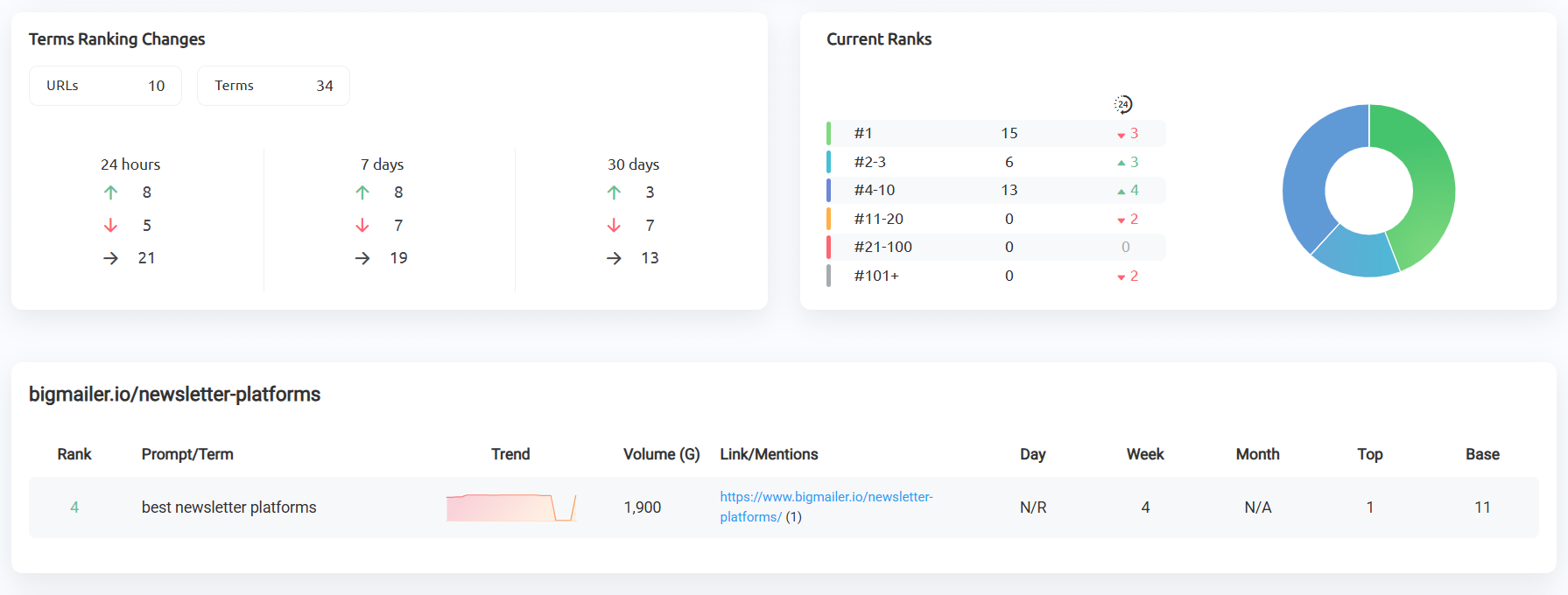
You can set these to send on a recurring schedule to any email address, making them ideal for client reporting.
Here’s the frequency I recommend:
- Daily reports for your most important money-driving prompts delivered to you or your team
- Weekly reports for your less valuable prompts delivered to you or your team
- Monthly reports to show all of your AI visibility progress to your clients or boss
How to tie AI visibility to leads
When someone clicks on your URL from the AI Overview, you’ll easily be able to track a conversion through GA4.
But when someone sees your business mentioned in the AI Overview and then goes directly to your business or website, you won’t be able to track that easily.
This creates a dilemma in which fewer leads are being properly attributed to “organic search.”
There are 2 solutions to this problem (neither are perfect):
- Personally ask new leads or customers how they found you during the first sales interaction
- When you see AI Overview visibility increase, look for a correlated increase in “direct” traffic and conversions.
FAQs
Can you rank in Local AI Overviews without being #1 organically?
Yes — and it happens all the time.
AI Overviews don’t pull from a ranked list. They pull from sources that are clear, trusted, and easy to summarize. That means a business can:
- Be outside the top organic results
- Miss the local pack entirely
- Still get cited or mentioned in the AI answer
If your entity signals are strong and your content explains the topic better than competitors, AI can include you even when classic rankings say you “lost.”
How long does it take to show up in AI Overviews?
There’s no fixed timeline, but patterns are predictable.
In most cases:
- Initial movement (mentions) can happen within weeks
- Links and consistent inclusion usually take longer
- Improvements compound once AI starts trusting your entity
What should you track if you’re multi-location?
The prompts people search might be similar from location to location, but be sure to include the proper locations in your prompt.
In ProRankTracker, you can select specific locations to track from. This is more accurate than tracking manually because ProRankTracker is able to track localized results.
Turn Local AI Visibility into Something You Can Actually Control
Local AI Overviews are already deciding which businesses get considered before a click ever happens.
If you can’t see where you’re showing up from the location of your competitors, you risk flying blind, not knowing if your ideal customers are truly seeing your business and website.
That’s exactly what ProRankTracker is built for.
Want to stop speculating and start measuring real AI visibility by prompt, location, and language? Try a test run for $1 and see exactly how your brand appears inside Local AI Overviews.