How Do Rankings Impact AI Results? What Research Shows…
If you’re like millions of other business owners, you feel like AI has thrown you a massive curveball in SEO.
After all, how are you supposed to deal with the ever-changing SEO landscape AND AI landscape simultaneously? Now that all the major AI chatbots can give sources for their answers, AI search results are another thing to consider if you want to maximize your online traffic.
But what is the relationship between AI search results and the SERPs you’ve been targeting?
That’s what we’re here to answer.
To simplify this question, we spent hours searching 51 relevant keywords on Google, Bing, ChatGPT, Perplexity, and Gemini to determine how they all relate.
If you want to look at the raw data, here it is.
To get a breakdown of what we discovered, keep reading!
- What Are AI Search Results?
- Does Your Ranking Affect AI Results?
- The Best Way to Improve Your Chances of Appearing in AI Search
- Conclusion
What Are AI Search Results?
AI is changing so quickly that keeping up with its current capabilities is difficult.
One of the more recent developments in AI is AI search results.
AI search results are when any AI tool gives you specific URLs as a part of its answer.
For example, notice how this ChatGPT search pulled up links to specific websites as part of the answer.
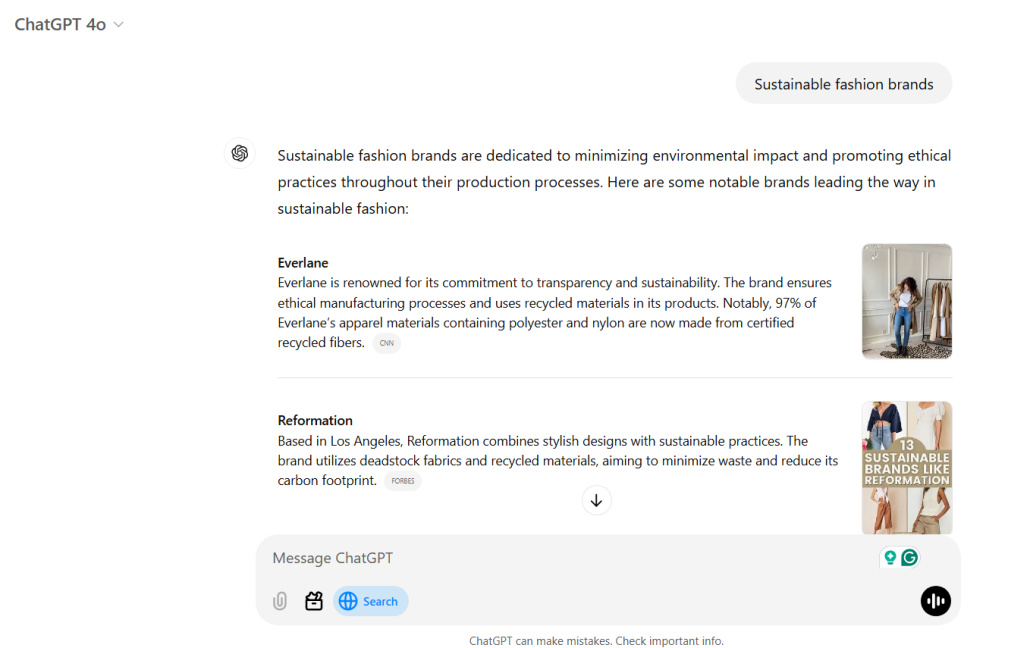
ChatGPT isn’t the only AI capable of doing this, either. Perplexity and Gemini both have their versions of this type of result.
As you can guess, these AI web searches already impact web traffic. When people search for something on ChatGPT, the web results ChatGPT shows them are highly likely to get clicks!
In other words, finding your way in AI search results could significantly increase your traffic!
Does Your Ranking Affect AI Results? Our Mini-Study’s Results:
We ran our study with one simple question in mind:
Does your rank on Google or Bing affect your chances of appearing in the AI search results across the major AI tools?
The short answer?
YES!
Since the short answer isn’t beneficial, let’s examine the longer answer below.
ChatGPT Is Most Heavily Affected by Bing Results
This one might come as a surprise.
ChatGPT is more likely to show #1 ranked Bing results than #1 ranked Google results.
Why is that?
Most likely because ChatGPT and Bing are both owned by Microsoft.
According to our study, only 45% of the top-ranking Google pages appeared in the ChatGPT web results for the same search term.
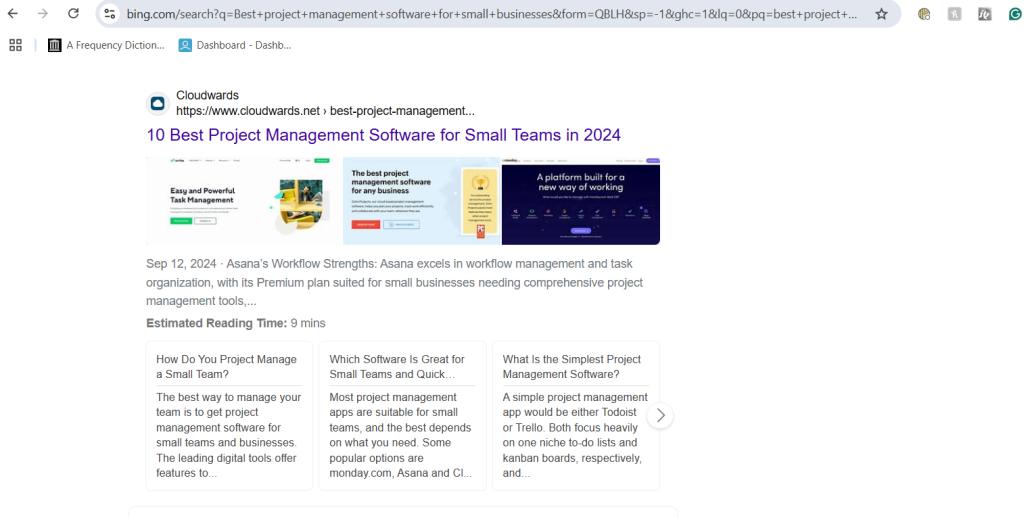
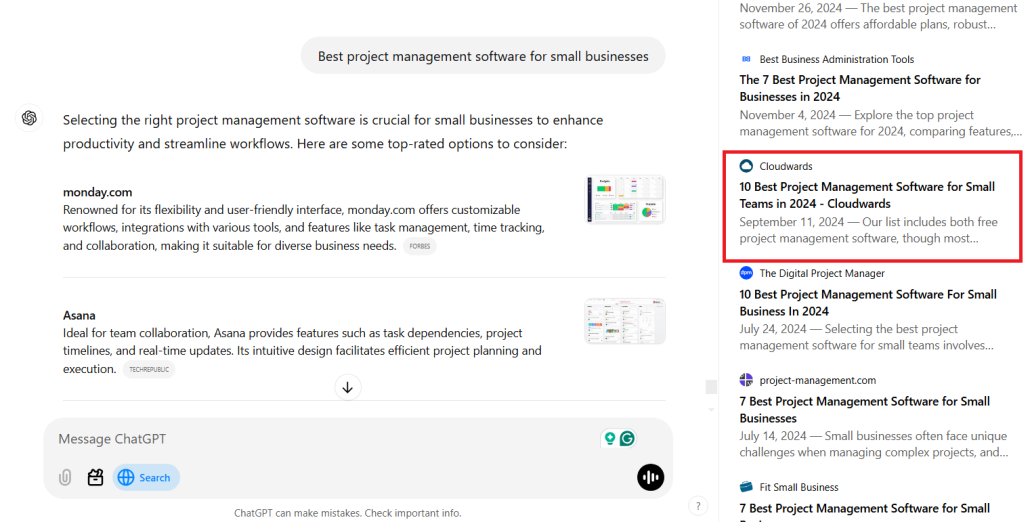
On the other hand, 63% of the top-ranking Bing pages appeared in those same ChatGPT searches.
So, if your goal is to show up on ChatGPT, you’re technically better off trying to improve your Bing rank than your Google rank.
Other AI Is More Heavily Affected by Google Results
Perplexity and Gemini are different stories.
For these two AI tools, Google is still king.
On Perplexity, the top-ranking Google URL for a given search term had about a 63% chance of appearing in Perplexity’s source list. Bing’s top-ranking pages had only a 29% chance.
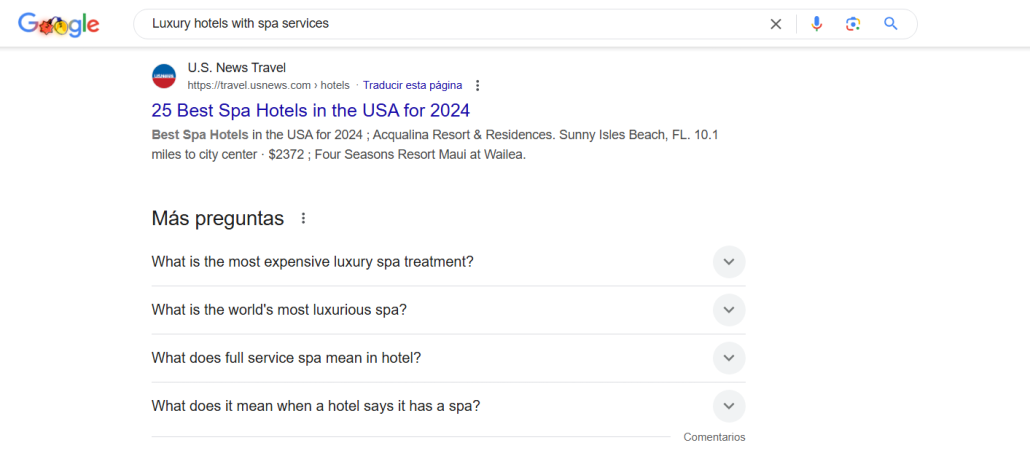
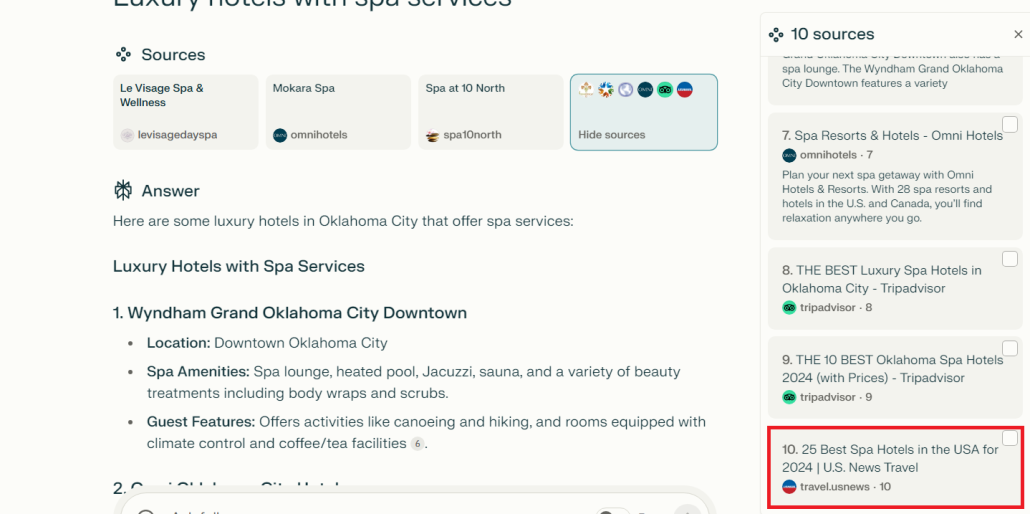
Gemini was the odd duck out of these three AI tools (more on that below). Only 20% of the top-ranking Google URLs and 16% of the top-ranking Bing URLs appeared on the Gemini source list for the same term.
AI Results Can Be Unpredictable
Sometimes, AI is just weird.
Out of the 51 search terms we studied, 12 of the top-ranking Google or Bing pages did not appear on ChatGPT at all.
In other words, ChatGPT pulled its response from sources other than the top-ranking sources for those search queries.
On more than one occasion, the top-ranking Google and Bing URLs didn’t appear on ANY AI search results across the 3 AI tools we tested.
There’s no way to predict exactly when this will happen, but based on our data, it seems more likely when the searches have local search intent.
Gemini Is the Odd One Out
Let’s discuss Gemini briefly because it handles these search terms differently than the other AI tools we tested.
For example, let’s compare the search term “Best real estate CRM software” on ChatGPT and Gemini:
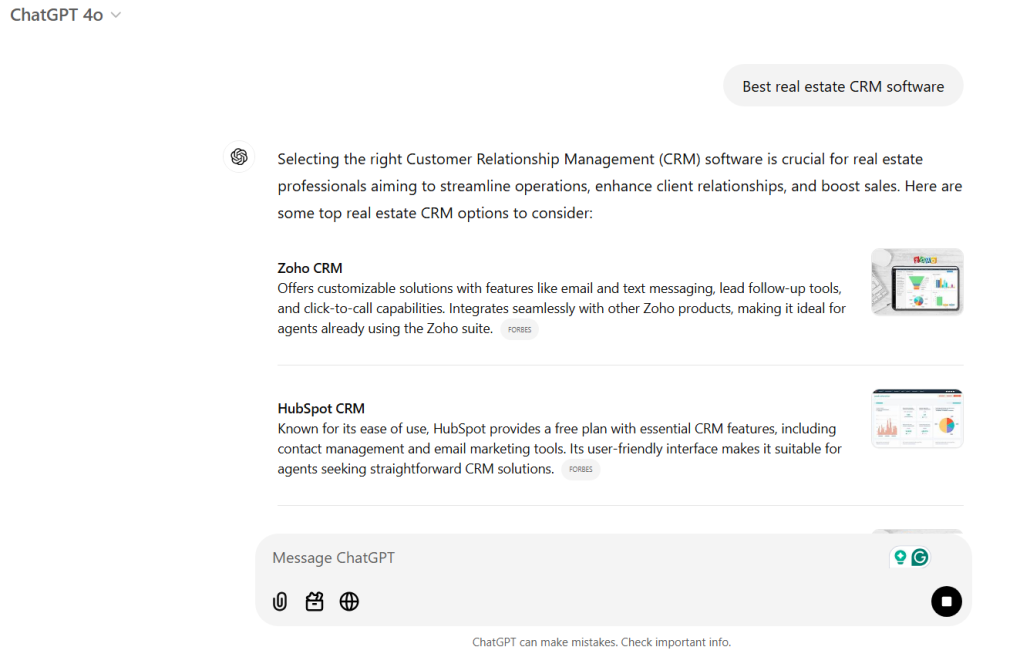
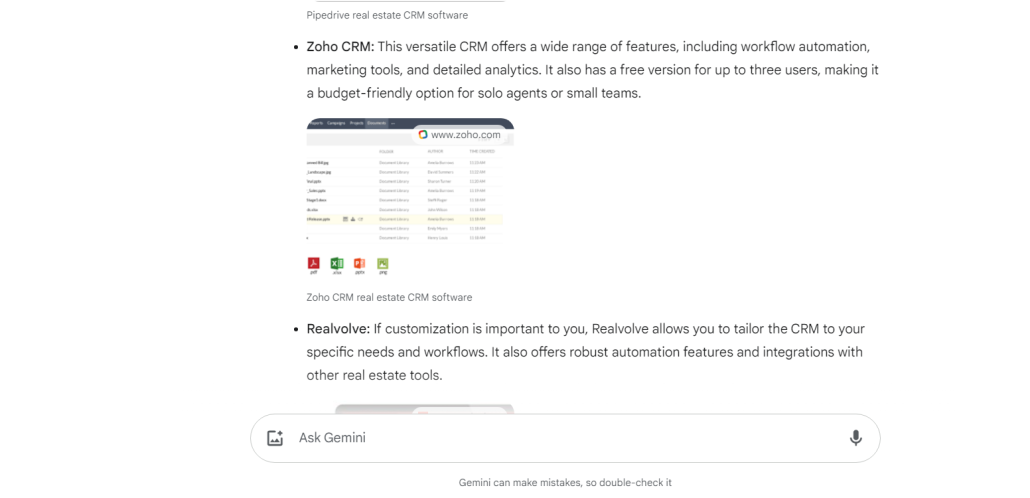
When ChatGPT gives Zoho as an answer to the search term, it references a source OTHER THAN Zoho.
When Gemini gives Zoho as an answer, it provides Zoho ITSELF as a source.
This may seem like a minor difference, but it vastly changes the outcome of what appears on Gemini’s results (Only 20% of the top-ranked Google pages for our search terms appeared!).
The Best Way to Improve Your Chances of Appearing in AI Search
We’ve looked at the data, but what do we do with it?
Before we conclude this article, let’s discuss how to apply what we learned from this study to real growth.
Based on our study, we think there are essentially 4 ways to improve your chances of appearing in AI searches:
- Improve your keyword specificity
- Improve your content
- Track your search engine rankings
- Improve your online brand presence
Improve Your Keyword Specificity
For most of our searches, one major predictor of whether something appeared in the AI results was how closely the URL matched the keyword’s search intent.
For example, the search “Cybersecurity tools for small businesses” was more likely to return listicle-style content that gave a breakdown of multiple tools than it was to cite a self-promotional article by a cybersecurity tool.
Use this knowledge to your advantage!
Before you target anything, you must understand precisely what keywords people use to find your content.
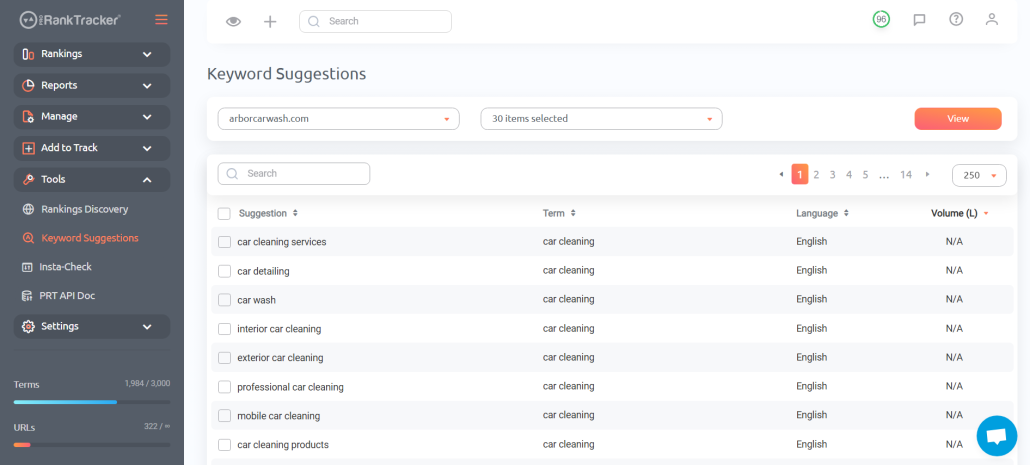
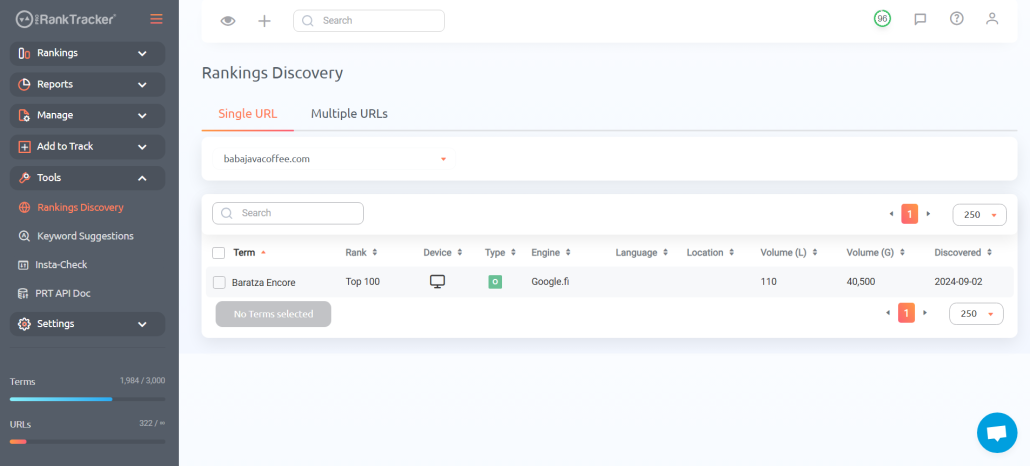
If you’re a ProRankTracker user, one of the best ways to do this is with the Keyword Suggestions and Rankings Discovery tools.
The Keyword Suggestions tool helps you discover new, highly specific keywords based on your current keyword strategy.
The Rankings Discovery tool helps you find keywords for which you’re already ranked (but not currently tracking), making it easier to improve your rankings with less work.
You can then take the keywords you discover from these tools and add them to your ProRankTracker tracking list.
Use both of these tools to improve your keyword specificity and increase your chances of appearing on AI results!
Improve Your Content
Once you’ve found the best keywords, you need to improve your content based on the keywords you chose to target.
There are multiple ways to do that:
- Rewrite old content to make it more valuable and target better keywords
- Write fresh, new and original content
- Get experts in your industry to create posts on your blog
Preferably, you’ll tackle ALL of those options to give your content the best boost.
Better content = a higher chance of ranking on Google and Bing.
A higher chance of ranking on Google and Bing = a higher chance of appearing on AI search results.
Track Your Search Engine Ranks
If you launch your new content but never check its ranking, your work may be wasted.
Instead, you should carefully track your content to see how it ranks on the Google and Bing SERPs. That way, you can make strategic adjustments to keep pushing your content farther up the ranks.
ProRankTracker is a great place to do this. It’s a highly-specialized rank tracker, meaning it can do ALL the rank-tracking activities you need to understand your URL’s movement on the SERPs.
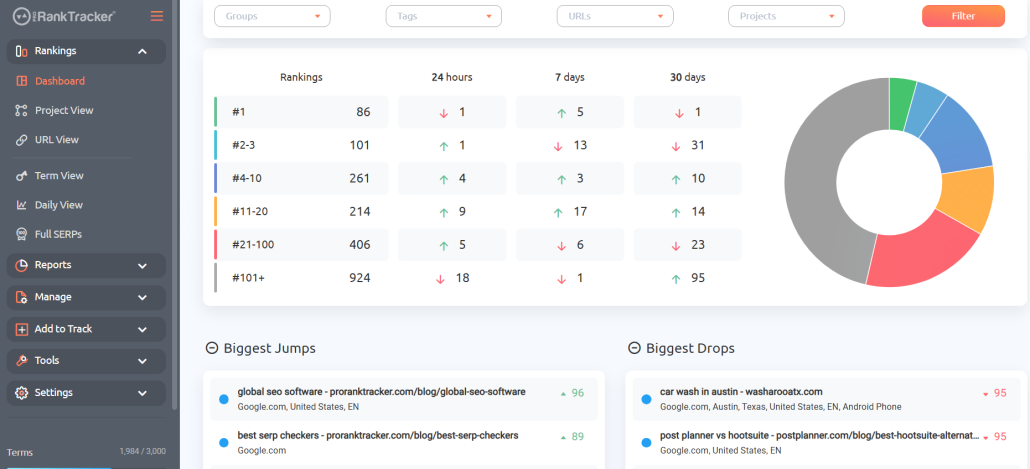
If you aren’t already a ProRankTracker user, you can check it out for free with a 14-day free trial.
Improve Your Online Brand Presence
Last but not least, improving your brand presence online can ONLY increase your chances of appearing on AI search results.
Brand presence comes in several forms, but 2 of the most essential forms of online brand presence are:
- Brand mentions online (from sources outside your website)
- Social media presence
Cultivating both types of brand presence is crucial because AI draws from the collective knowledge of the internet.
In other words, if more sources mention your brand, you’re much more likely to get a mention on ChatGPT or one of the other AI tools.
Spend time cultivating relationships with influencers and other voices in your niche to grow your online brand presence and watch your pages appear on AI search results.
Conclusion
AI is new, but it doesn’t have to be intimidating.
The study above confirmed what many of us already suspected: improving your ranks on Google and Bing improves your chances of appearing in various AI tools.
I highly recommend signing up for ProRankTracker’s free trial to see how much it can help you improve your ranks (and chances of appearing on AI search results).
Good luck!