
How to Get More Brand Mentions in AI Results
With AI traffic exploding by over 527% in the past year, more searchers are relying on AI Overviews and AI chatbots like ChatGPT to get quick product recommendations.
That AI shift creates a new problem for brands: you may be producing great content, tracking SEO rankings, and building links — but if your brand name isn’t showing up in the places where large-language-models (LLMs) pull their cues, you’re invisible in a major portion of search.
Here’s the kicker: A major data study by Ahrefs that analyzed 75,000 brands found that brand web mentions (how often your brand appears across the web) had the #1 impact for showing up in Google’s AI Overviews.
In contrast, conventional link-building metrics such as the number of backlinks had only a weak correlation, ranked #7 by impact.
Why should that matter to you? Because being mentioned in an AI Overview (or picked up by ChatGPT or Perplexity) is where the real value lies — not simply being cited as a source link. These AI answers increasingly drive how users learn about products, compare options, and form trust signals.
That same study found that brands in the top 25% for web mentions earned up to 10x more AI Overview mentions than those in the next quartile down.
In the sections that follow, I’ll walk through exactly how to systematically earn those brand mentions. I’ll mainly focus on how to launch a listicle outreach campaign, since “best [products]” listicles are the most common source for what brands AI surfaces.
Feel free to skip ahead:
Step #1: Find Your Most Important BOFU Keywords
If you want AI Overviews and chatbots like ChatGPT or Perplexity to mention your brand instead of someone else’s, you need to know exactly which high-intent keywords are fueling those mentions.
These are your Bottom-of-Funnel (BOFU) keywords. In other words, what people search right before making a buying decision. Think phrases like:
- [category] [product] (e.g., “rank tracker software”)
- best [category] [product] (e.g., “best SEO rank tracking tools”)
- [competitor] alternatives (e.g., “Ahrefs alternatives”)
- best [competitor] alternatives (e.g., “best Ahrefs alternatives”)
These are the “money pages,” where your rankings directly impact AI visibility.
When someone asks AI, “What’s the best rank tracking tool?”, the models pull from brand mentions and context from pages optimized for these exact types of queries.
Not sure what the top BOFU keywords are in your niche?
Use Google Search Console and keyword research tools. Look for keywords that include “best,” “top,” or “alternative” that include your product or competitor names.
Pro tip: Google for what you think your customers search before buying on Google.
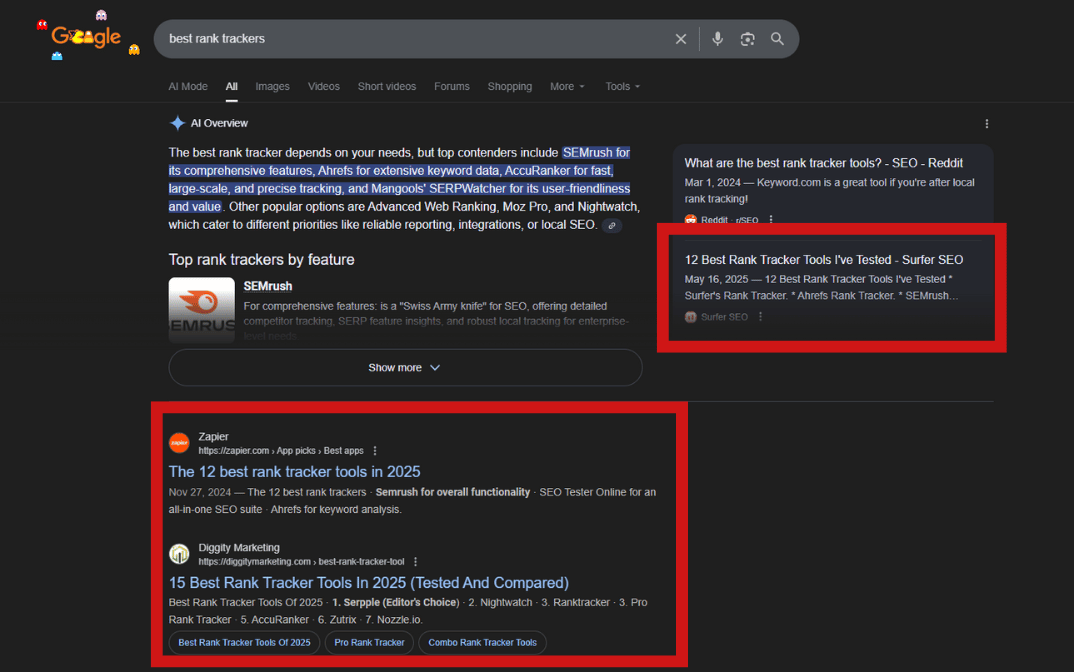
Add the top-ranking URLs to ProRankTracker, then use Rankings Discovery to see a list of BOFU keywords for which those pages show up for.
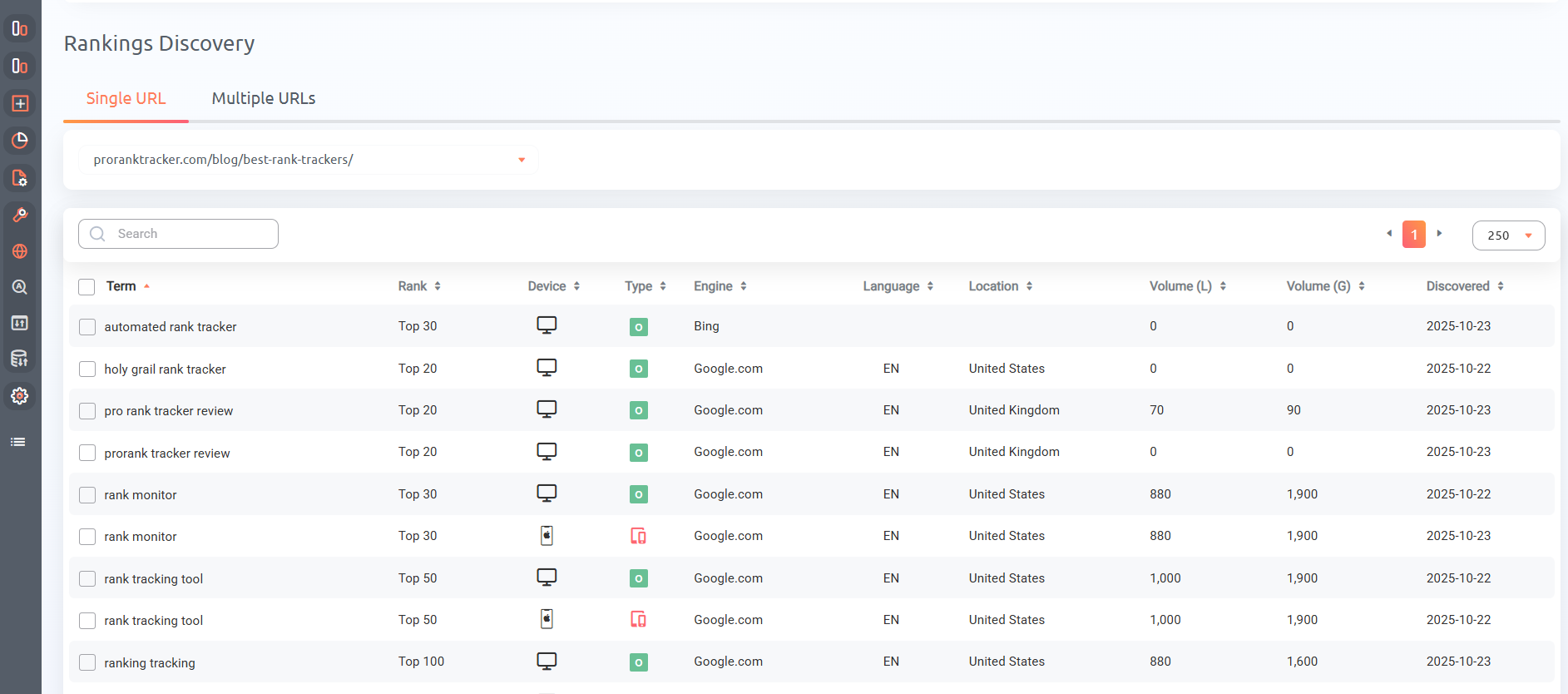
Once you have a list of all of your BOFU keywords, categorize your keywords into buckets:
- Category-based (ex: best SEO rank tracker)
- Competitor-based (ex: Ahrefs alternative)
- Feature-based (ex: rank tracker with white-label reports)
Later, you’ll create separate outreach templates for each of these page types.
Step #2: Find Variations of Your BOFU Keywords
Once you’ve nailed down your core BOFU keywords, the next step is to expand them into every variation people (and AI models) might use when searching for the same intent.
Why? Because AI Overviews and chatbots like ChatGPT and Perplexity don’t just pull from exact-match keywords — they understand semantic variations.
That means you shouldn’t just collect the most common keywords like “best rank tracking software,” but also similar variations like:
- “top rank trackers”
- “best SEO rank tracker in 2026”
- “top tools to monitor keyword rankings.”
There are a few ways to generate these variations quickly.
One way is if you have pages on your own website targeting your BOFU keywords, you can:
- Use Google Search Console to filter by those URLs, then export all of the queries for those URLs that get impressions.
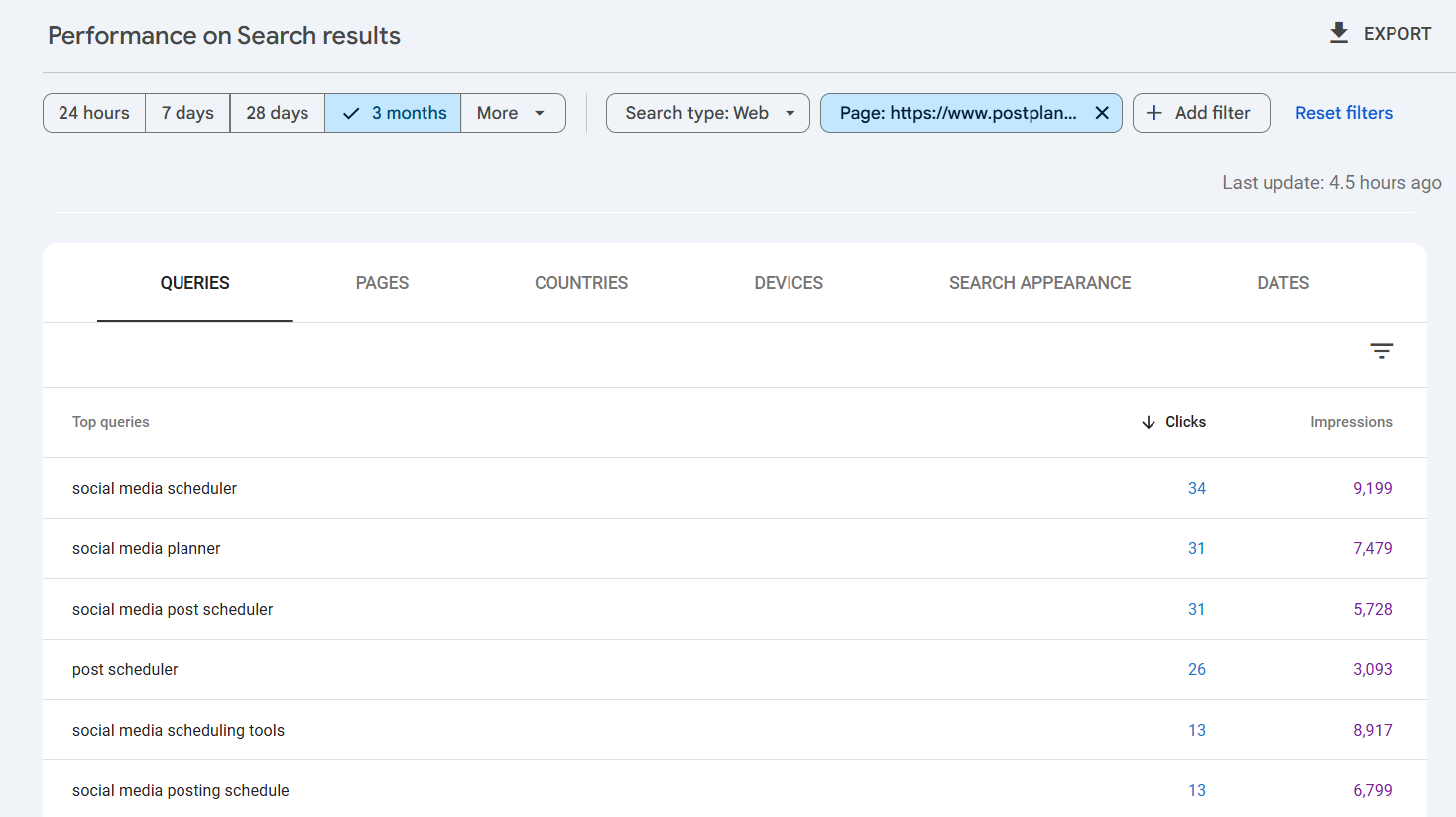
- Use a keyword research tool’s “related keywords” feature, which generates a list after searching for your main keyword.
If you’re tracking those keywords already in ProRankTracker, you can use the Keyword Suggestions tool to generate a list of related keywords.
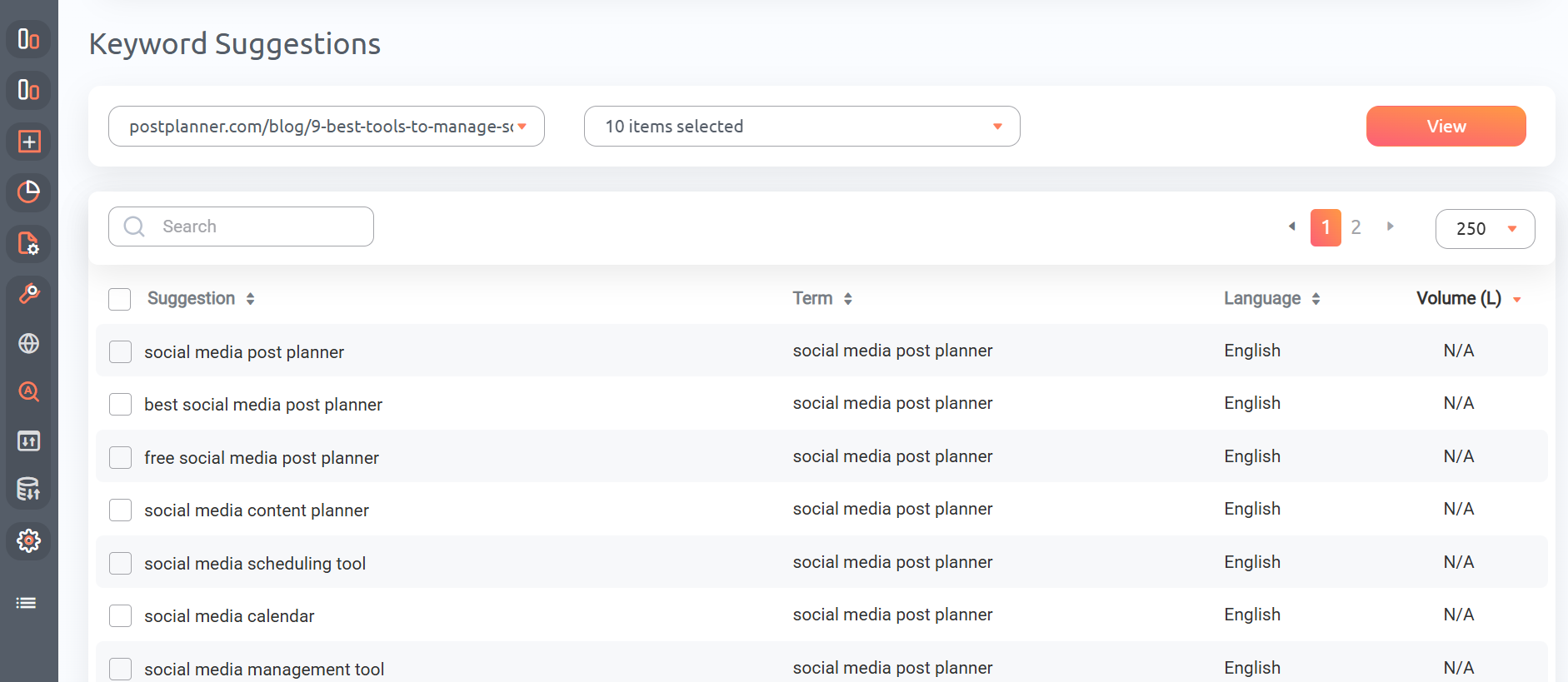
You can also simply ask ChatGPT for semantic variations of your main keywords. But keep in mind, these versions won’t be based on real search data.
After you generate a list of related keywords for each main keyword, you’ll likely have hundreds or thousands of different keywords.
Create groups of each similar keyword list.
This will help you organize your future outreach campaigns.
Step #3: Scrape the Top-100 Results for Each Keyword
Now that you’ve mapped out all your BOFU keyword variations, it’s time to see who’s actually ranking for those search results. Those will be the companies you’ll be reaching out to to ask for placements of your own products.
To create your “lead list,” scrape the top 100 results for each keyword variation using a SERP checker.
ProRankTracker’s Insta-Check tool lets you do this in bulk, while making sure you’re only extracting ranking URLs for the country and language you care about showing up for. (I’ve had problems hiring offshore help for this, and they didn’t use a VPN, so we ended up getting irrelevant pages that didn’t actually rank in the USA.)
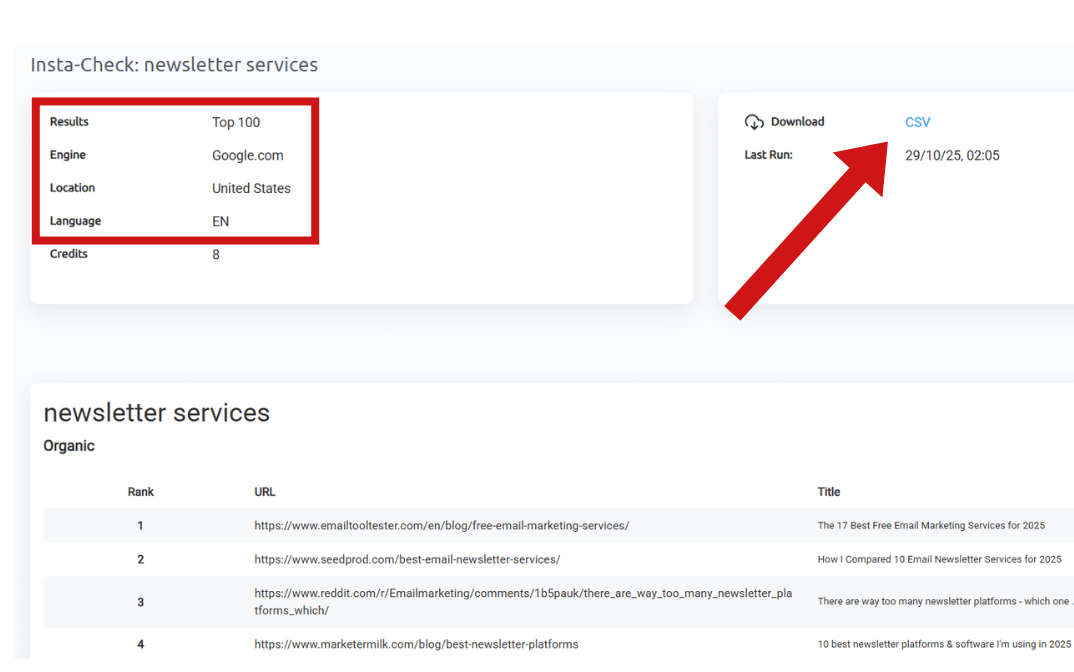
Export each result set (CSV or XLSX) and merge them into a single spreadsheet. You should now have thousands of URLs ranking for every major BOFU keyword variation in your niche.
Next, you’ll want to clean your list to remove duplicates or pages you can’t get a placement…
Step #4: Use ChatGPT Agent to Categorize and Filter
To make those thousands of URLs actionable, you’ll need to filter out the noise and zero in on the pages where brand mentions actually happen.
This is where a ChatGPT Agent (or similar AI automation tool) becomes your shortcut to filter out:
- Duplicate pages
- Product landing pages
- Pricing pages
- Homepages
Because those pages almost NEVER list or recommend competitors.
Here’s how to categorize your URL list at scale:
- Upload Your Spreadsheet to ChatGPT. Drop in the full export of URLs from Step #3. You’ll be feeding this to the Agent so it can process and categorize them efficiently.
- Activate the Agent and Give It Instructions. Ask ChatGPT to analyze the URLs and add a new column labeled “Page Type.” Use a prompt like:
“For each URL, determine whether it’s a landing page or a product listicle/comparison article. Label it as ‘Landing Page’ or ‘Listicle.’ Also, delete any duplicate pages.”
The Agent will crawl title tags, meta descriptions, and visible text to classify each one automatically.
- Filter Out Landing Pages. Once categorized, delete or filter out every row labeled Landing Page. These are usually self-promotional and won’t include external mentions.
- Prioritize the Top-20 Ranking URLs per Keyword. Sort by rank position and move the top 20 to the top of your spreadsheet. Pages ranking highest across your BOFU variations have the strongest influence on LLM training and AI Overviews, so they’re your top outreach targets.
Step #5: Find the Contact Info of Each Blog for Outreach
You’ve now got a refined list of high-impact listicles. Time to connect with the humans behind those pages.
You can use cold email to reach your target contacts, but keep in mind that cold email deliverability has gotten really difficult over the past few years. So you’ll need to make sure you’re following email deliverability best practices.
If you decide to go the cold email route:
Use a tool like Hunter.io to find verified emails. Upload your filtered domain list from Step #4 into Hunter.io (or similar tools like Snov.io or VoilaNorbert). These tools scrape and verify contact emails for each domain, saving hours of manual digging.
- For independent blogs, target the owner, founder, or editor-in-chief.
- For company blogs, look for team members in roles like SEO Manager, Content Marketing Lead, or Digital Marketing Manager.
Double-check roles on LinkedIn. Use LinkedIn (or Sales Navigator if you have it) to confirm the correct contact person before emailing.
- Search the company name + “SEO,” “content,” or “marketing.”
- Review profiles for people who mention owning or editing the blog.
- For agencies, prioritize contacts with “Head of Content,” “Managing Editor,” or “Outreach” in their title.
Alternatively, you can try just using LinkedIn or another social platform where your target contact is active for outreach.
Record everything in your spreadsheet. Add new columns for:
- Contact Name
- Email Address
- Job Title
- LinkedIn URL
- Outreach Status (Not Contacted / Contacted / Replied / Added)
This turns your outreach spreadsheet into a live outreach CRM, helping you keep track of progress across hundreds of opportunities.
Pro tip: When you find someone worth building a relationship with — say, a blog editor who regularly writes “best tools” lists — add them to your LinkedIn network before pitching. Comment on a few of their LinkedIn posts or share their content. A little rapport first can double your outreach success rate and earn you recurring mentions in future articles.
Step #6: Reach Out to Each Blog Owner
With outreach, the goal isn’t to spam 1,000 blogs with the same email. It’s to run a targeted, human outreach campaign that comes off as authentically providing value.
Here are some simple steps to get you started (you’ll need cold email software to do this at scale):
Create slightly different outreach templates for each BOFU variation type:
- Category-based (best [product])
- Competitor-based ([competitor] alternatives)
- Feature-based ([product] with [feature])
Add places within your template for personalization beyond just [first name]. You’ll want to add parameters for naming the exact page you want a placement on and any unique value you can provide for an exchange.
Keep it short and conversational. Editors and marketers are busy. Your outreach should read more like a quick DM than a formal proposal. Aim for 2-5 sentences max.
- Start with a personal reference to the article.
- Mention your brand briefly and what makes it a fit.
- Hint at the value you can offer (fresh data, comparison insights, affiliate partnership, etc.).
- End with a simple yes/no question.
Example:
Hey [Name],
I came across your post on the best SEO rank trackers—super comprehensive. I noticed [your brand] wasn’t included yet, even though we’re one of the few that track daily across Google, YouTube, and Bing.
Would you be open to adding us if we offered you 20% lifetime commission?
End with an easy yes or no question. Avoid long, open-ended requests. Make it effortless to reply.
Examples:
- “Would you be open to adding us if we refreshed your article for you?”
- “Can I send over a short blurb for your review?”
- “Would you be open to a higher commission rate for placement of our brand?”
Pro tip: Keep a “winning template vault.” Every time a campaign earns a mention, save that exact message (and the subject line). Over time, you’ll have a library of outreach scripts proven to land placements.
Step #7: Offer a Value Exchange
When a contact replies with interest, congrats — that’s your foot in the door.
Now it’s time to turn that conversation into a mutually beneficial deal that gets your brand featured in their content.
The key is to figure out what the other side cares about and offer something that makes the update worth their time.
Once someone replies with interest, ask them something like:
“Awesome — thanks for the reply! What would make it worthwhile for you to include our brand in that article?”
This open question gets straight to their expectations and saves you from guessing.
Editors typically want one of four things:
- Payment – The most direct route. Many blogs accept small one-time inclusion fees or “editorial update” costs.
- Backlink swap – Offer to include one of their articles in a related resource or guest post on your site.
- Affiliate commission – Perfect for bloggers and review sites. If you have an affiliate program set up, offer them commission. If it’s for a very valuable placement (like being #1 on the list for the article ranking #1), consider offering them the most competitive commission possible.
- High-value content – Come up with a few unique, valuable content ideas (which should be obviously valuable so they can easily agree to it).
After you lock in your deal, make sure it’s clear where your placement in the list will be and whether you’ll get a backlink back to your website (which you should try).
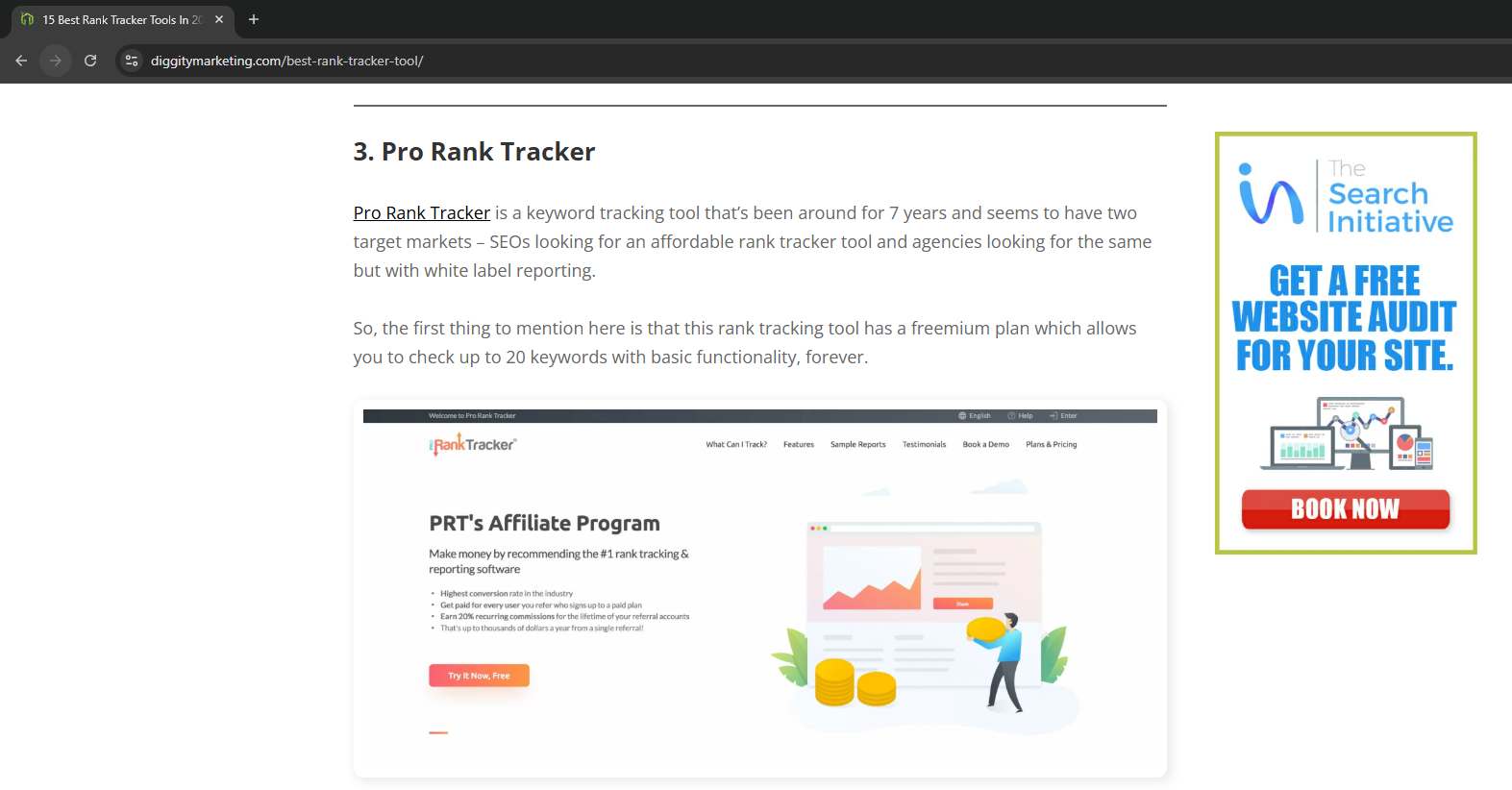
Most companies will want you to write your own placement section, so be prepared to write it yourself, adapting the style to fit the article naturally.
Step #8: Track Your Rankings Where You’re Placed
The next phase is to track how those brand mention placements perform over time so you can double down on what works and nurture the partnerships that drive the most visibility, traffic, and conversions.
Think of this as your AI visibility dashboard. By tracking where your brand is mentioned, how those pages rank, and what results they bring, you turn outreach into an ongoing growth system rather than a one-off campaign..
Tracking these placements helps you:
- Identify which blogs are worth negotiating for higher placement when they rank higher
- See when articles drop in rankings and proactively re-engage editors about updating the content
- Measure the ROI of your outreach in both search visibility and conversions
You can use ProRankTracker to set up rank tracking for each listicle you earn a placement.
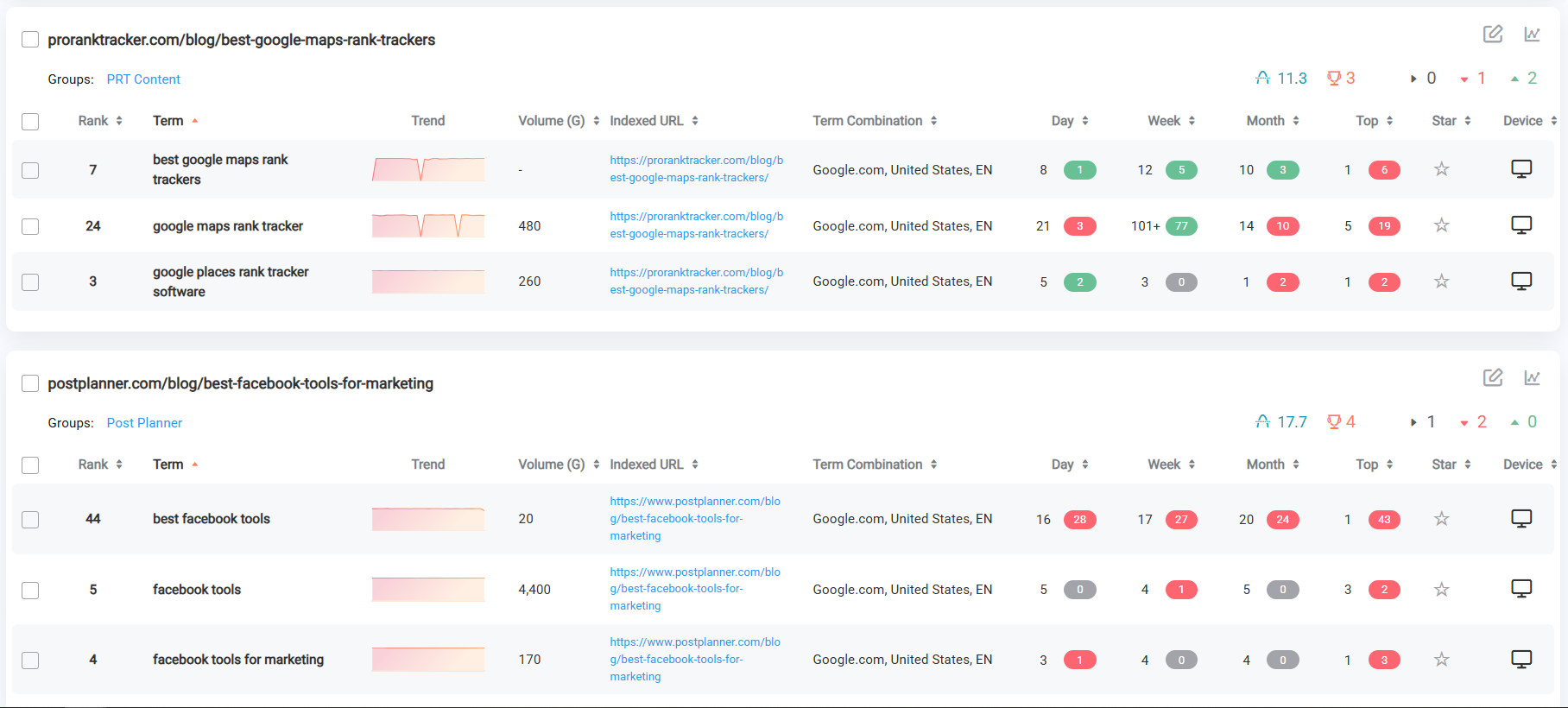
I recommend creating dedicated Projects or Groups to organize the URLs with your “brand mentions.”
This will allow you to create automated reports that keep you in the loop with rank data for brand mention URLs.
You should also try to add a custom UTM tag (e.g., utm_source=blogname&utm_campaign=placement2025) to the URLs from each blog that points back to your website.
This lets you track which blogs drive traffic AND actually generate sales.
For full visibility, connect GA4 and the ProRankTracker API in Looker Studio. This combined dashboard gives you a live view of both ranking performance and business impact.
3 Other Ways to Get Brand Mentions Across the Web
Although running a listicle outreach process like I outlined above will get you the best results (since you maintain a lot of control of how and where your brand is mentioned), you can also try other “brand building” tactics that help get brand mentions more passively.
Here are 3 additional ways to build that brand mention footprint:
1) Use QuuuPromote
If you’re looking for a simple, affordable way to build social buzz around your brand, QuuuPromote is a great starting point. It’s a platform that distributes your content across LinkedIn, Facebook, and X by having real users share it with their audiences.
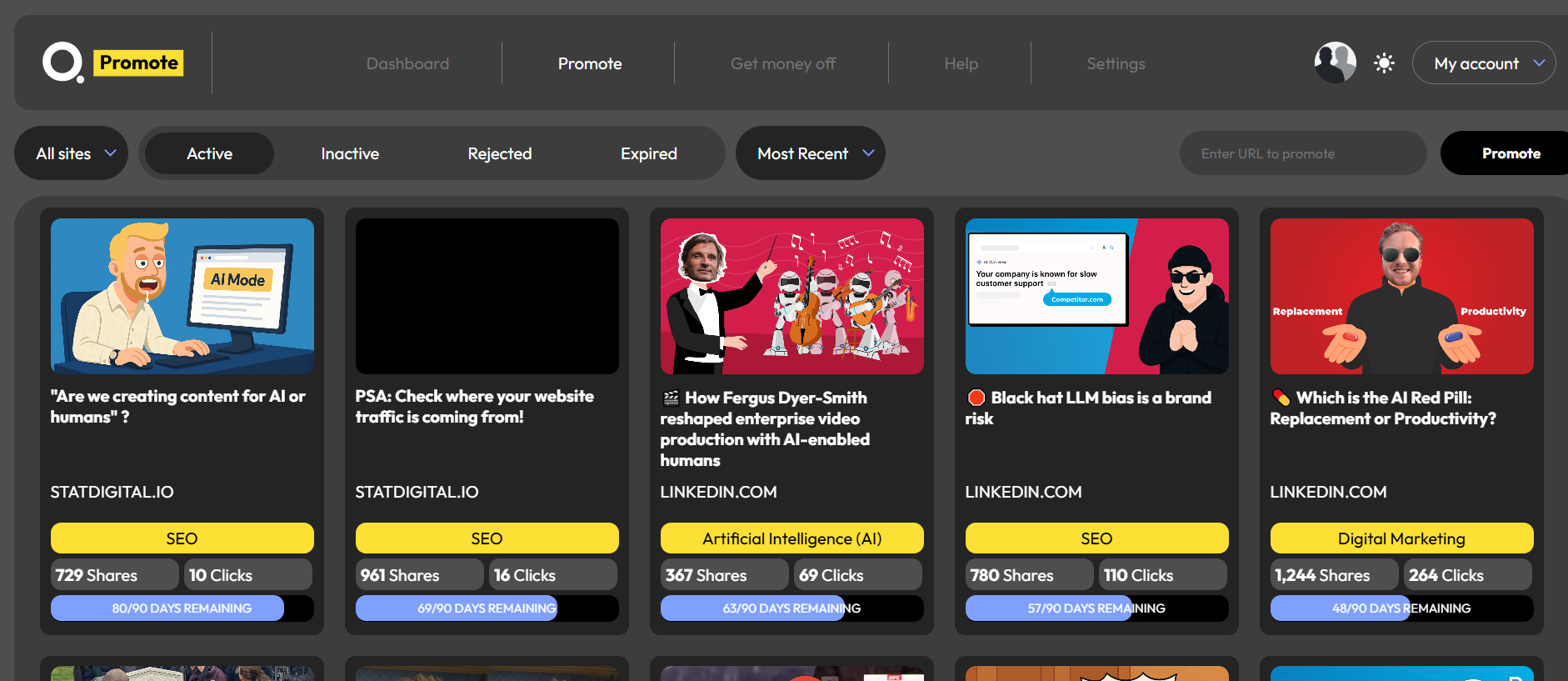
Most of these mentions will come from smaller accounts, but don’t underestimate their value. Each post adds another public data point that connects your brand name with your category — something that large language models like ChatGPT, Perplexity, and Google’s AI Overviews pick up over time.
At just $5 per campaign, QuuuPromote can help you:
- Seed hundreds of small, organic mentions across social media
- Build early credibility for your brand in niche communities
- Signal to AI systems that your product is actively discussed across the web
You won’t always know where the next mention will come from, but for the price, it’s worth running to have a shot at your content getting picked up by other publications.
2) Publish Press Releases
Press releases are one of the most effective ways to earn high-authority brand mentions that get recognized by both search engines and AI systems.
They help your brand appear on reputable news sites and industry publications — exactly the kind of trusted domains that LLMs use as reference material when generating responses.
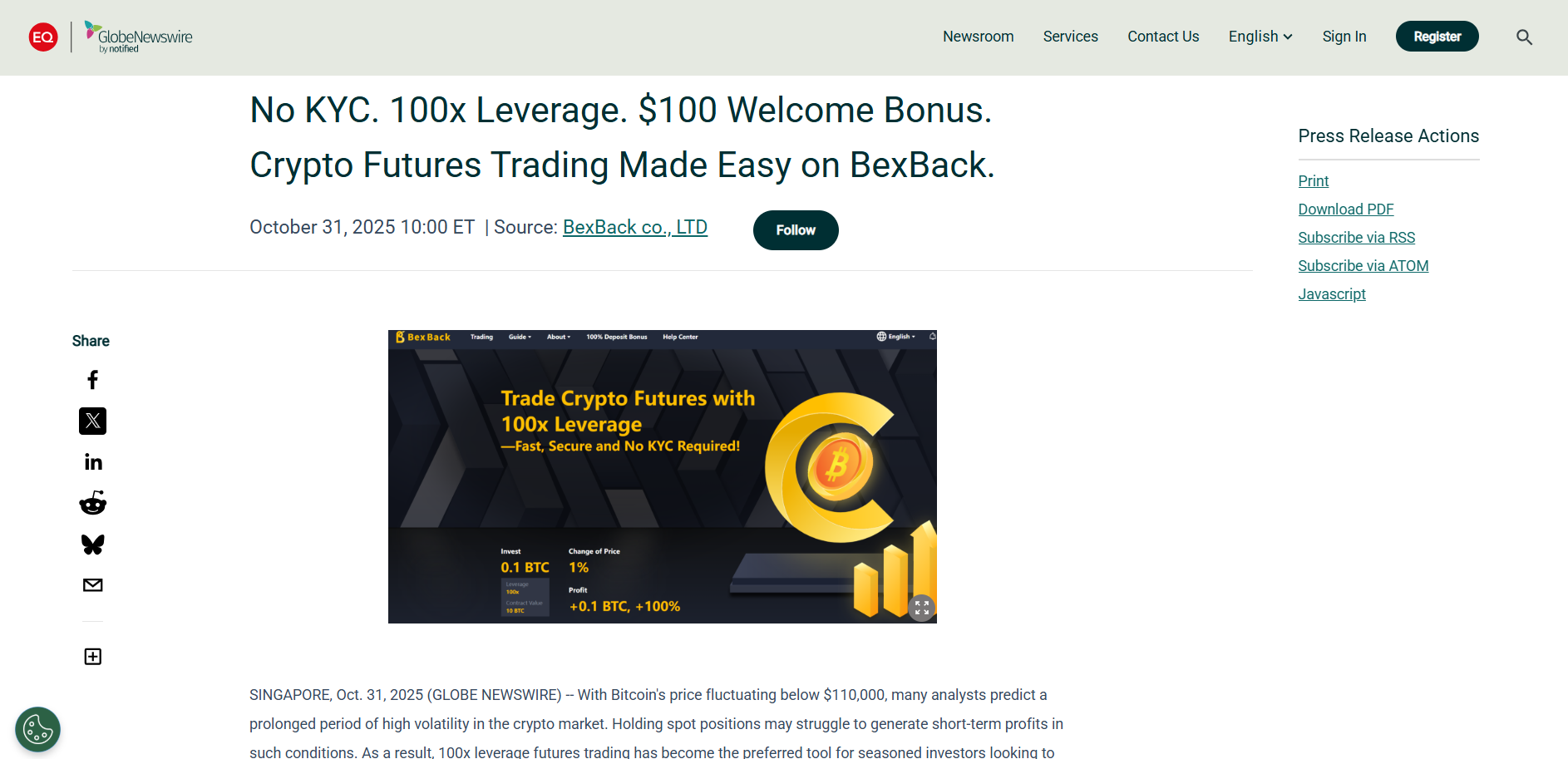
You can hire PR firms that specialize in press distribution for your specific industry. These firms can syndicate your release across hundreds of sites, including well-known outlets such as Yahoo! Finance, MarketWatch, and Business Insider.
But the real value is in the quality of where your PR gets published. Try to land your PRs on the biggest and most trusted websites in your specific industry, because those carry far more influence with LLMs like ChatGPT and Google’s AI Mode. A single mention on a major trade publication can outweigh dozens of low-quality reposts.
Use press releases strategically for announcing product updates, partnerships, funding news, or other company updates.
3) Guest Posts
Guest posting is similar to press releases, but instead of distributing announcements, you’re creating valuable, educational content for other brands’ audiences. The goal is to reach out to respected industry blogs, contribute genuinely useful insights, and naturally weave your product into the story as part of the solution.
Start by identifying blogs your target audience already reads — ones that publish how-to guides, expert tips, or opinion pieces in your space. Then, pitch them a topic that bridges their readers’ interests with what your product helps solve.
For example:
- If you offer SEO tools, pitch a post like “How to Simplify Client Reporting Without Losing Accuracy.”
- If you sell staff scheduling software, write “The 5 Most Common Scheduling Mistakes (and How to Fix Them Fast).”
Each guest post earns you:
- A credible brand mention in a trusted, topical environment
- A natural contextual backlink that reinforces authority
- Broader visibility that helps AI systems associate your brand with your category
When done right, guest posting creates a win-win: the host site gets fresh, valuable content, and you get another high-trust brand mention.
Ready to Start Getting More Mentions from AI?
AI-driven search is changing the rules of visibility. It’s no longer enough to just rank high — you need to be mentioned in the right places online so that LLMs recognize your brand as a trusted entity.
Start tracking your brand’s mentions and keyword performance today with a ProRankTracker test drive. You’ll get access to daily rank updates, advanced reports, and tools like Insta-Check for just $4.