

18 Ways to Use AI to Improve Your SEO Rankings
Curious about how to use AI to improve your SEO rankings?
You’re not alone.
AI has been dominating conversations about SEO recently, so I wanted to help you incorporate AI into your SEO strategy by giving you these 18 tested AI SEO use cases.
Want to save yourself a TON of time and improve your ranks simultaneously?
Read on!
I’ll cover:
- Content Brief Generation
- Draft SEO-Focused Articles
- Target AI Web Search
- Brainstorm Future Content
- Trend Spotting for Fresh Content
- Find New Keywords
- Generate Images
- Draft SEO-Optimized Metadata
- Optimize Google Business Profile Listings
- Programmatic SEO for Similar Pages
- Translate Content to Rank for International Keywords
- Competitor Research and Analysis
- Internal linking suggestions
- GA4’s AI Insights
- Identify Ranking Anomalies Faster
- Cluster Performance Analysis
- Detect Intent Shifts in SERPs
- Automated Content Refresh Triggers
- How to Track Your SEO Progress Using ProRankTracker
Content Brief Generation
One of the most important things you can do for your SEO is to increase the consistency of your content.
After all, posting high-quality content mixed in with low-quality content won’t help you consistently increase your ranks.
Using an AI like ChatGPT can help you draft a content brief that you can edit and publish to your writing team to standardize and improve your SEO-focused content.
For example, you could feed ChatGPT your best articles and tell it to generate a content brief.
When you do this, be specific. Tell your AI tool everything you want it to include in your content brief:
- Topic and focus
- Target audience
- Keywords
- Sentence structure and style
- Format and length
- Image best practices
- Internal/external linking
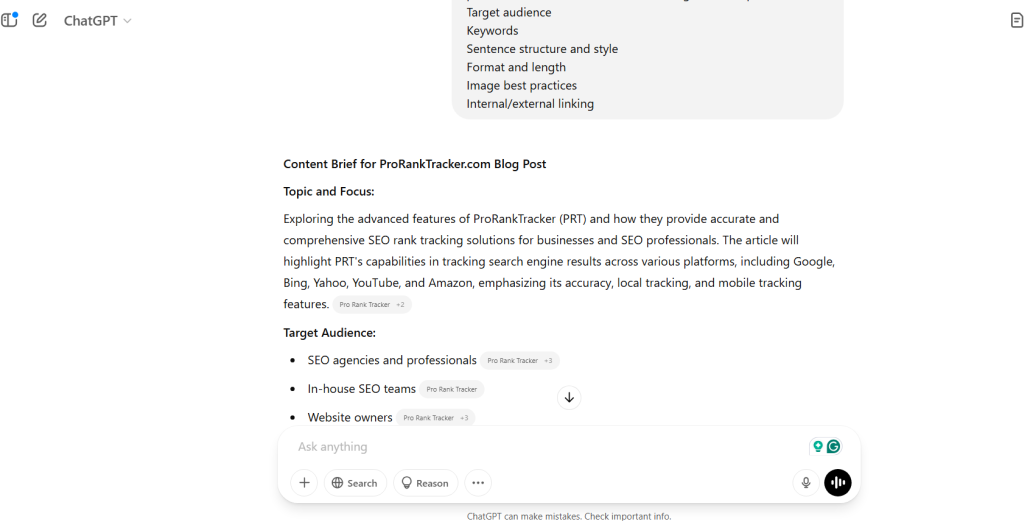
Think about what is important to you and mention it to your AI tool when it generates your content brief!
Draft SEO-Focused Articles
One of AI’s most prominent time-saving features for SEO workers is its ability to draft entire articles in seconds.
If you use AI to draft articles, you can maximize its effectiveness by feeding your AI tool with customer insights and subject matter expert (SME) interviews. You can also ask it to find insights from around the web.

However, remember that AI should not be relied on for all of your article’s insights. Your content must incorporate YOUR unique perspectives and real-world experience to stand out.
By combining AI-generated drafts with expert insights, brands can ensure content is optimized for search engines and valuable to readers.
Target AI Web Search
AI web search is becoming more popular by the day, so it’s essential for your business to rank on those AI searches.
But how do you do that?
We’ve done a lot of research on this topic. The short answer is to try your best to rank as high as possible on the regular SERPs.
However, a strong correlation exists between ranking high on Google and Bing and the corresponding likelihood that you’ll appear on an AI web search.
Note that ranking on Bing is more critical than ranking on Google if you want to appear on a ChatGPT web search.
Brainstorm Future Content
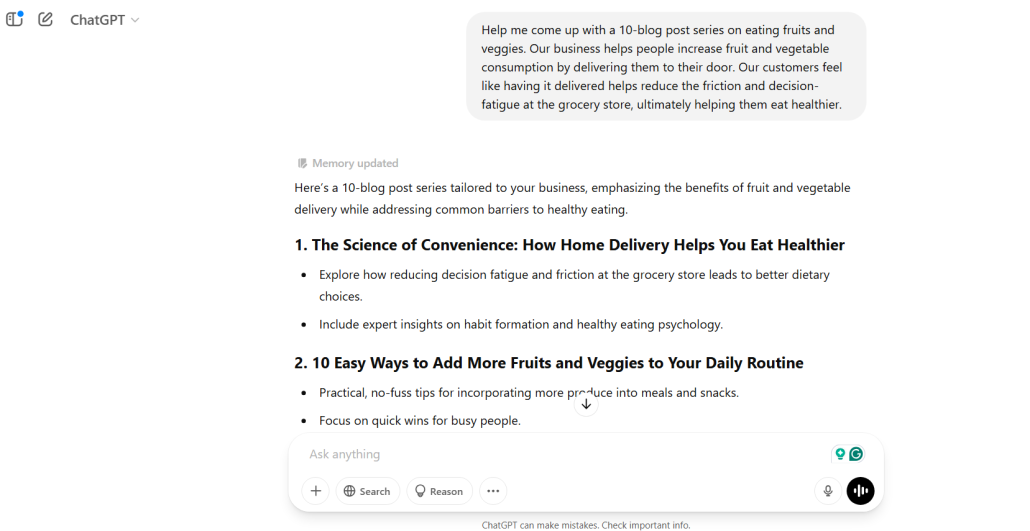
AI can generate many new content ideas in just a few seconds. If you give it the right info, it can even give you solid direction for much of your future content.
In fact, AI is actually a LOT better than you (and any other human being) at quickly analyzing a lot of data and using it to create strategic plans.
How do you get it to do that?
Feed it company, product, and customer info and customer pain points and goals to have it quickly develop high-converting topic ideas (that align closely with your business’s goals).
Trend Spotting for Fresh Content
The internet is constantly changing, and staying up to date on what’s trending can feel like a full-time job.
At least, it used to feel like that before AI came along.
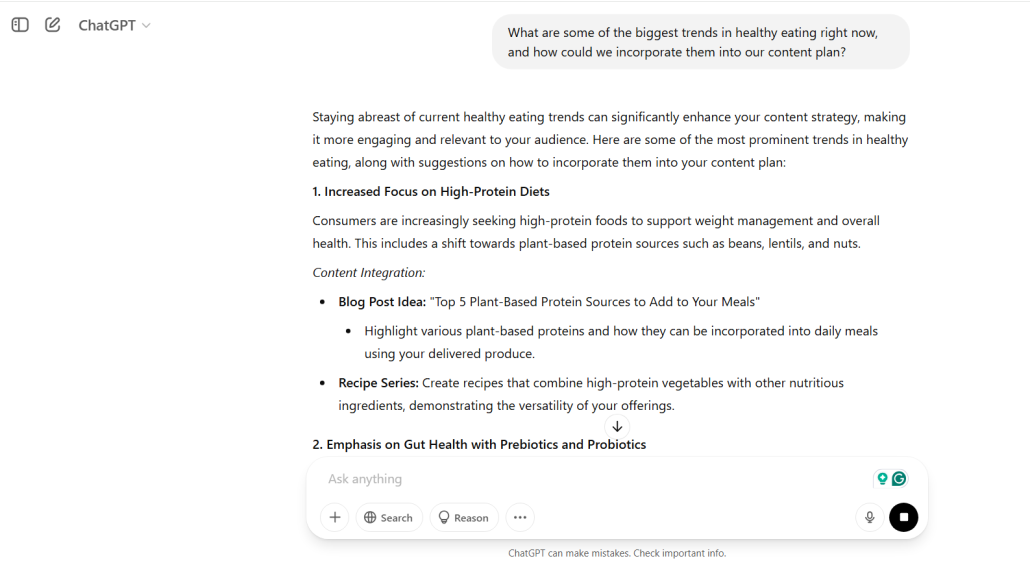
Now, all you have to do is ask your favorite AI tool to create a list of trends in your industry.
Take this one step further by having AI discuss how you can incorporate those trends into your future content (again, this works best if you tell AI some of the main details of your business, customers, and content).
Find New Keywords
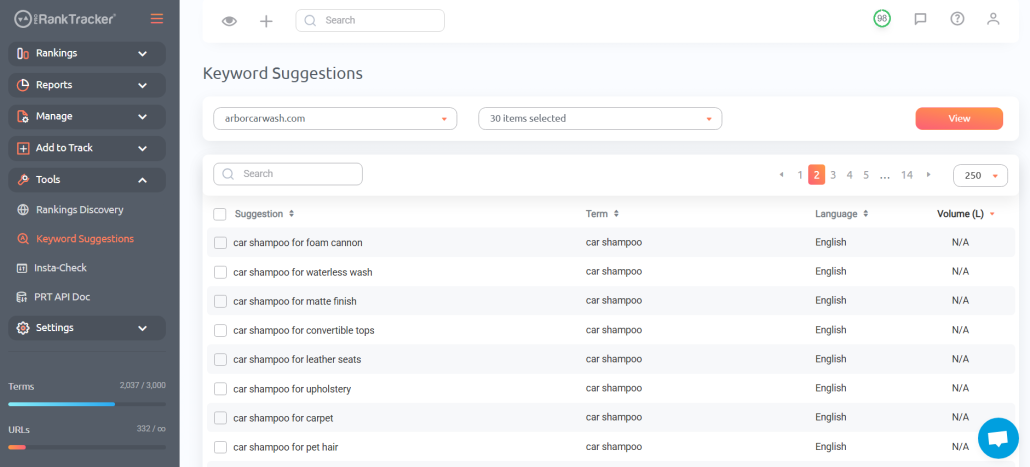
Your keywords make or break your SEO success, so finding an AI tool to help you generate new high-value keywords is worth its weight in gold (if software weighed anything).
ProRankTracker has a keyword tool called Keyword Suggestions that considers your current keyword strategy and uses it to suggest new keywords that will fit nicely into your plan.
Generate Images
Believe it or not, the images you include in your article can directly and indirectly impact your SEO ranking.
As AI image generation continues to improve, it’s now possible to include fully AI-generated images in your articles.
Chat-GPT has DALL-E, which can produce high-quality images based on your prompts. Several other tools exist, but DALL-E provides a good combination of quality and ease of use.
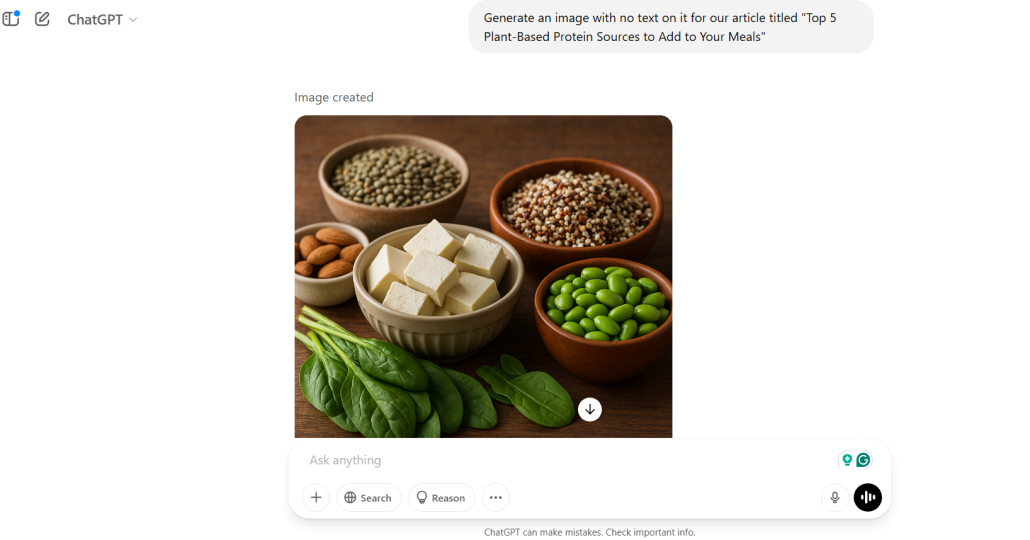
Alt-text for your images can also have a profound impact on your ranks. Try uploading your pictures to ChatGPT or another AI tool and have it generate SEO-focused alt text.
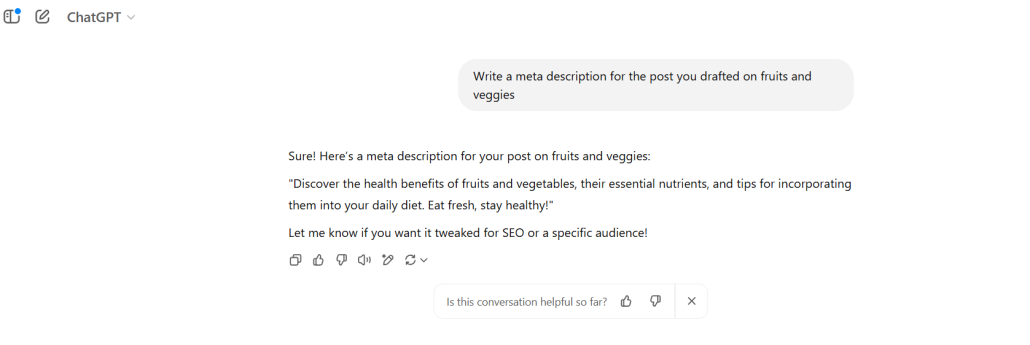
Draft SEO-Optimized Metadata
AI is excellent at performing repetitive tasks like writing metadata.
The best way to get AI to perform this task well is to upload some of your best meta titles, descriptions, and tags to learn what metadata formulas perform well for your content.
Then, simply feed it your new content piece and have it write the meta description, tags, and title.
Optimize Google Business Profile Listings
AI tools like ChatGPT can quickly analyze Google Business Profiles and provide targeted recommendations about optimizing them.
For example, I asked ChatGPT to help me optimize the Google Business Profile listing of a random zoo, and it had a ton of suggestions.
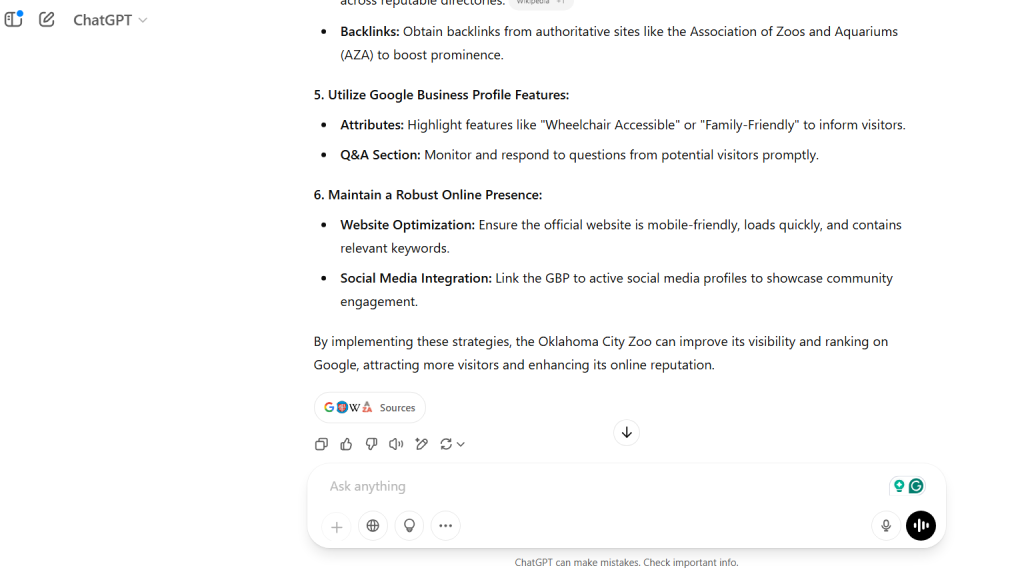
The great thing about using ChatGPT or another AI tool for this type of work is that it can instantly search the web for best practices and offer niche details to help you improve your listing.
For example, ChatGPT recommended adding features on Google to highlight wheelchair accessibility–something it knows is valuable for zoos to highlight for their potential visitors.
Programmatic SEO for Similar Pages
If you have multiple pages on your website (or if you run multiple websites about similar topics), you can use ChatGPT to help you quickly apply the SEO strategies used on one page to the other pages you run.
This is particularly applicable if you run a site with many different pages for almost identical search terms. One typical example is review sites like Yelp, which has thousands of landing pages for the keyword “Best restaurants in [city name here].” Each keyword only varies by 1 word, and the resulting pages are almost identical.
In this case, you could upload the content and metadata of one of your pages and use AI to use programmatic SEO to apply the same SEO settings to every page simultaneously.
Doing so can save you tons of time going back through your page’s SEO and manually applying it to other similar pages.
Translate Content to Rank for International Keywords
Your keywords don’t translate perfectly into other languages, meaning the translated versions of your web pages need to target unique keywords while remaining faithful to the original page.
The problem?
You can’t tell Google Translate to optimize your translated text for SEO.
The solution?
ChatGPT and other AI tools like Weglot are perfectly capable of handling that request.
Here’s how to do this in ChatGPT:
1. Identify the equivalent foreign language terms to your primary keywords.
2. Copy/paste your web page content into ChatGPT or another generative AI tool.
3. Tell ChatGPT to translate your web page into your target language, and also include in your prompt what precise keywords you want to include in the translated version.
In Weglot, the process is even more straightforward. They will create an SEO-optimized translation for you that ensures your page is successful across the globe.
Competitor Research and Analysis
Competitor research is one of the MOST critical SEO tasks you can perform. After all, your competitors are the only things keeping you from occupying a top spot on your targeted SERPs!
AI can help with this, too.
An AI tool like ChatGPT can analyze websites and their content, making it easy to ask questions about your competitors.
For example, try asking some of these questions:
- What are the main keywords targeted by [your competitor’s new blog post]
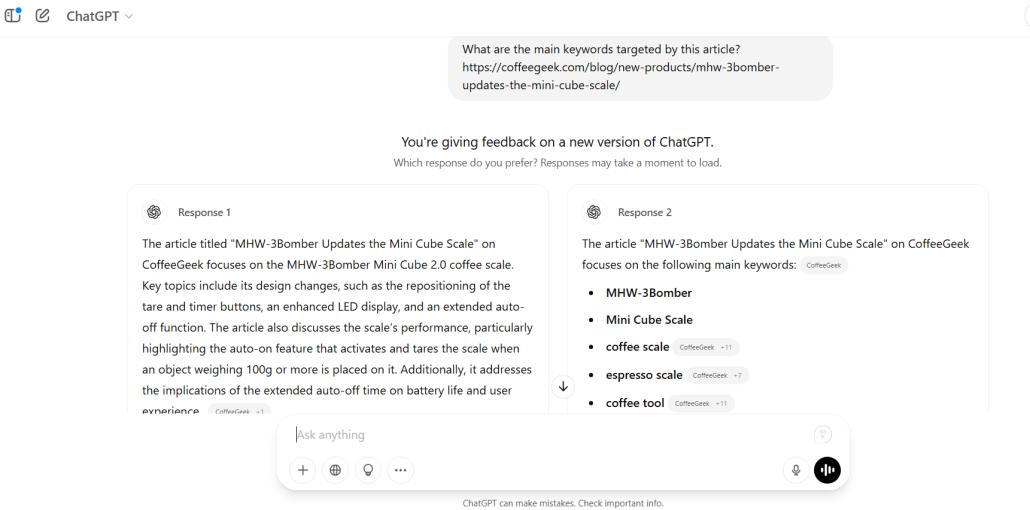
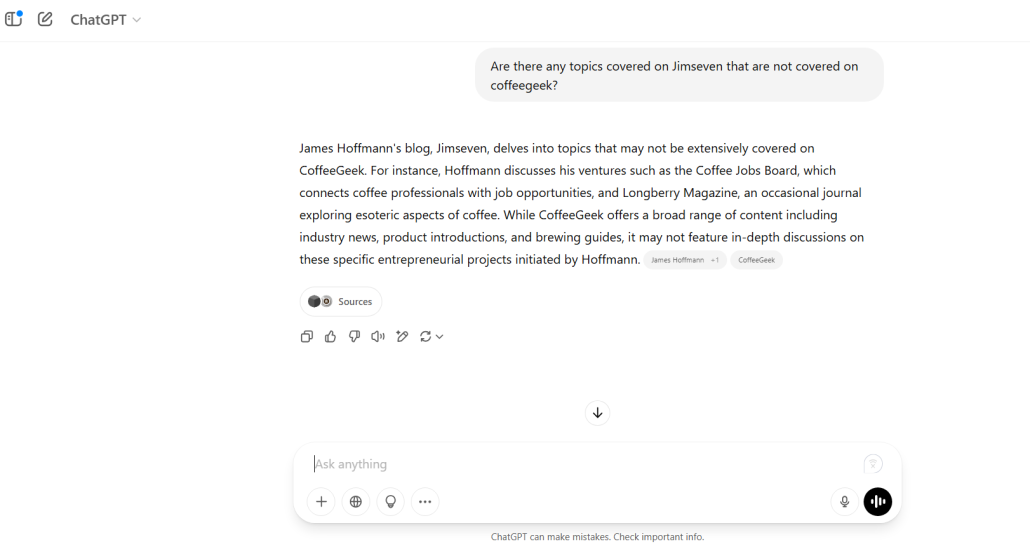
- Are there any topics covered by [your competitor’s] website that aren’t covered on [your business’s] website?
- Generate a list of all the blog articles published by [your competitor] in the last 3 months.
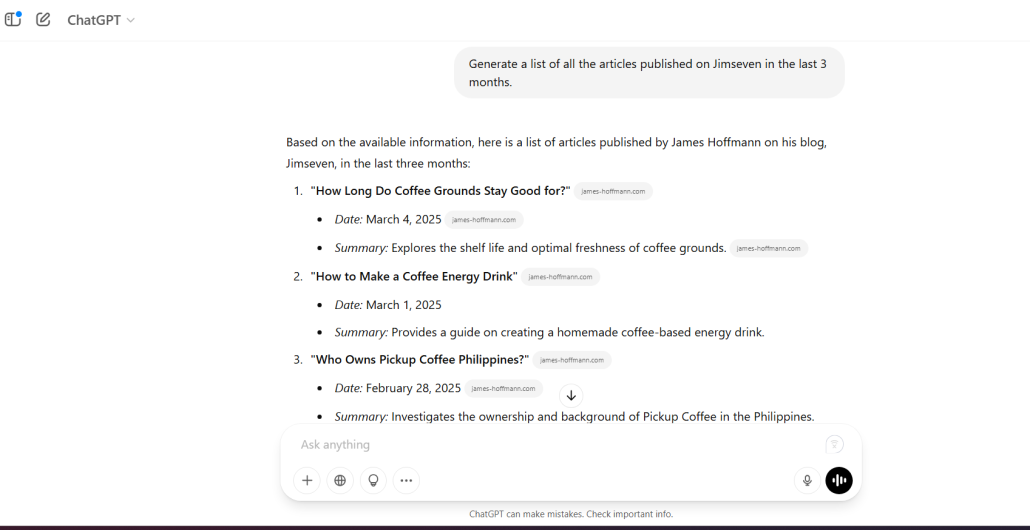
There are tons of ways to do competitor research with AI, so get creative!
Internal Linking Suggestions
You can increase your website’s topical authority (which helps improve your ranks) by increasing your internal linking.
But internal linking can be difficult–especially as your content library grows.
Use AI to help. You can upload an entire article into ChatGPT and tell it to make suggestions for where you can add internal links to your website.
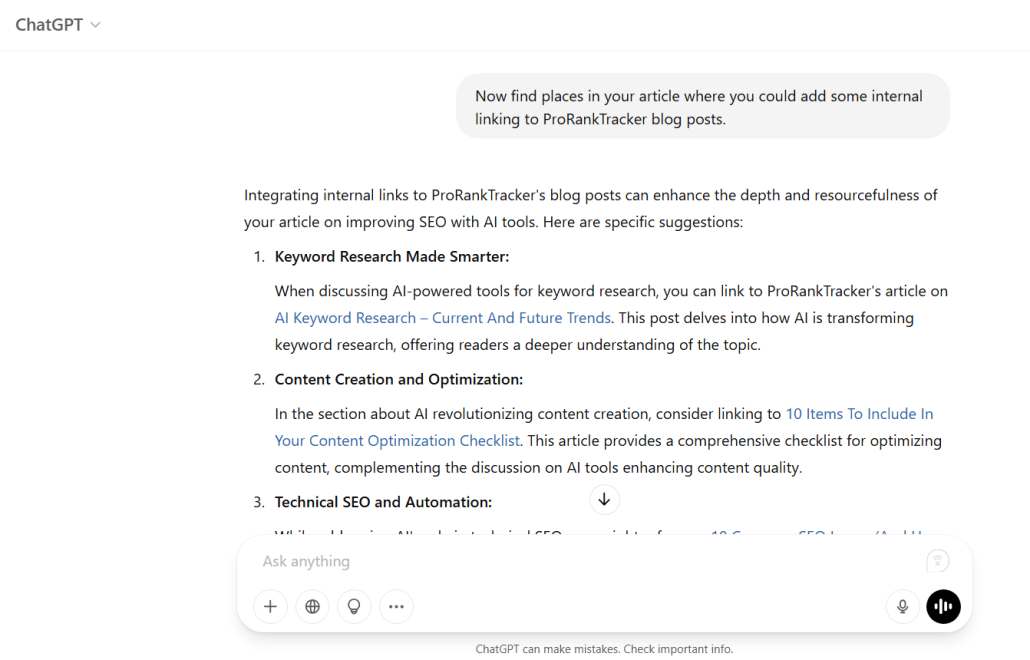
Alternatively, you can add your most important links into a spreadsheet, then upload it into ChatGPT and ask it to find a place in your new content to include those links.
Either way, AI can get internal linking done much faster than you can by yourself.
GA4’s AI Insights
Google Analytics 4 is a powerful (and free!) tool that offers AI-powered insights into your website’s KPIs like:
- Visitor engagement metrics
- Page performance data
- Ad performance
- Many other data points
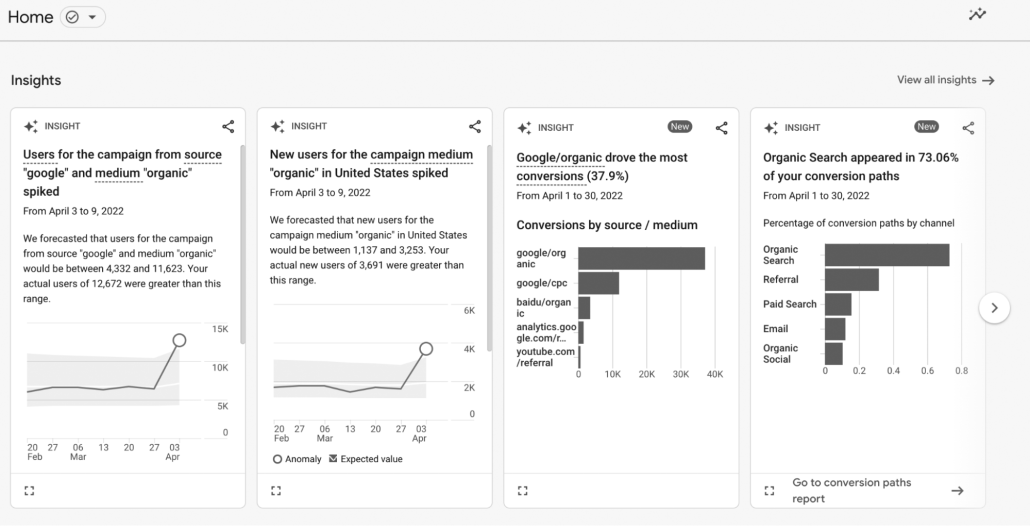
These insights can help you identify your most important strategic changes to maximize traffic and conversions.
You can access these insights on your home page by scrolling down to the section titled “Insights.”
Identify Ranking Anomalies Faster
Sometimes, ranking changes are subtle and hard to detect (especially if you’re wading through tons of ranking data).
AI can help with this by analyzing large amounts of ranking data and generating insights in seconds.
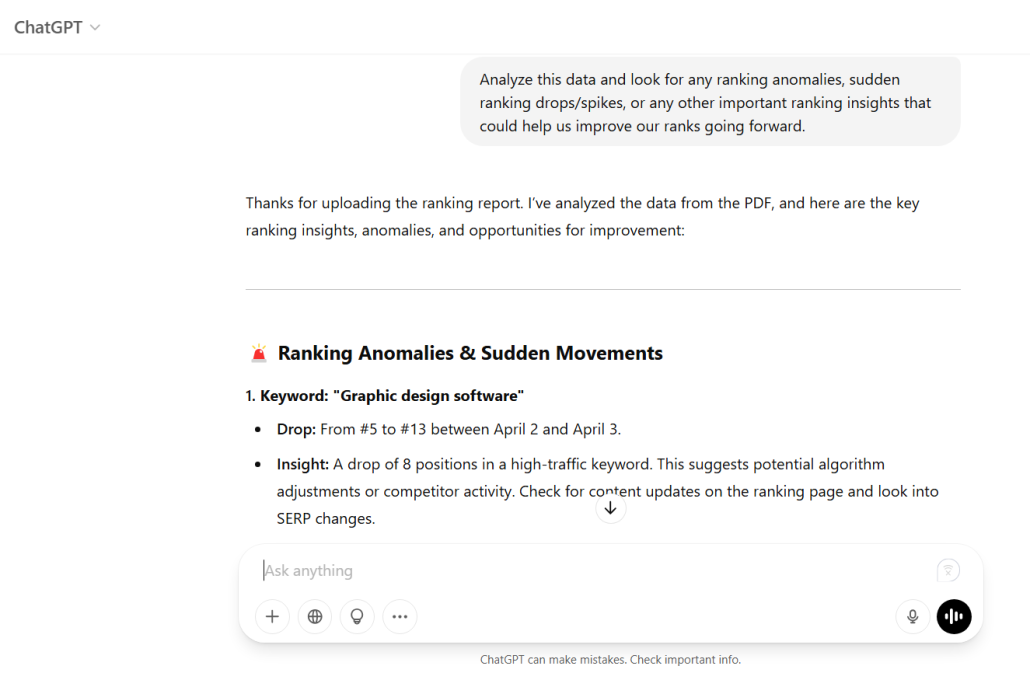
One easy way to accomplish this is by generating PDF reports using a rank tracker like ProRankTracker, then uploading those reports into ChatGPT and asking it targeted questions like:
- Detect drops or spikes in keyword positions in the attached data
- Flag any volatility or other ranking patterns in the attached data
- (After uploading data from ProRankTracker and traffic data from GA4) Find which ranking changes impacted our website traffic most by comparing the attached ranking data and traffic data.
Cluster Performance Analysis
ProRankTracker has a feature called Projects that allows you to group your keywords and URLs in any way you want.
This could be based on:
- Target audience
- Topic
- Search intent
- Competitor
By creating Projects with specific topics or groups, you can then share reports of those Projects with ChatGPT and ask it to conduct a cluster performance analysis to help you quickly identify high-performing or underperforming topic clusters.
For example, I uploaded a “Projects Summary” report into ChatGPT and asked it to help me identify which groups were doing well and which needed some more attention.
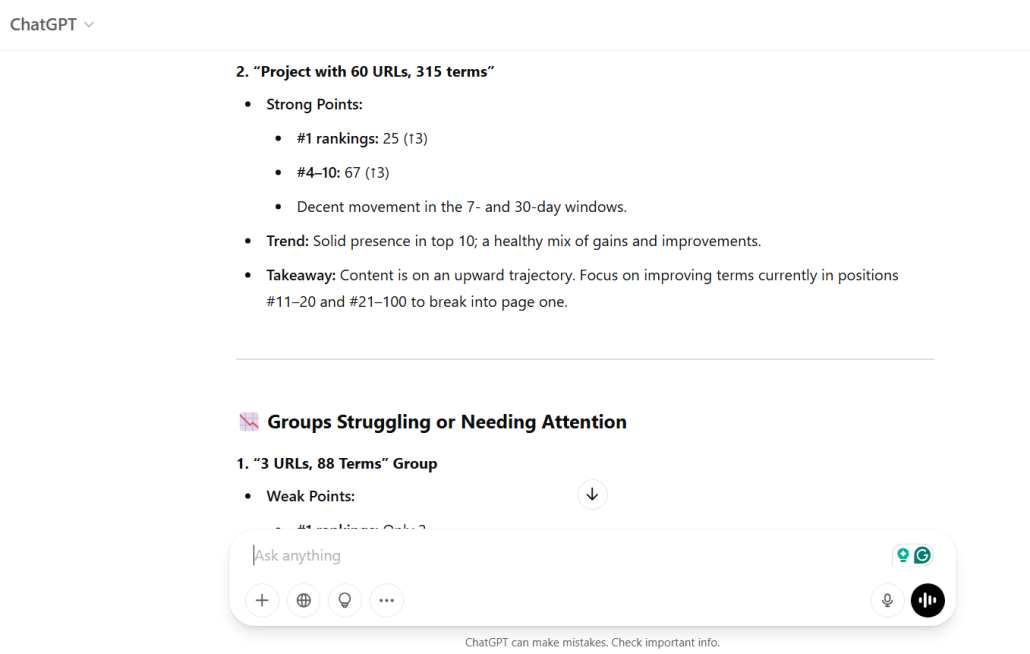
ChatGPT’s response helped me quickly see which content groups need attention, but you can use this same strategy for any kind of cluster performance analysis.
Detect Intent Shifts in SERPs
If you want to make it to the top of the SERP, you must match your targeted keywords’ search intent.
The problem is that keywords undergo periodic search intent fluctuations. For example, the top pages could switch from informational to transactional or from listicle to product review format.
This means you must periodically review your keywords to ensure you match the top search intent.
AI can help with this.
Just conduct a top 10 report in Insta-Check for your desired keyword, location, search engine, device type, and language.
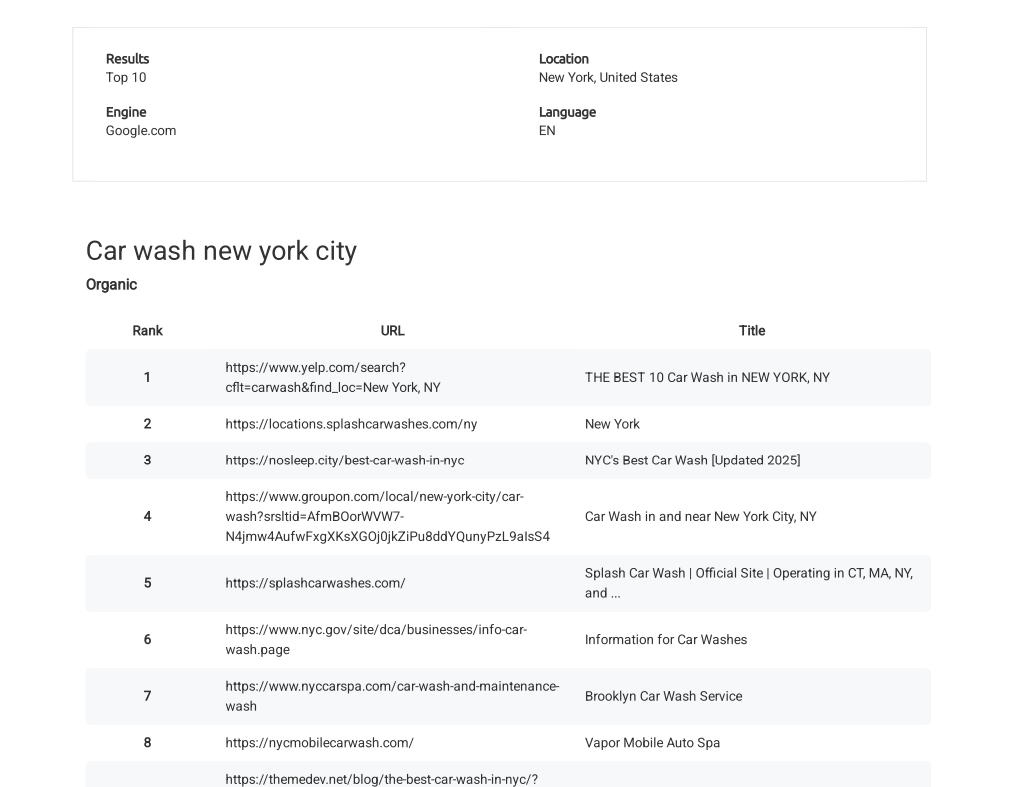
Then, upload it to ChatGPT and ask it to identify the top results’ primary search intent and format.
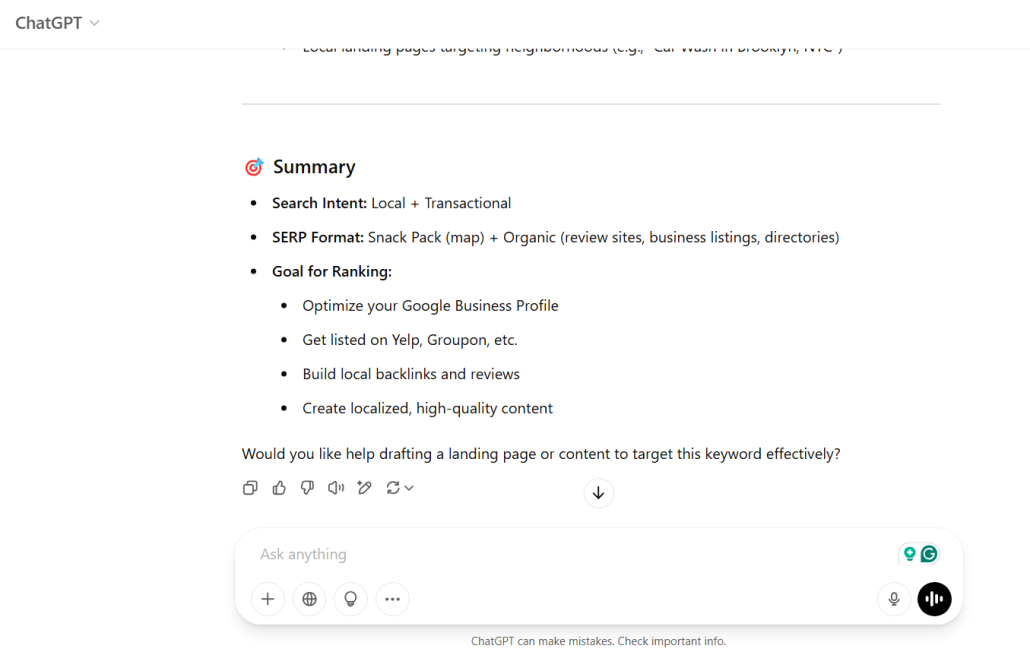
ChatGPT gave me a ton of helpful information about search intent and some optimization tips. Using this method can save you TONS of time on SERP research and help you refresh older articles to match new search intent.
Automated Content Refresh Triggers
ProRankTracker’s daily breakdown reports allow you to see the ranking trends of your pages over time. These reports are great for helping you catch problems before they become catastrophes–they’re especially effective when you combine them with the power of AI.
Here’s how:
1. Generate and download a PDF or CSV daily breakdown (or weekly/monthly breakdown for a less granular analysis) report of your main keywords and the URLs you’re tracking for them.
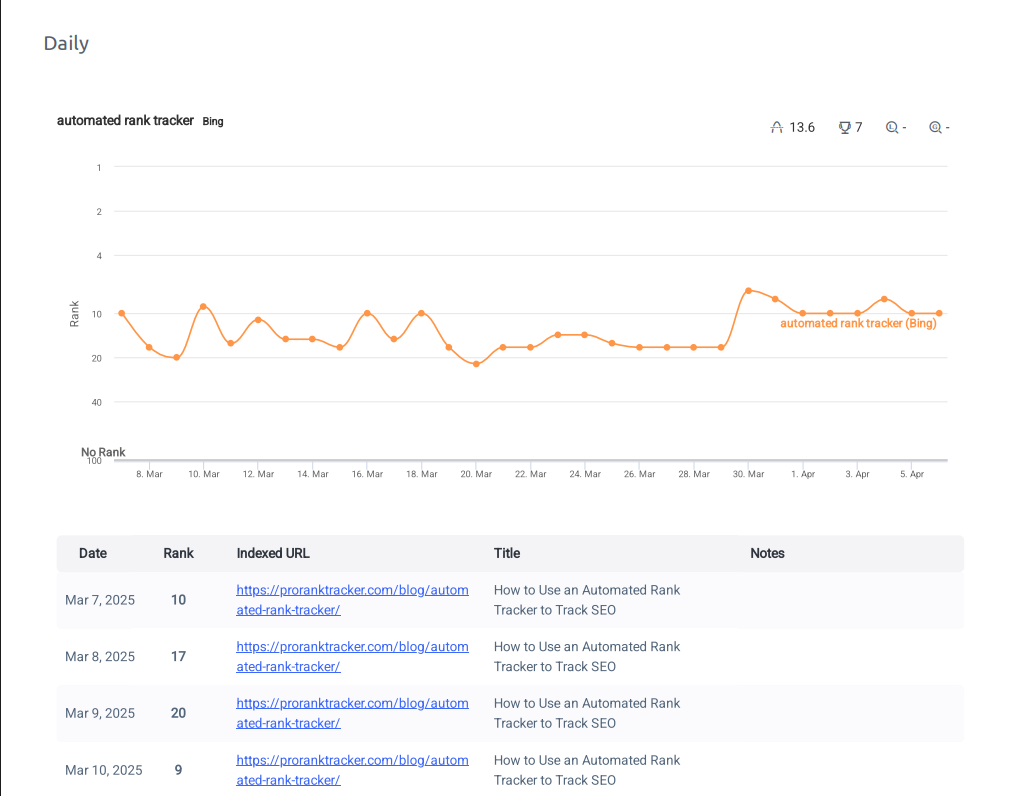
2. Upload the report to ChatGPT.
3. Tell ChatGPT to help you identify keywords at risk of experiencing large ranking drops based on recent ranking trends.
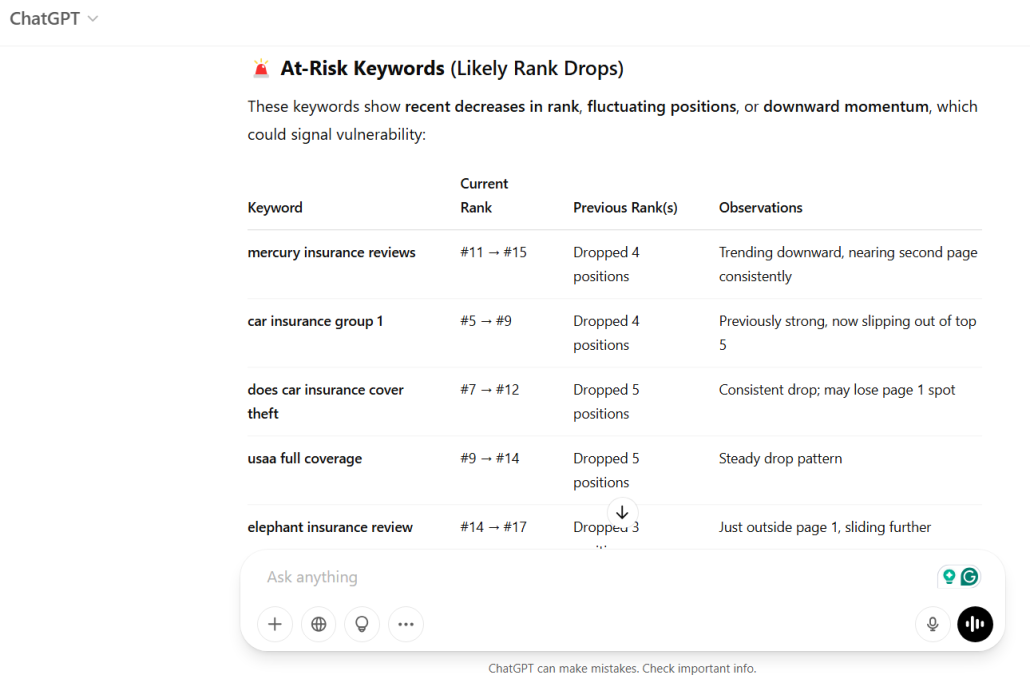
4. Ask ChatGPT to make suggestions on how to refresh the content to recover on the SERPs.
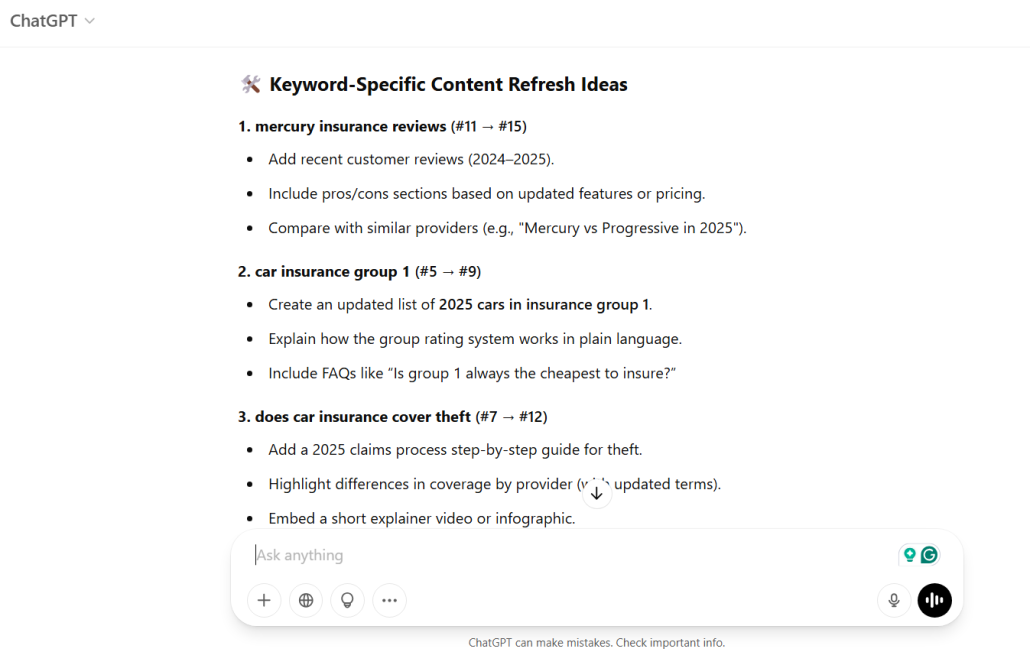
Set your ProRankTracker reports to be sent to your email inbox regularly so you can frequently conduct this type of analysis and keep your content fresh.
How to Track Your SEO Progress Using ProRankTracker
Before I wrap this article up, let’s briefly discuss how to use ProRankTracker to keep up with your SEO ranks so you can take advantage of all the strategies listed above.
Using a daily rank tracker like ProRankTracker helps you generate large amounts of data for analysis, giving you enough information to feed AI so it can give you good analysis and suggestions.
If you aren’t already a ProRankTracker user, I encourage you to sign up for a 14-day free trial so you can follow along with this section.
Establish Projects
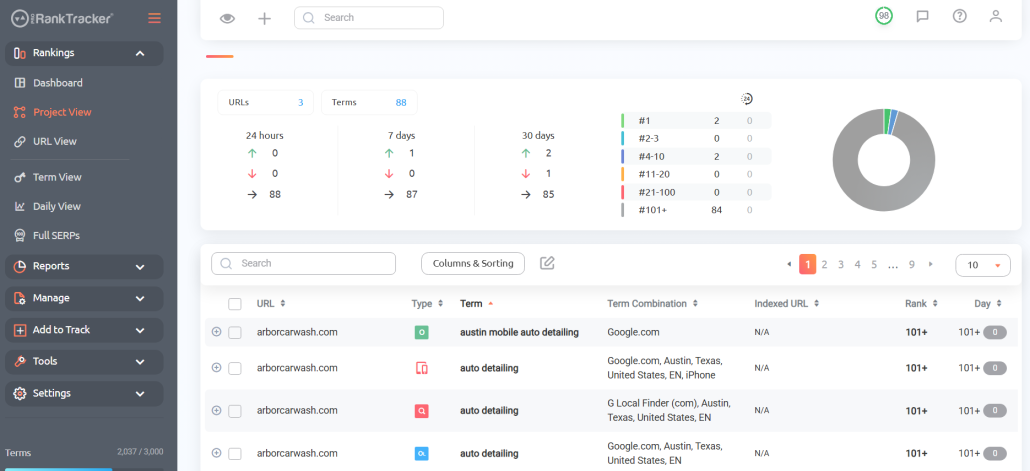
After you’ve uploaded your URLs and keywords into ProRankTracker, you should first organize everything into Projects.
You can organize your data into Projects however you want:
- Topical (like the one below I created for car washes)
- Competitors
- Location/language/search engine/device type
- SEO campaign
Organizing your data into Projects helps you take advantage of the suggestions above, like using AI for cluster performance analysis. Clumping your data into discrete groups ensures you can target your use of ChatGPT/AI and quickly generate helpful analysis.
Use Rankings Views
ProRankTracker organizes all your data into 6 Rankings Views:
- Dashboard
- Project View
- URL View
- Term View
- Daily View
- Full SERPs
Each view gives you a different angle on your ranking data, helping you stay entirely up to date.
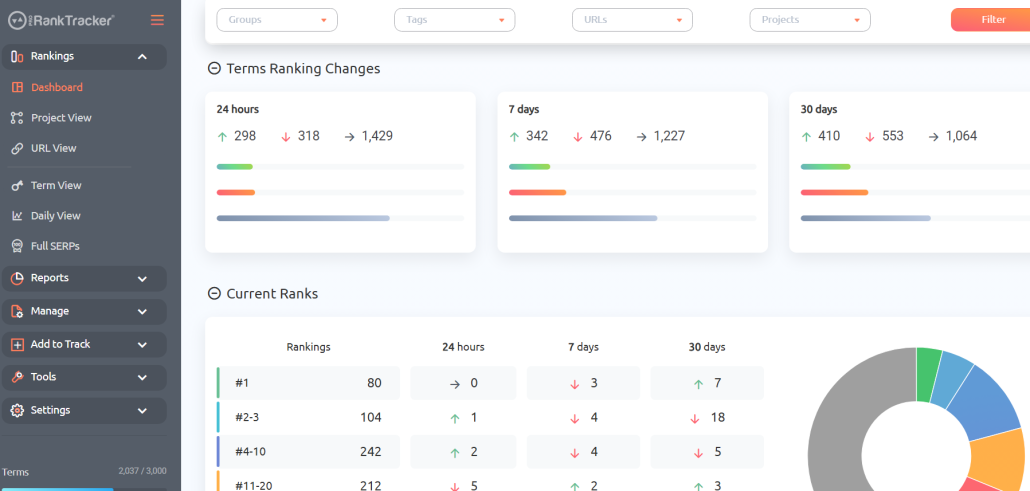
Unfortunately, ChatGPT can’t tell you everything you need to know about your ranks and how to improve them.
ProRankTracker gives you the data you need to use AI and other analysis methods effectively. Gather your ranking data here to guide your use of AI using the methods above.
Generate Reports
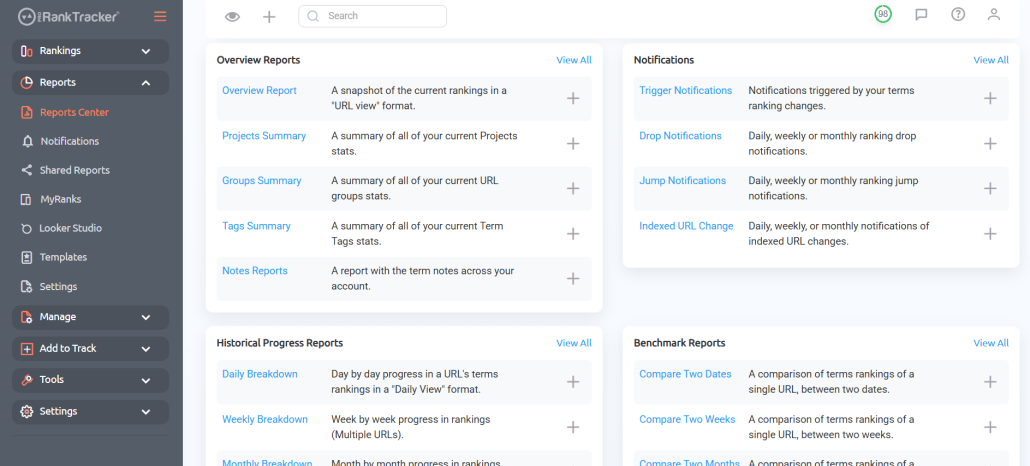
If you want ChatGPT or another AI tool to analyze your ranking data, you need to get them into a format that AI can read.
That’s where reports come in.
Reports allow you to gather specific sets of ranking data in an exportable format, like a PDF or CSV.
ProRankTracker offers more than 20 types of automatable reports that help you stay current on your ranks and transfer your data to your AI tool for analysis, as demonstrated above.
Conclusion
Undoubtedly, AI has a place in your SEO toolbox, but figuring out where to fit it into your strategy can feel overwhelming.
Start with the 18 methods listed above!
You should quickly see AI becoming a valuable and irreplaceable part of your SEO ranking strategy–especially if you use it with a powerful rank tracker like ProRankTracker.
Good luck on the SERPs!

