Google SERP Features You Should Be Tracking and Optimizing
Ranking number one on Google sounds like the end of the story.
Then you open the results page and see an AI Overview, a local pack, a video carousel, and a row of products sitting above that number one result.
Suddenly, first place feels much farther down the page.
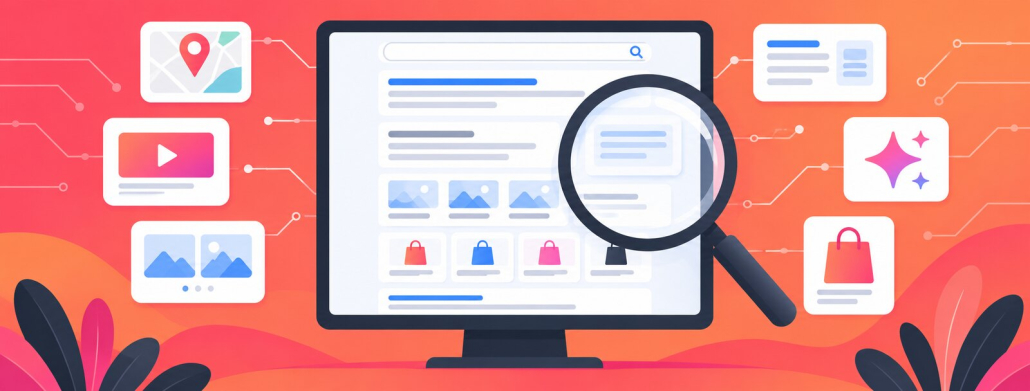
Google’s results are no longer ten blue links arranged in a neat list. They are a mix of organic results, AI answers, maps, videos, products, images, featured snippets, and rich results. Two websites can hold similar organic positions and receive completely different visibility.
That changes what you need to track.
Why does this matter? Because these features change what “ranking” looks like before they change the number in your report. In March 2025, Pew Research Center found that 18% of the Google searches in its study produced an AI summary. On those pages, users clicked traditional results about half as often as they did when no AI summary appeared.
If you record only one traditional position, you may miss the result your customers actually see, use, and click first. Let’s look at the SERP features that matter, how to optimize for them, and how to measure each one without turning the report into a mess.
What Are Google SERP Features?
A SERP feature is a result or experience that goes beyond a standard organic listing.
Examples include:
- AI Overviews
- AI Mode, a separate Google Search experience
- Featured snippets
- Local 3-Pack results (Snack Pack)
- Local Finder and Google Maps results
- Video results
- Product and shopping results
- Image results
- Rich results supported by structured data
Some features provide an expanded version of your page. Others create an entirely different search experience. The right tracking method depends on the feature.
Why SERP Features Change Rank Tracking
Imagine your page ranks fourth organically. On paper, that looks strong. On the real results page, an AI Overview, a local pack, and a video section may all sit above it.
Your organic position is still fourth, but your visual position is much lower.
The opposite can also happen. Your page may rank below a competitor organically but appear as a cited source in an AI Overview, while your Business Profile holds a top local position.
That is why modern search reporting needs separate views for the result types that matter. One blended number cannot explain the full picture.
The Google Search Features You Should Track
1. Organic results
Traditional organic rankings remain the foundation. They show where a URL appears for a keyword, device, language, and location.
Track deeper than the first ten results. A page moving from position 73 to 24 has made meaningful progress even though it has not reached page one.
Daily top-100 tracking also helps you catch sudden drops, new entries, and fluctuations.
2. Google AI Overviews
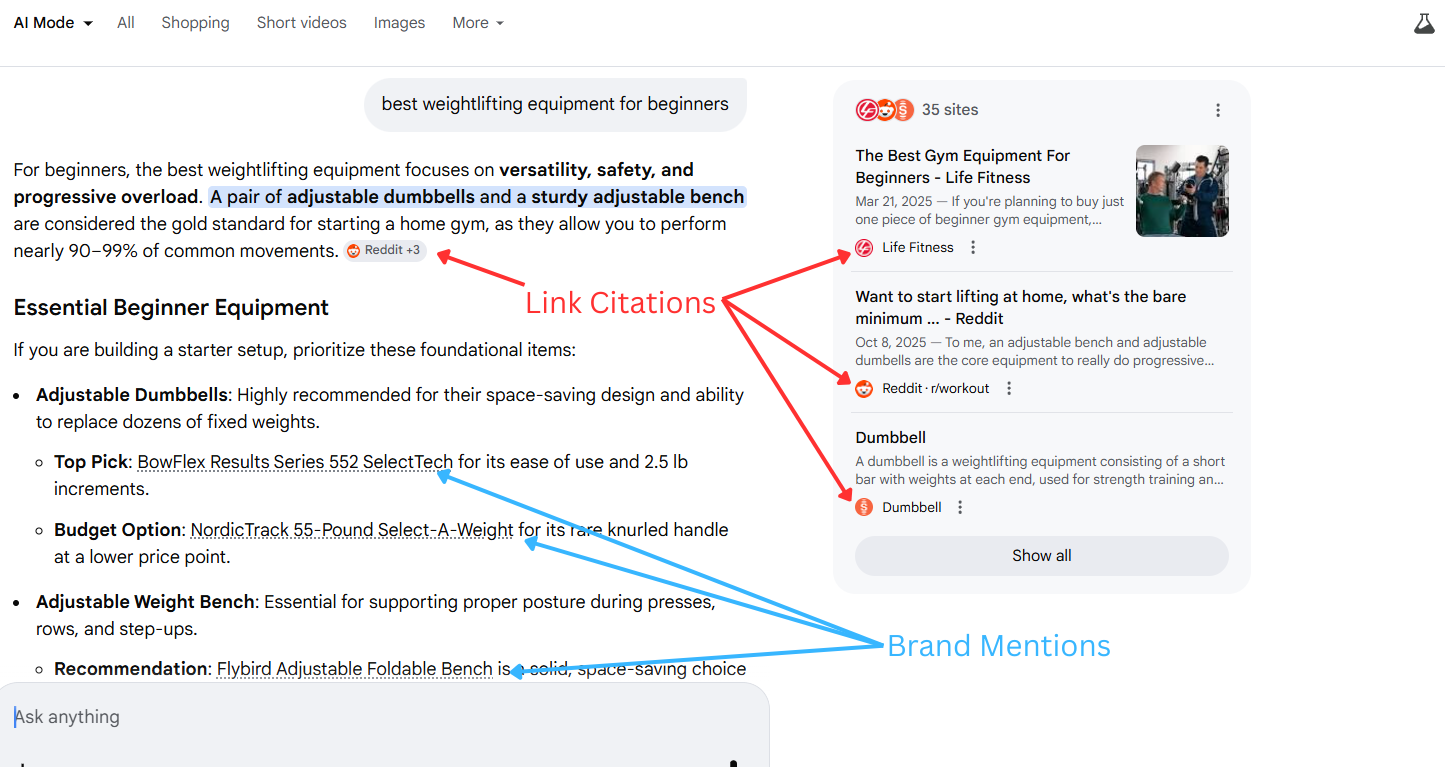
AI Overviews summarize information directly on the results page and include supporting links when Google decides the experience adds value.
Google says there are no special technical requirements for appearing as a supporting link. A page must be indexed, eligible to appear with a snippet, and follow the same helpful-content and technical SEO principles used for Search.
Track two signals:
- Mentions: Whether the answer names your brand or product.
- Links: Whether it cites or references one of your URLs.
Search Console includes AI Overview traffic inside the Web search type, so prompt-level tracking provides detail that Search Console does not separate.
3. Google AI Mode
AI Mode is designed for questions that require exploration, reasoning, or comparison. It can run related searches across subtopics and present a detailed answer with supporting links.
Strictly speaking, AI Mode is not a block placed inside the traditional results page. It is a separate Search experience and tab. It belongs in the same visibility plan because customers can use it for the same research and buying journey, but it should be reported separately from classic SERP features.
The sources shown in AI Mode can differ from the sources in AI Overviews. Track the same important prompts separately in both experiences.
Do not assume an organic ranking guarantees an AI Link. Review which pages are selected and what those pages do well.
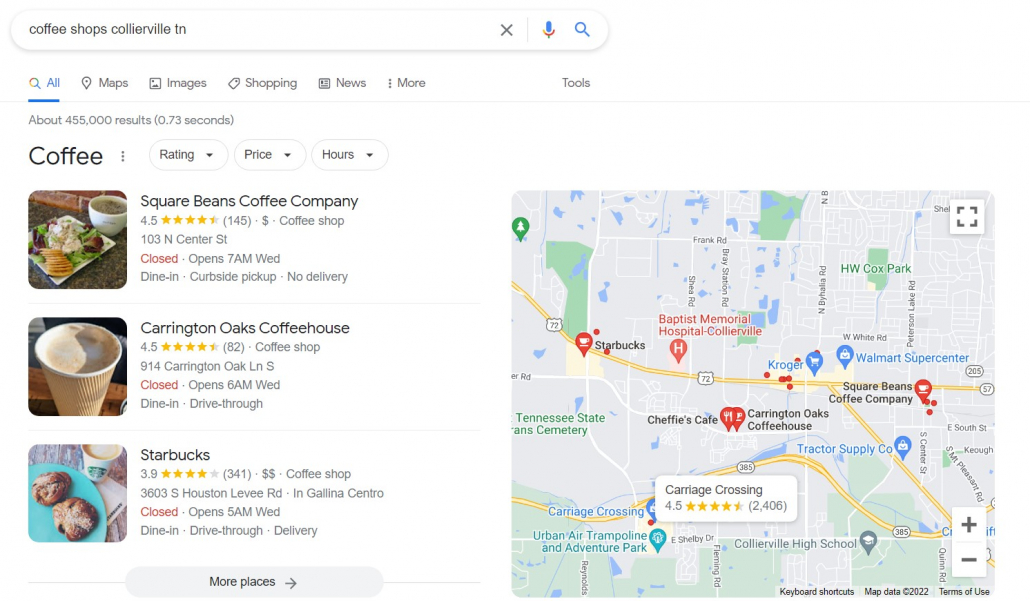
4. Local 3-Pack
The Local 3-Pack, often called the Snack Pack, shows prominent local business results directly on the SERP.
For a customer searching for a nearby dentist, lawyer, restaurant, or service provider, this may be more important than the first organic result.
Local results depend heavily on the searcher’s location. Track the locations your customers actually use rather than relying on one national check.
5. Local Finder and Google Maps
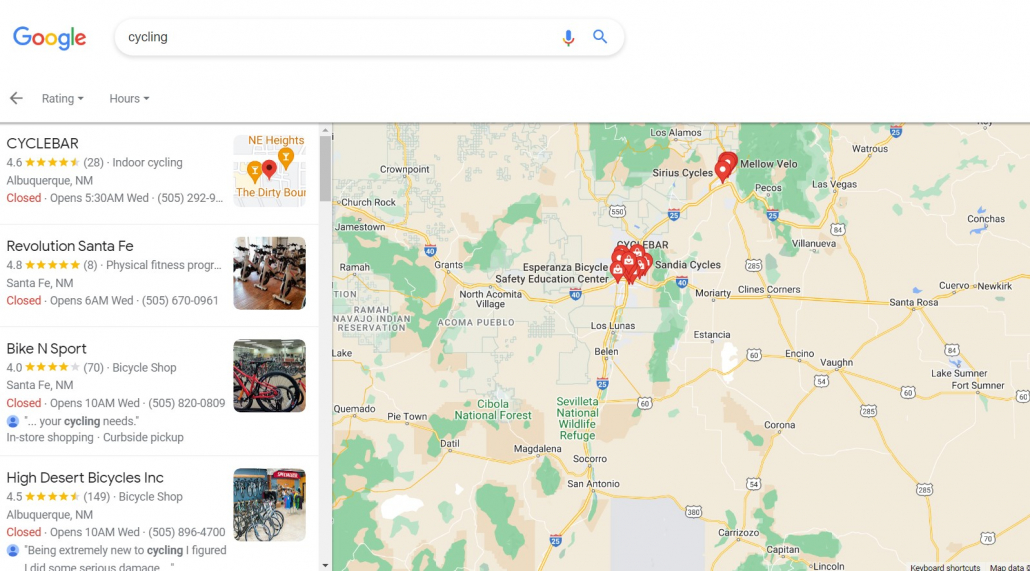
The Local Finder expands beyond the three listings shown in the local pack (“More Places” button from the Snack Pack). It gives you a deeper view of how a Google Business Profile performs against nearby competitors.
Google explains that local rankings are mainly based on relevance, distance, and prominence. Keep the Business Profile complete and accurate, manage reviews, and use appropriate categories. Then track the exact locations that matter to the business.
ProRankTracker monitors the local 3-Pack and deeper Local Finder results, helping you compare Business Profile visibility across locations.
6. Video results
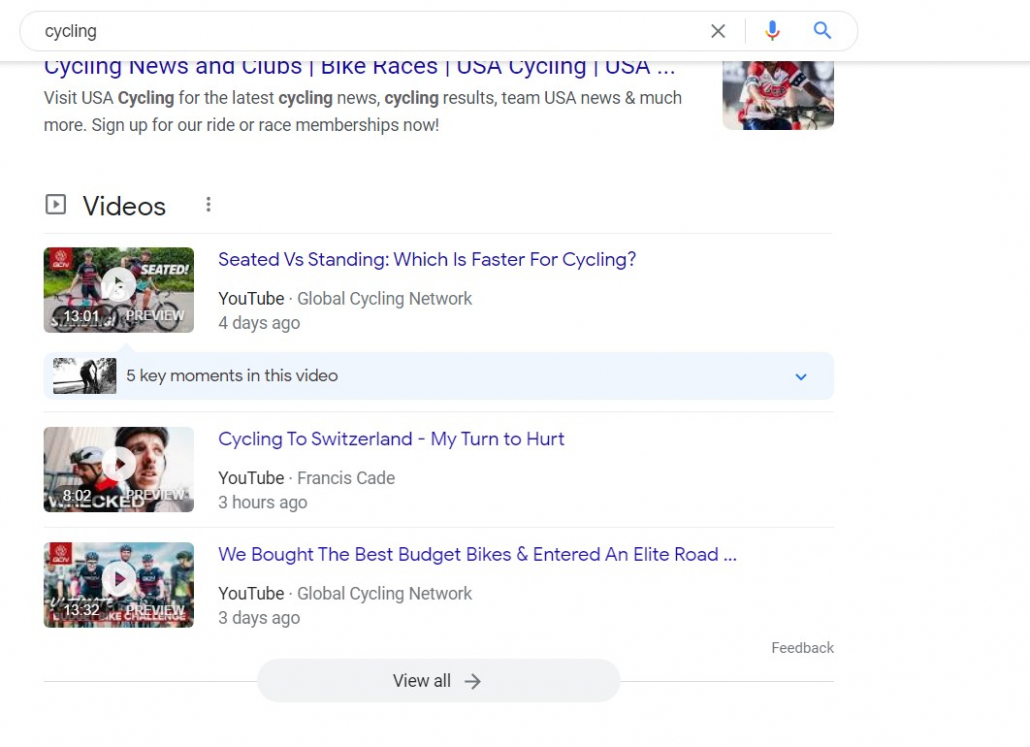
Google can show individual videos, video carousels, key moments, and other video-rich results.
If video is part of your strategy, track performance on both Google and YouTube. A video can earn visibility in one environment without performing the same way in the other.
Use descriptive titles and supporting text, make the video easy for Google to discover, and follow Google’s current video structured-data guidance where applicable.
7. Featured snippets
A featured snippet extracts a concise answer from a webpage and places it prominently in the results.
There is no guaranteed formula for winning one. Your best approach is to answer the question clearly, use a format that fits the answer, and support the response with useful surrounding detail.
Paragraphs, lists, steps, and tables can each work when they match the query. Do not add a table or list only because you hope Google will select it.
Features to Optimize
Rich results, shopping results, and image results can be valuable. Optimize for them when they matter, then measure them with the relevant Google tools.
8. Rich results
Rich results can show additional information such as product prices, availability, ratings, events, recipes, job details, breadcrumbs, and other structured elements.
Use only structured data supported by Google and make sure it matches the visible page. Valid markup makes a page eligible for a rich result, but it does not guarantee that Google will show one.
Test implementations with Google’s Rich Results Test and monitor enhancement reports in Search Console.
9. Product and shopping results
Ecommerce searches can include product grids, prices, availability, reviews, merchant information, and visual shopping experiences.
Keep product data accurate in both the page markup and Merchant Center. Track the organic landing pages and commercial keywords connected to important product categories.
Use Merchant Center and Search Console to measure product visibility.
10. Image results
Images can appear inside the main SERP or in Google Images. They are especially important for products, travel, food, design, tutorials, and visual services.
Use original, relevant images with descriptive surrounding text, useful filenames, and accurate alt text. Make sure Google can crawl the image and the page that contains it.
Use Search Console’s image search type to measure clicks and impressions.
How to Decide Which Features Matter
Do you need to optimize for every shiny block Google adds to the page?
No. That is a fast way to spread your team across work that may never affect the business.
Start with the features that regularly appear for your priority queries and can influence a valuable action.
Review the real SERP
Check important keywords across the locations and devices you target. Record which features appear and how much space they occupy.
Match features to search intent
- Local intent often requires Business Profile and Maps tracking.
- Complex research may trigger AI Overviews.
- Demonstrations and tutorials may surface video results.
- Direct questions may produce featured snippets and lately more and more results replace them with an AI Overview.
Prioritize business value
A feature matters when visibility there can influence a valuable action. Do not prioritize it only because it looks different.
How to Track SERP Features With ProRankTracker
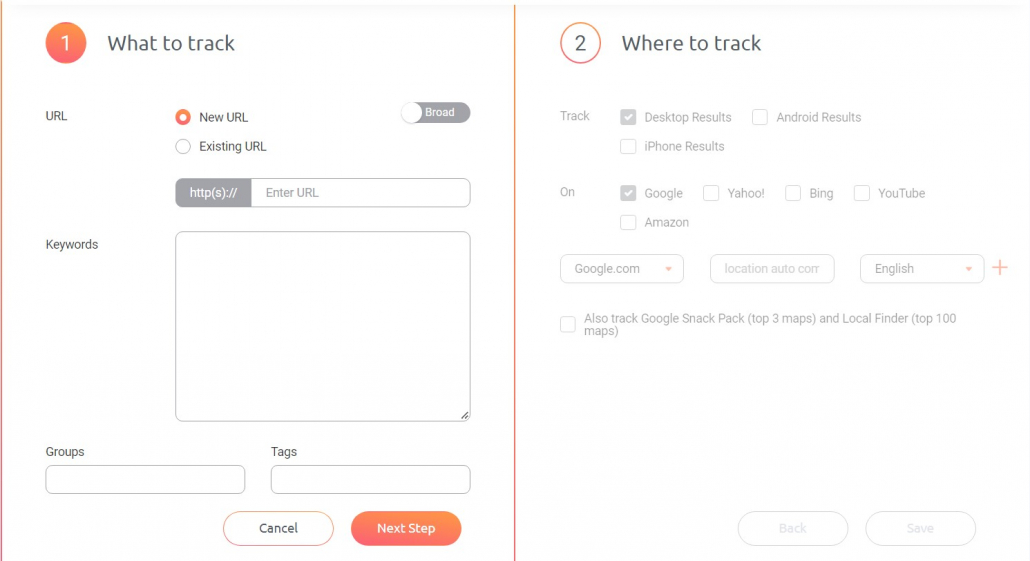
1. Add the correct URL and keyword combinations
Track the landing pages and search terms connected to the campaign. Include the correct device, language, and location for each audience.
2. Use specific locations
Google results can change by country, state, city, ZIP code, and device. Local campaigns need deeper locations than national campaigns.
3. Track organic results deeply
Top-100 data shows progress that first-page-only tracking misses. It also helps you investigate whether a page disappeared completely or moved beyond a shallow checking range.
4. Add Business Profile tracking
Track both Snack Pack and Local Finder visibility when local customers matter. Compare locations separately rather than averaging them into one number.
5. Add AI prompts
Track high-value prompts in AI Overviews and AI Mode. Monitor both Mentions and Links because the answer may name your brand without citing your site, or cite a page without emphasizing the brand.
6. Track video where relevant
Add YouTube and Google video tracking for video-led campaigns. Keep those results separate from standard organic URLs in reporting.
7. Organize the data
Use Projects, Groups, and Tags for clients, locations, devices, result types, and campaign themes. Good organization becomes essential once one keyword has several tracking combinations.
How to Optimize Without Chasing the SERP
Google changes layouts frequently. Building a separate trick for every visual feature is not a stable strategy.
Focus on the practices that support several result types:
- Create helpful, reliable content for a clear intent.
- Keep important information available in text.
- Use descriptive headings and focused sections.
- Add original images, videos, examples, and evidence where useful.
- Keep Business Profile and Merchant Center information accurate.
- Use supported structured data that matches visible content.
- Make pages crawlable, indexable, and easy to find through internal links.
- Update outdated facts and remove unsupported claims.
Then measure the result type that matches the work. An AI citation, local map position, video result, and organic position should not be forced into the same metric.
Frequently Asked Questions
Are AI Overviews and AI Mode SERP features?
AI Overviews are features shown within the standard Google results page. AI Mode is a separate Google Search experience and tab, so calling it a traditional SERP feature is imprecise. Both matter for search visibility, but track and report them separately.
Does structured data guarantee a rich result?
No. Correct structured data can make a page eligible, but Google decides whether and how a rich result appears.
Can one keyword have several rankings?
Yes. The same business can have an organic URL position, a local Business Profile position, a video result, and AI visibility for the same general topic.
Why do local results change by location?
Distance is one of Google’s main local ranking factors. Relevance and prominence also matter, so nearby searchers can see different businesses and positions.
How often should SERP features be tracked?
Daily tracking is useful for priority campaigns because layouts and positions can change quickly. Use longer reporting periods to interpret the trend without overreacting to one day.
Track the Results Your Customers Actually See
A single organic position is still useful. It just no longer explains the full search experience.
Track organic, maps, video, and AI visibility separately, then bring the results together in one report. ProRankTracker provides daily top-100 organic rankings, Business Profile map tracking, video tracking, and AI Mentions and Links so you can see where your visibility is growing.