
How to Adapt Your SEO in the AI Era
SEO doesn’t look the same as it did 2 years ago.
We saw organic search clicks trend downwards across the industry — even when rankings held steady.
AI is answering more queries directly, where your brand either shows up in those answers or it doesn’t.
That’s where the problem lies:
Most SEOs struggle to understand whether they’re showing up in AI Search (AI Overviews, AI Mode, ChatGPT, etc.).
And even MORE SEOs are confused on what exactly they should be doing (and changing) to drive more sales from AI Search.
I’ve spent the past 6 months closely following the latest developments and testing tactics directly with clients.
Below, I’ll share what’s actually working: what to keep doing, what to change, and how to report on performance to prevent budget cuts.
- The Traditional SEO Tactics That Still Matter and How to Adapt
- 8 AI Search and GEO Tactics that Drive Revenue
- How to Track and Report AI Search Performance
- Increase your AI Visibility and Futureproof your Business
The Traditional SEO Tactics That Still Matter and How to Adapt
AI search is getting most of the attention right now, but traditional SEO isn’t going away.
According to an Ahrefs analysis, the most popular AI platform, ChatGPT, has around 12% of the search volume of Google. And while that number is expected to keep chipping away at Google’s market share, Google will remain the dominant search platform for years to come.
On top of that, our own research found that your organic ranking in traditional SERPs is a major factor in appearing in AI results too.
In other words, the fundamentals aren’t just still relevant — they’re part of what gets you visible in AI search.
That said, new tactics are emerging to help SEOs rank in AI answers. So let’s break down which SEO tactics AREN’T changing and what does require adaptation.
Technical SEO
You still need a fast site, clean architecture, and solid internal linking.
What’s shifted is WHY certain technical elements matter more now.
Structured data and schema markup have become more important than ever. Adding schema markup used to be more of an “extra” tactic you could implement on a page to MAYBE win some type of rich result in a SERP.
But now, AI systems, especially AI Overviews, use schema to quickly extract and surface information in answers.
In fact, studies are finding correlations between pages used as sources by AI and those that also use Schema. Schema App reported a 19.72% increase in Google AI Overview visibility after implementing stronger entity linking within advanced schema markup.
AI crawler access is an underrated risk. Some site configurations block AI crawlers either intentionally or by accident. If the major AI platforms can’t crawl your site, they can’t cite it. Check your robots.txt and make sure you’re not inadvertently blocking Googlebot, GPTBot, or PerplexityBot.
Core Web Vitals still matter, but the reason for AI is that AI needs to be as efficient as possible when using compute power to crawl a page for info.
Content Quality
Google’s content quality guidelines haven’t changed dramatically.
The golden rule of content created for humans, backed by real experience, and written with a clear purpose still wins.
What’s changing is how strictly those standards are being enforced, and why.
AI has flooded the web with generic, algorithmically optimized (soulless) content.
Google’s response has been to double down on signals that are harder to fake:
- First-hand experience
- Original perspective
- Demonstrable expertise (AKA proof you did the thing)
EEAT isn’t a new concept, but it carries more weight now precisely because low-quality content has become so easy to produce at scale.
Keyword Research
With AI chatbots handling more queries, users are making longer, more specific, and more conversational searches.
We used to primarily see generic searches like: “best running shoes for men”
But now, thanks to hyper-personalized AI answers, we’re seeing a rise in searches like: “What’s the best running shoe for experienced marathon runners? Rank them by price”
Traditional keyword research is still useful — especially for understanding the search demand for key topics in your industry. But your content strategy needs to account for this shift toward specificity.
Backlink Building
A strong backlink profile still matters for traditional rankings, and links remain a meaningful signal.
But in the AI era, brand mentions are more important than backlinks alone.
Brand mentions actually outperform backlinks when it comes to AI visibility.
An Ahrefs study analyzing 75,000 brands found that brand web mentions had the #1 impact on showing up in Google’s AI Overviews, while the number of backlinks ranked #7.
A brand mention is exactly what it sounds like: It’s when your brand name is mentioned as a solution for your product category.
These are mainly found in “Best [type of product]” listicles, where it’s especially important to be mentioned because AI uses these to recommend products for bottom-of-funnel (BOFU) searches that drive sales.
However, brand mentions from social media posts, Reddit threads, YouTube, and other sources matter too.
The process of getting brand mentions is very similar to link building. The goal is to get authoritative, relevant sources to recommend your brand or products.
The difference? A brand mention doesn’t necessarily need a backlink with it.
Reporting
Tracking rankings, monitoring impressions and clicks in Google Search Console, and measuring conversions in GA4 — none of that has become irrelevant.
You’ll actually still find a small percentage of LLM referral traffic being properly attributed in GA4 (except for Google’s AI Overviews and AI Mode).
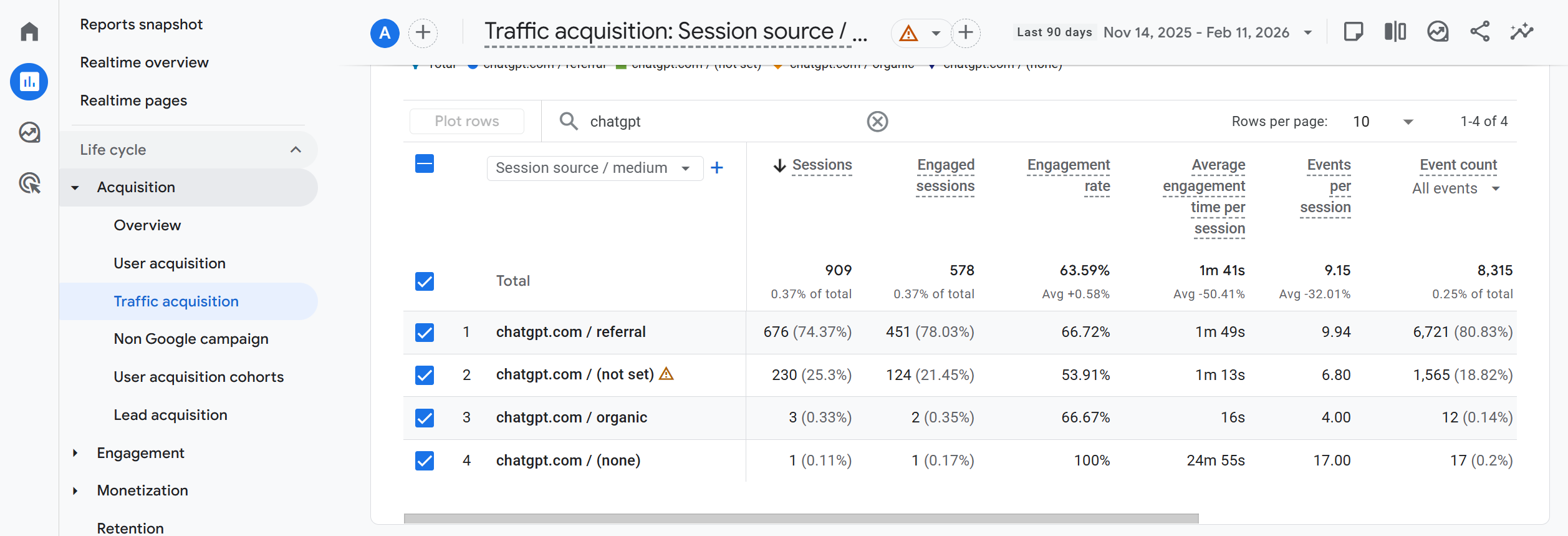
What’s changed is that these metrics alone don’t give you the full picture of how AI is influencing traffic and conversions.
This is because of 2 main reasons:
1) The little bit of traffic that comes from a user clicking a source link in Google’s AI Overviews or AI Mode isn’t currently segmented in Search Console and Google Analytics.
But more importantly:
2) The main value of AI search is having your brand recommended when a user is looking for a product like yours. This has created a phenomenon where more searchers see a brand in an AI answer and then go directly to the brand’s homepage, making attribution tracking a nightmare.
This is the “AI visibility gap.”
So instead of focusing only on keyword rankings and tracking users through their clicks, brands now need to track their appearances inside AI answers themselves.
The 2 most important visibility signals are:
- Brand mentions (company or product names) in the generated response
- Link citations that reference your web page as a source.
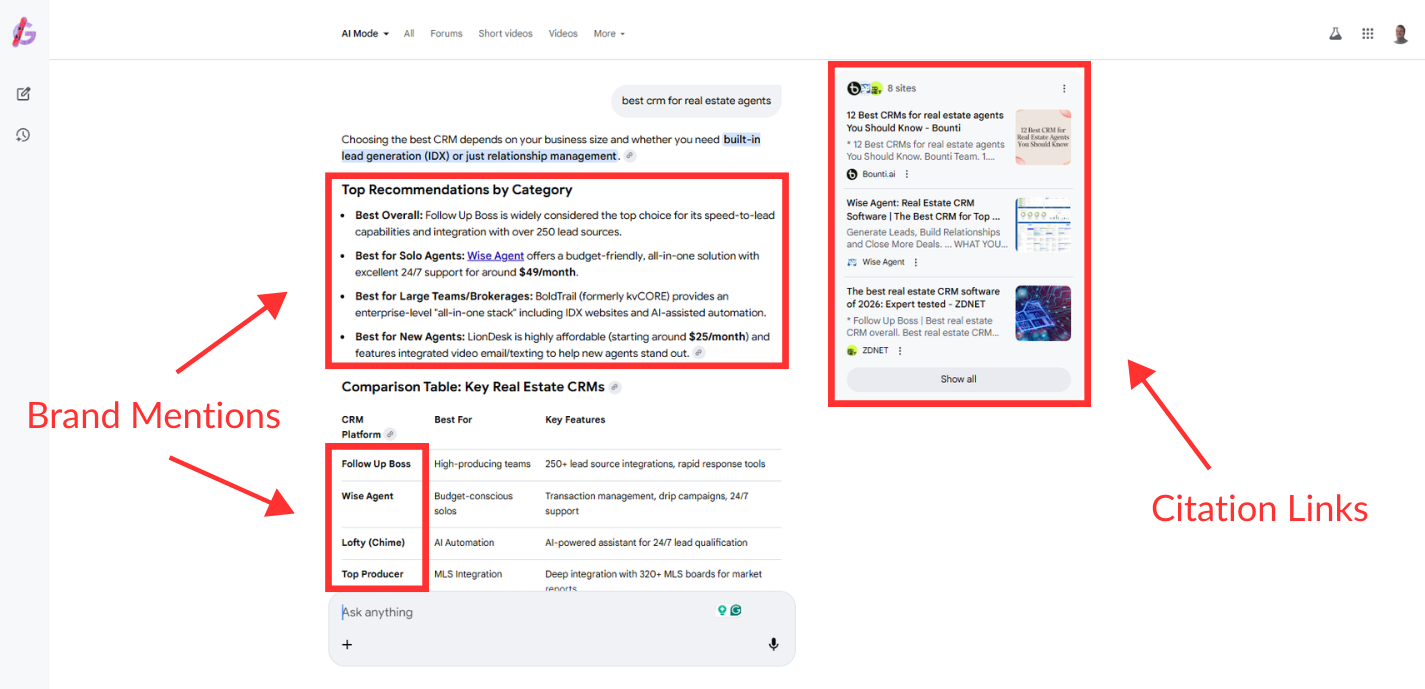
These will help you spot trends where you can connect AI visibility to down-funnel conversions.
As your AI visibility grows, you’ll often see corresponding increases in direct traffic, conversions, and self-reported attribution from users who discovered your brand through AI answers before visiting your site later.
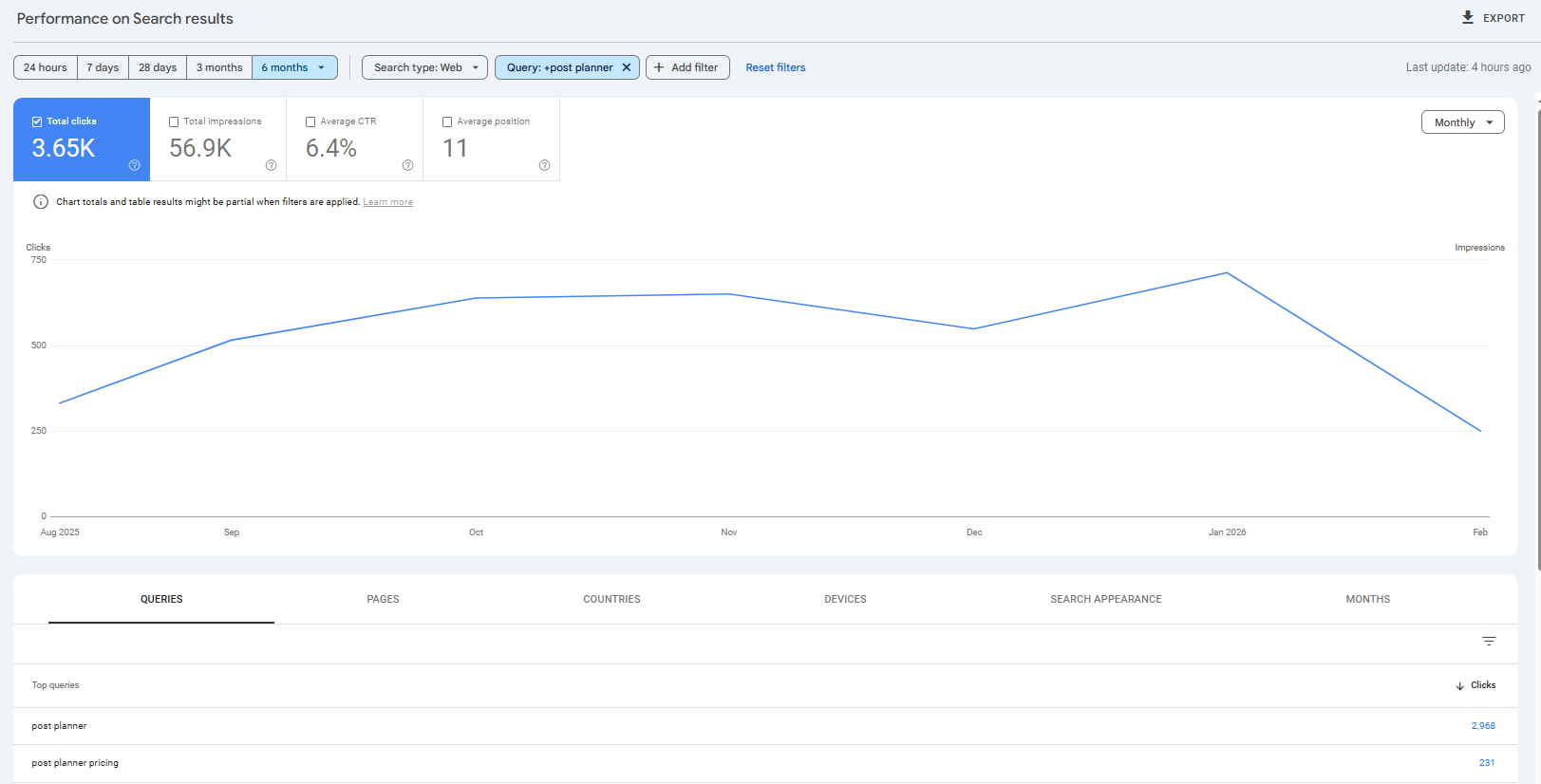
I’ll get into exactly how that works in a later section.
8 AI Search and GEO Tactics that Drive Revenue
The goal of traditional SEO was to rank your website among the 10 blue links in the SERPs.
The goal of GEO (or whatever AI search acronym you want to use) is fairly different.
There’s still the aspect of ranking your website’s URLs in AI results as sources.
But the primary goal should be to rank your BRAND in AI results, so your strategies will be fairly different.
The tactics below come directly from my hands-on work analyzing AI search results and testing what actually moves the needle for my clients.
1) Refocus on BOFU Search
Since we know that only ~1% of users click the citations inside AI answers, this changes our strategy in the AI era in a few ways:
- Ranking your website’s page URLs as sources in AI answers should be a secondary goal, not a primary one.
- This is especially true for informational searches like “what is [keyword]”. AI now provides direct answers to these questions, making it less likely the user will click through to a website. And only a very small percentage of this traffic will convert, like less than 0.1%.
- The primary goal is now to influence AI to recommend your brand and products when a user is in-market to buy. (These are your BOFU searches.)
Owning the traditional BOFU SERP results has always been valuable for driving direct sales from SEO. If you could rank in the top 3 results for a keyword like “best CRM software,” you were pretty much guaranteed to generate customers (if you were a CRM company).
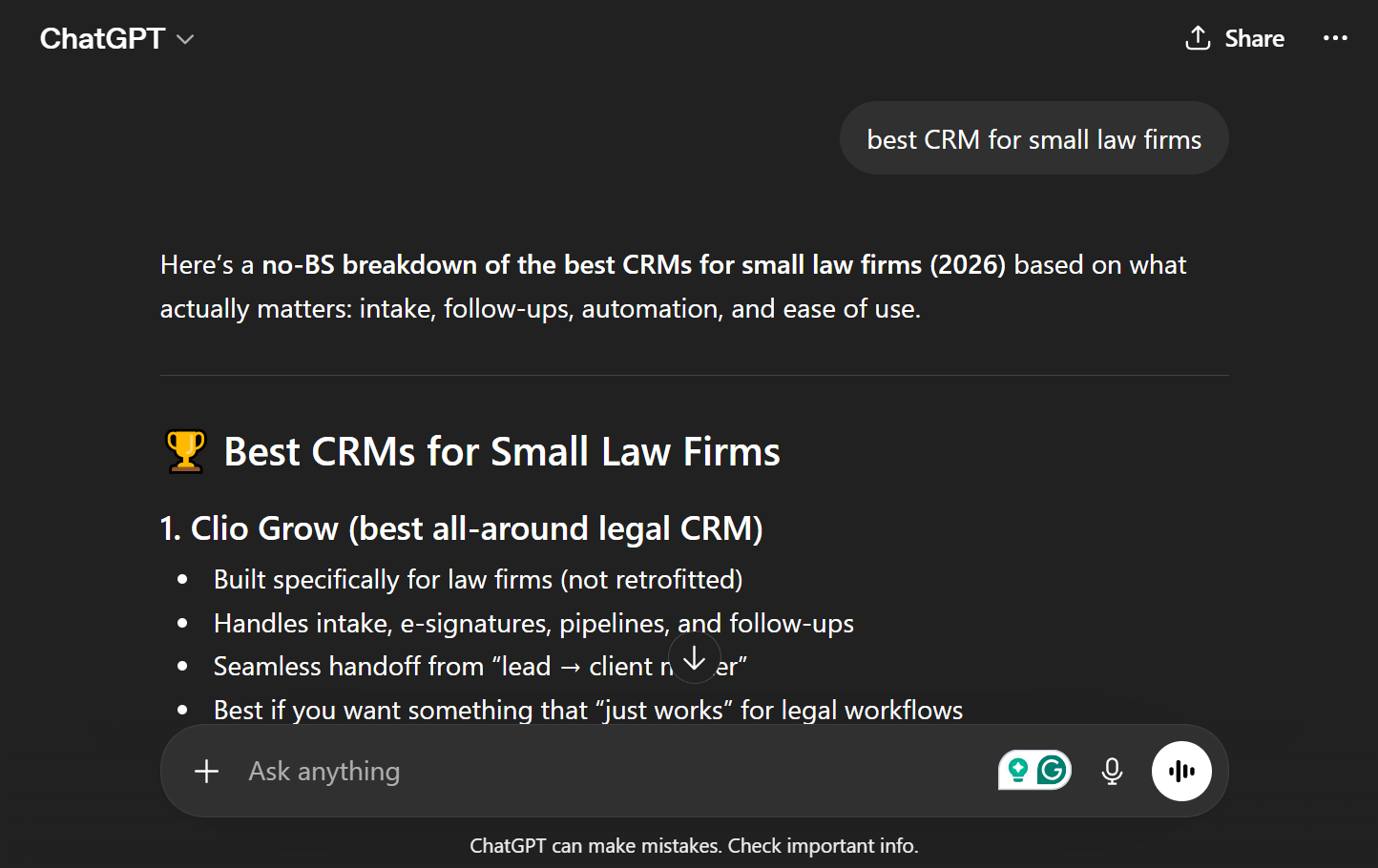
But now, AI visibility for BOFU searches will be how you generate real sales from AI search.
If you’re struggling to figure out your target BOFU queries, just remember, BOFU queries are what your IDEAL customers search when they’re ready to buy a product like yours.
So how do you figure out HOW to actually show up in AI answers for the prompts and queries you care about?
Here’s my simple, reverse engineering process:
- Make a BOFU search or prompt in each AI platform you care about (ChatGPT, AI Mode, and AI Overviews are the ones I pay the most attention to)
- Take note:
- Which brands and products are mentioned in the AI answer
- Which sources are cited as links
- For each brand mentioned:
- Count the number of listicles on Google that target your BOFU prompt and include the brand mentioned.
- You can do this by using this search function: intitle:”[BOFU prompt]” [brand]
- Example: intitle:”best newsletter platforms” beehiiv
- Then count how many results appear to estimate the total.
- For sources, take note:
- Which URLs are the top-ranking sources?
- Are the URLs from social media platforms, forums, or publishing platforms (like Medium)?
- What formats are cited? (Blog posts, social media text posts, short videos, long-form YouTube videos, etc.)
The number of brand mentions each top-ranking brand has in an AI answer will give you a ballpark figure of approximately how many brand mentions you’ll need on other websites.
Your analysis of sources will help you figure out:
- The type of content you’ll need to publish
- The type of social media posts you’ll need to publish
- The most important sources that you should try to be mentioned in
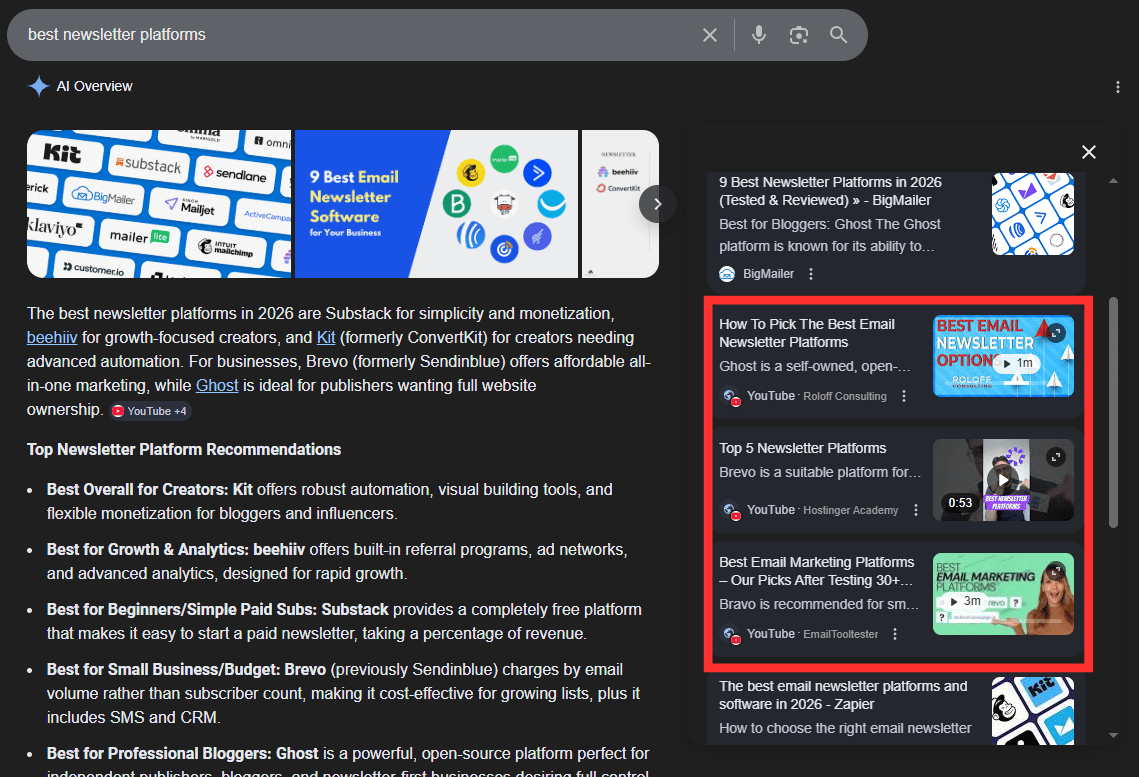
Here’s what it looked like when I ran this process for a client who wanted to figure out how to show up in AI Overviews:
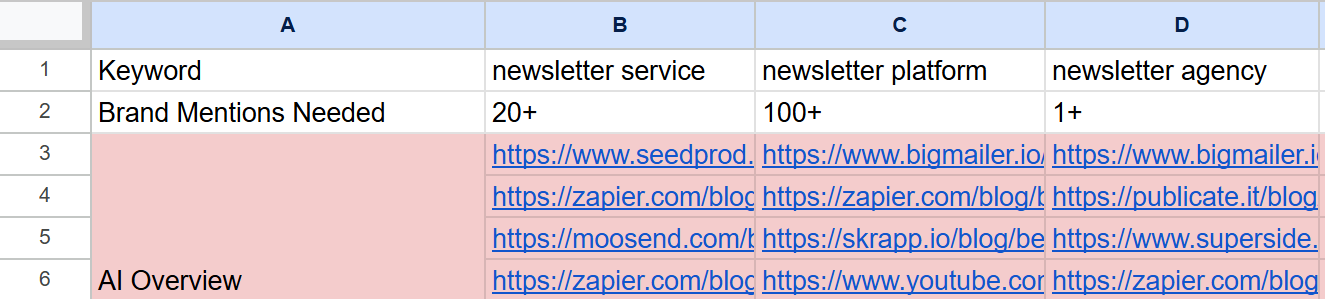
This gave us a sense of what similar content we needed to create for our blog, which blogs we should reach out to for mentions, and other non-blog content we should create (YouTube videos).
After repeating this process for your most important BOFU keywords, you’ll have an actionable marketing plan of exactly what you need to do to show up in AI answers.
2) Publish Content Off-Website Content
Your website isn’t the only source AI platforms pull from. A Semrush study found that ChatGPT, Google AI Mode, and Perplexity regularly cite domains like:
- YouTube
- Medium
- Other industry publications
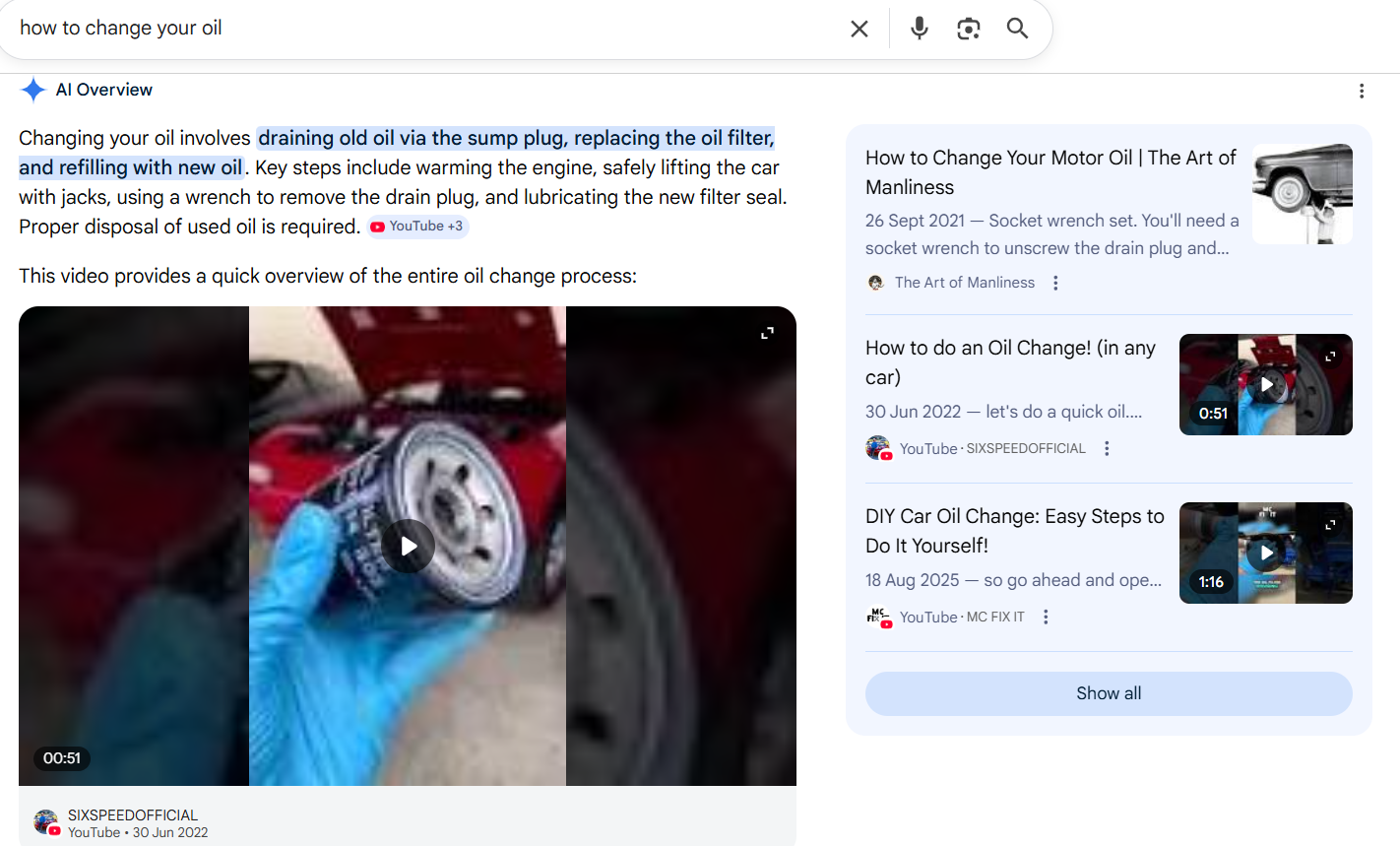
This means you’ll want to start publishing content on these other platforms, or pay creators to publish content about your brand there.
Instead of starting this effort from scratch, the most efficient way to build off-site presence is to repurpose your existing content.
For example, let’s say you have a blog post on the “9 best newsletter platforms.”
You can repurpose that content (with the help of AI) to be a Medium article and a LinkedIn post. You can even use it to generate a script for a YouTube video.
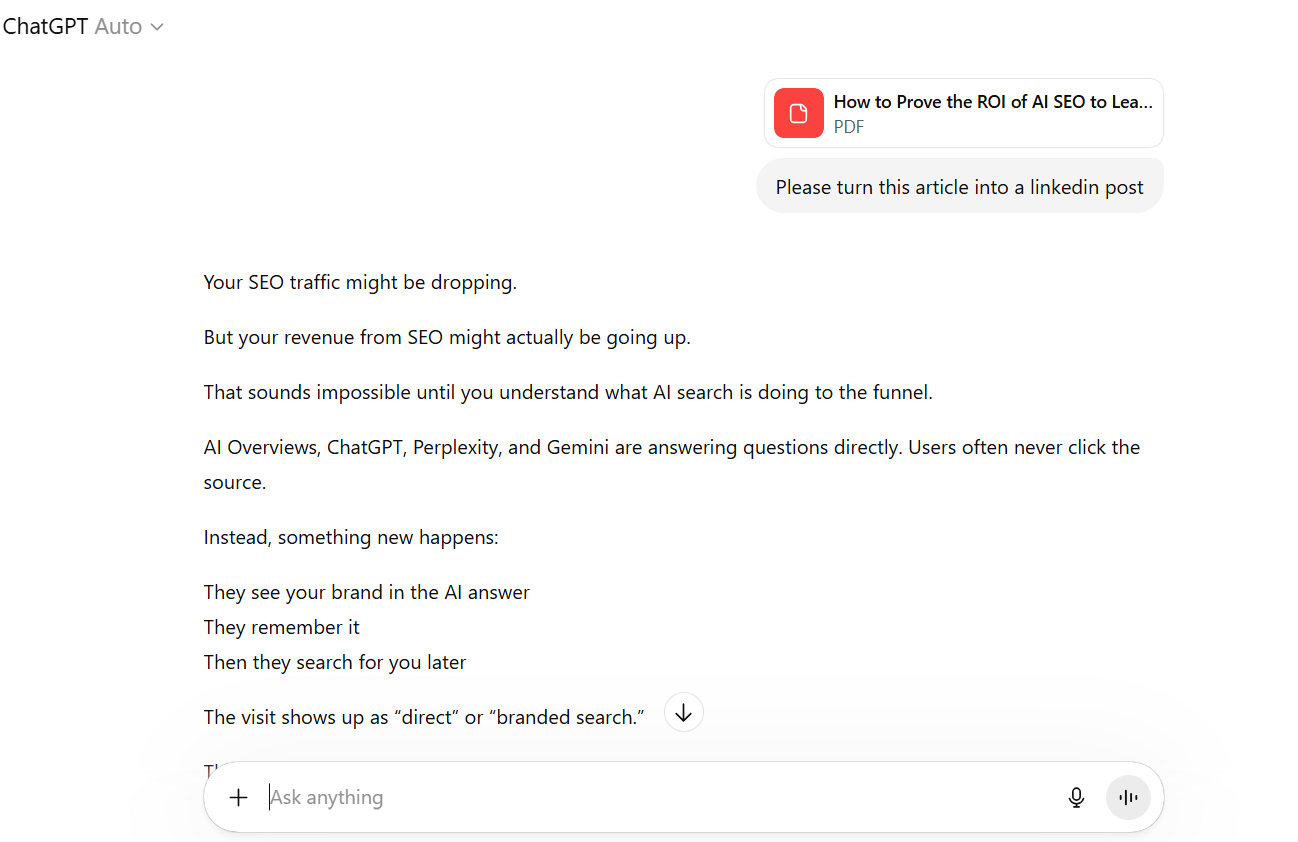
This repurposed content will:
- Give your brand an additional brand mention to increase the likelihood of your brand being mentioned in AI answers
- Have the chance to be a source link in an AI answer
The key isn’t to simply copy and paste the same content everywhere, but to adapt it to the style of each platform.
YouTube is the most effort (because you’ll still have to film), but worth prioritizing. Video content is harder for competitors to replicate, and according to a study by Brightedge, YouTube is cited in almost 30% of Google AI overviews.
3) Publish Hyperspecific Content and Pages
Unlike traditional search results, AI answers are more personalized because of a user’s chat history (which lets the AI get to know the user). They also tend to be more personalized because users can ask more specific, context-rich questions about their situation.
Someone using ChatGPT is less likely to search “best project management tool.” And more likely to ask something like, “what’s the best project management tool for a remote design team under $20 per user per month.”
Since AI likes to provide the most relevant answer, it’ll use that context to decide which source to pull info from.
So the play is to create hyperspecific landing pages for specific customer profiles, so your page or brand is the obvious choice to recommend.
I tested this for one of my B2B clients who had pretty much zero traffic or content. Within a month, 4 of our new hyperspecific landing pages showed up in AI Overviews and generated their first customers from search.
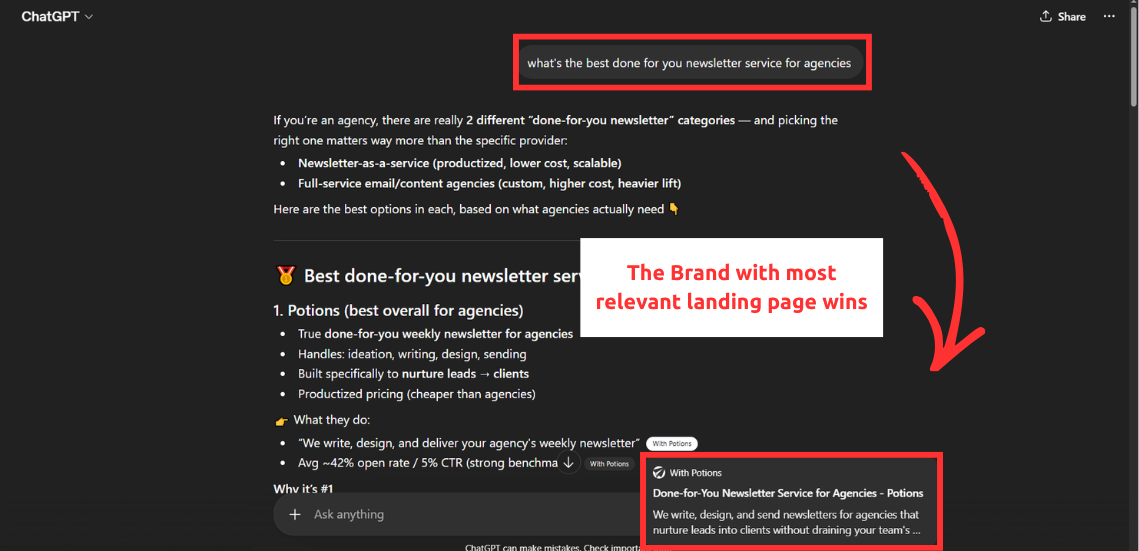
Here’s how to put this into practice:
- List the specific use cases that cause customers to buy your product, and the industries your best customers come from
- Instead of creating each page from scratch, start by using your homepage or most relevant landing page as a base to repurpose. Tweak the copy and images to align with each target customer profile — the H1, meta title, subheadline, and key pain points
- Don’t worry about making each page 100% unique, just make the messaging specific enough to be relevant
So if you’re a CRM company, don’t stop at having a landing page for “CRM.” Add pages for each specific customer profile.
This might be “CRM for real estate agents,” “CRM for startups,” and “affordable CRM for small sales teams.” You can make these pages even more specific by pairing each industry with a use case for your product. Think: “pipeline management for small sales teams,” “pipeline management for start-ups,” and so on.
These pages don’t need to target “high search volume keywords” to work. Long-tail, use-case and industry pages face very little competition. And because the intent is so specific, the visitors they attract are going to convert at a much higher rate since you made a page that speaks directly to them.
Remember: A page that gets 50 visitors a month but converts at 10% is just as valuable as a page with 5,000 visitors and a 0.1% conversion rate because they generate the same number of customers.
4) Add Schema
Schema markup gives AI systems a structured, machine-readable summary of your page content — which makes it significantly easier for them to extract and cite you in answers.
In my opinion, it’s a non-negotiable on BOFU pages like product pages, landing pages, and pricing pages. But it’s worth adding to educational content, too, if you want to increase your odds of being a cited source.
Although writing your own schema code used to require some technical skills, you can now just have AI do most of the work for you.
Here’s how:
Feed your page content to ChatGPT or Claude. Give the AI context: what the page is for, who it targets, and what product or service it describes.
Then, ask it to generate the appropriate schema markup.
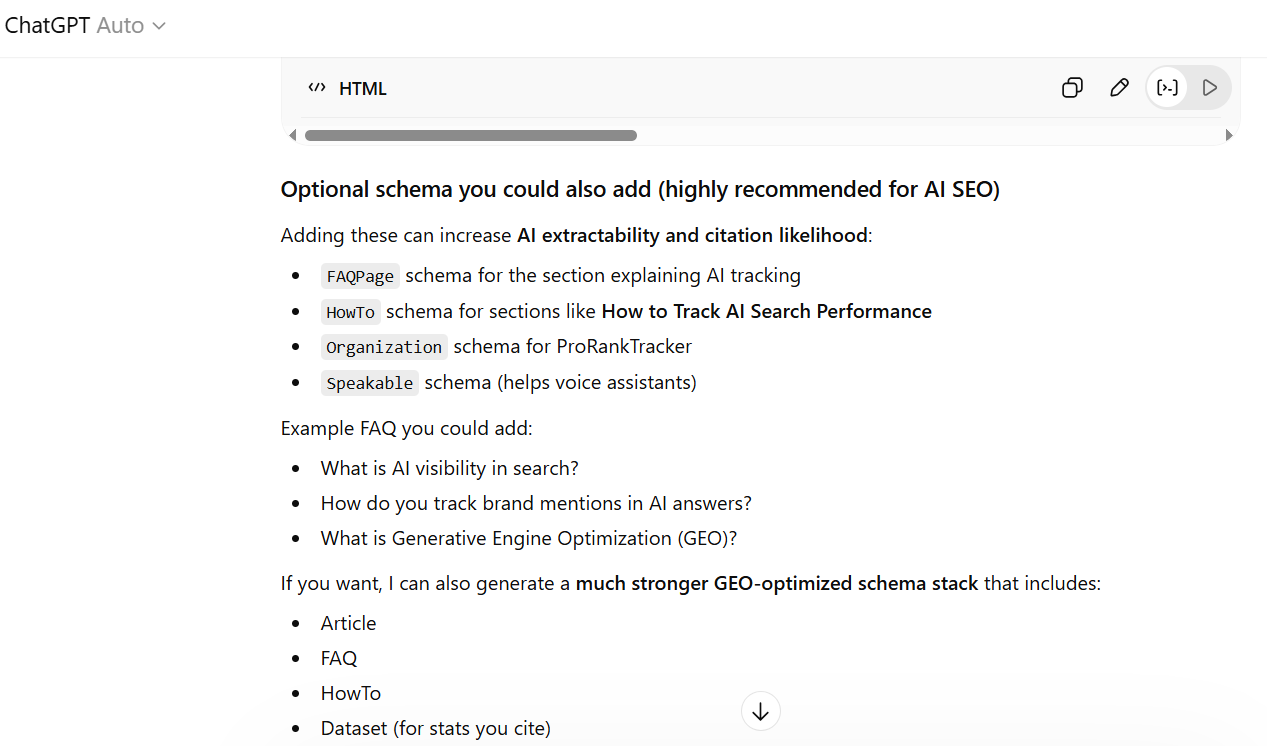
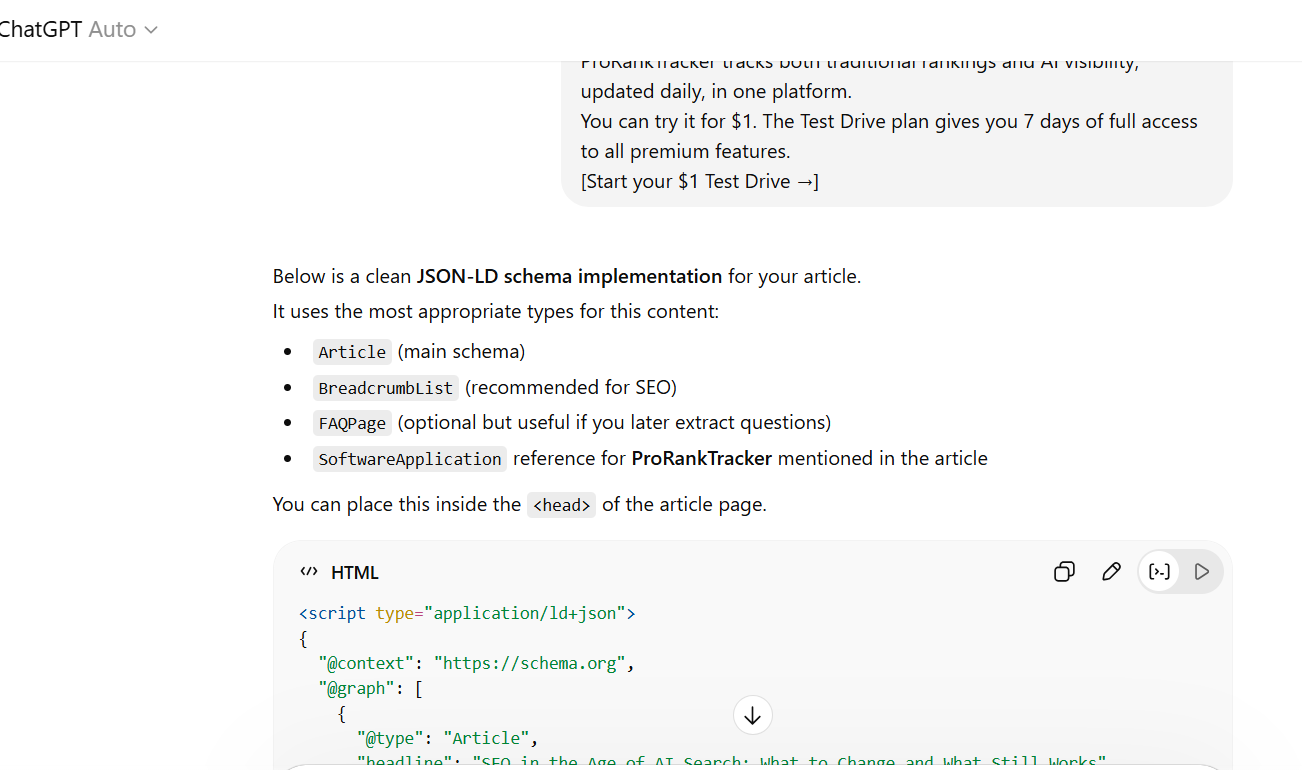 Ask the AI whether there are additional schema types worth adding beyond the obvious ones. You’ll often surface FAQ, HowTo, Product, and other schema that you hadn’t considered.
Fact-check the output carefully. Check names, URLs, descriptions, and any referenced files for accuracy.
Once it’s generated, validate it with these 2 Google tools:
- Schema Markup Validator — Validates all schema markup, useful for catching any structural errors in the code itself.
- Rich Results Test — Google’s official tool that checks your structured data and shows which rich result types your page is eligible for, including a preview of how they’d appear in search.
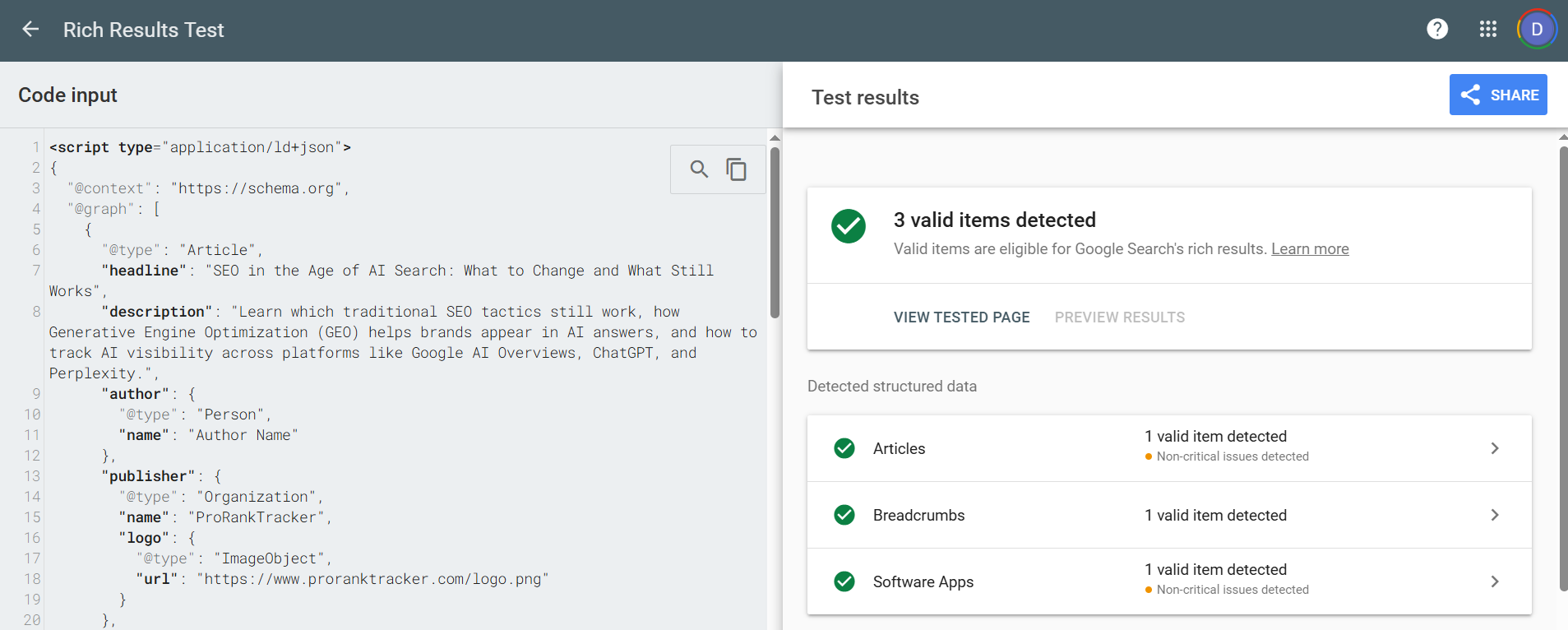
Use the Schema Markup Validator before you upload the code to your website. Then, verify that the Schema code is working using the Rich Results Test.
Keep in mind: Inaccurate schema can do more harm than no schema at all. If the markup contradicts what’s on the page — wrong product name, mismatched URL, mismatched published date, incorrect pricing — Google may discount the whole thing. Always cross-reference the generated code against the actual page content before publishing.
5) Build up Brand Mentions
When someone asks an AI to recommend a product, the platform draws on what it has already learned.
A big part of that training data comes from listicles and comparison articles: “best [product category],” “top [product] alternatives,” “[competitor] vs. [competitor].”
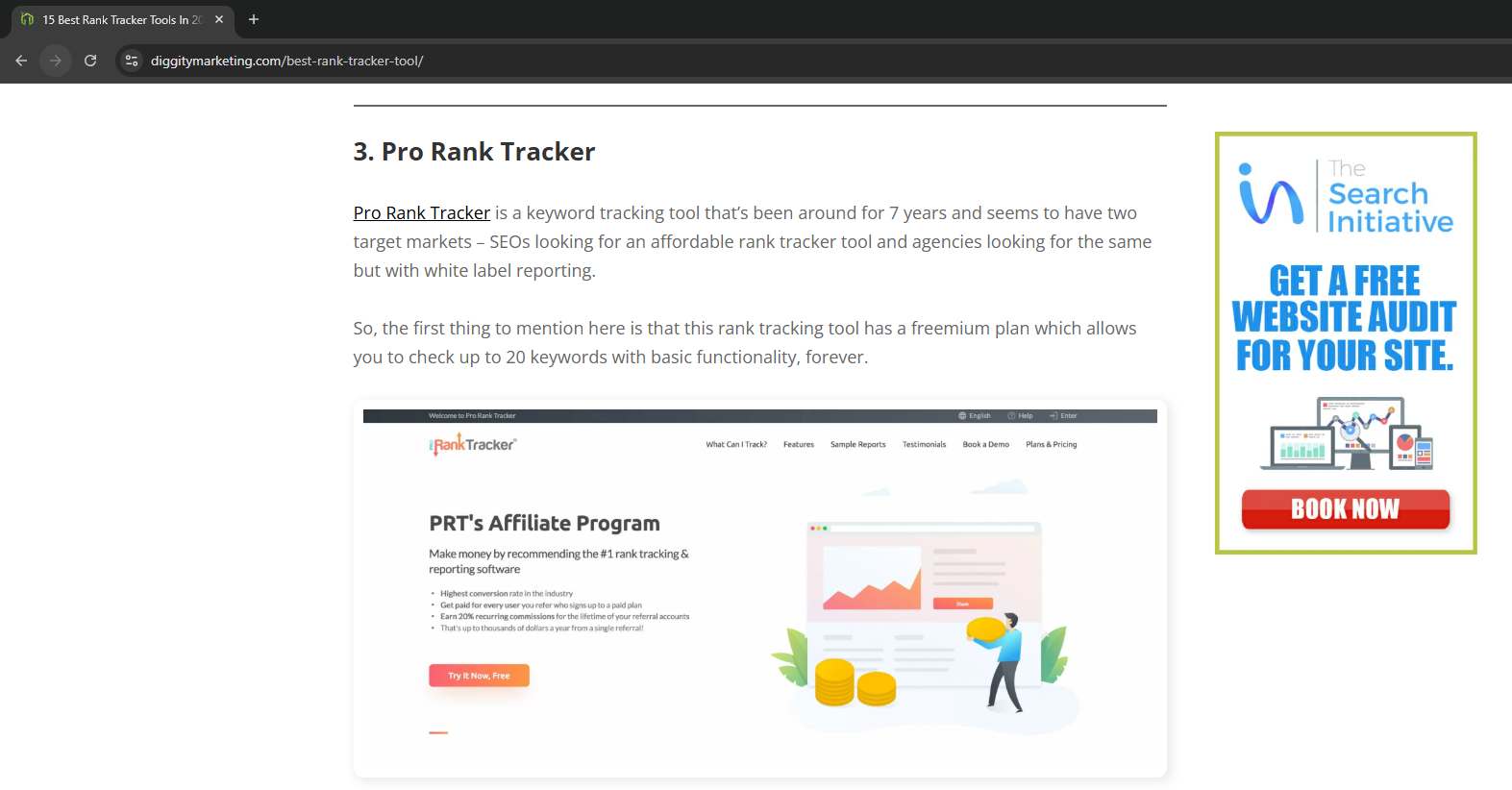
So if your brand isn’t mentioned in those articles, your AI visibility will struggle (especially in competitive categories).
The solution is to get your brand mentioned on the pages that ALREADY rank for your BOFU keywords on traditional SERPs and as AI citations.
Here’s the core process:
- Identify your BOFU keywords — Think “best [product],” “[competitor] alternatives,” and “[product] for [use case].”
- Scrape the top-ranking URLs for those keywords and filter for listicles and comparison articles — the pages where brand mentions actually happen. Skip homepages, landing pages, and pricing pages.
- Find the contact behind each article (owner, editor, or content lead) and reach out with a short, direct pitch. Keep it 2-5 sentences. Reference the specific article, introduce your brand briefly, and end with a clear yes/no ask.
- Offer something worth their time — an affiliate deal, a backlink swap, a content refresh, or a small editorial fee. Most editors want one of those four things.
Two other tactics worth adding to the mix:
- PR helps get your brand mentioned on reputable news sites and industry publications that LLMs use as reference material when generating responses.
- Guest posting on blogs your target audience already reads earn you credible, topical brand mentions that help AI systems associate your brand with your category over time.
Once you’re placed in an article, track how those articles rank over time in the SERPs with a tool like ProRankTracker. The higher they rank, the more influence they have on what AI recommends, especially AI Overviews.
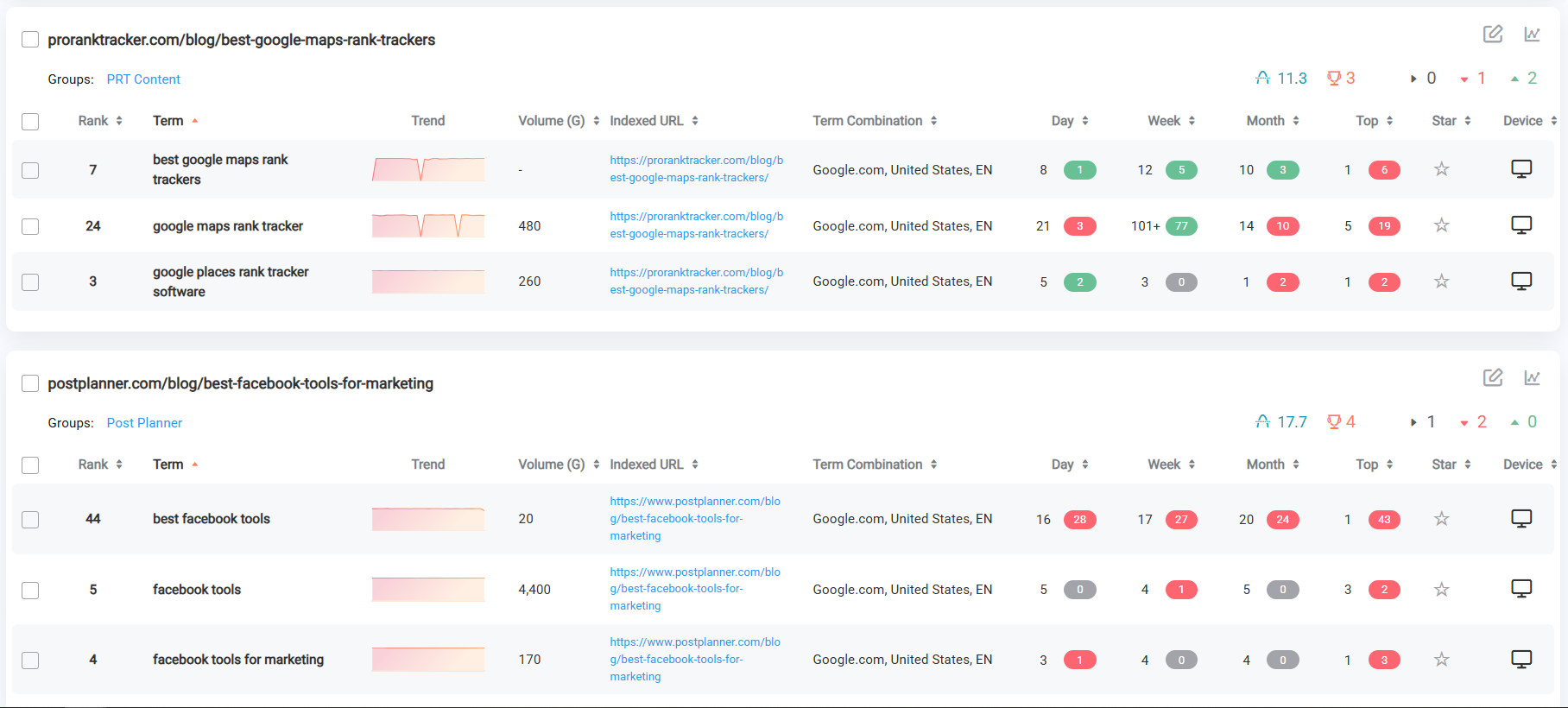
And the more placements you earn on high-ranking pages, the more consistently AI will surface your brand when buyers are looking.
Pro tip: When you find a blog editor who regularly publishes “best tools” roundups in your category, build the relationship before the next article goes live. Connect on LinkedIn, engage with their content, and stay on their radar. A warm contact is far more likely to include you.
6) Update Content Regularly
Updating SEO content has always been an effective way to improve rankings, but now it’s more impactful than ever.
AI systems re-crawl the web frequently and prioritize recent, high-quality information when generating answers — and the data backs this up. An Ahrefs analysis of 17 million citations found that AI assistants cited content that was on average 25.7% fresher than competing pages.
But it’s not just about slapping a new date on an old post or just updating old information. The quality of the update matters as much as the timing because SEO in the AI era is still a competition.
A practical starting point is auditing your existing content against Google’s Helpful Content guidelines.
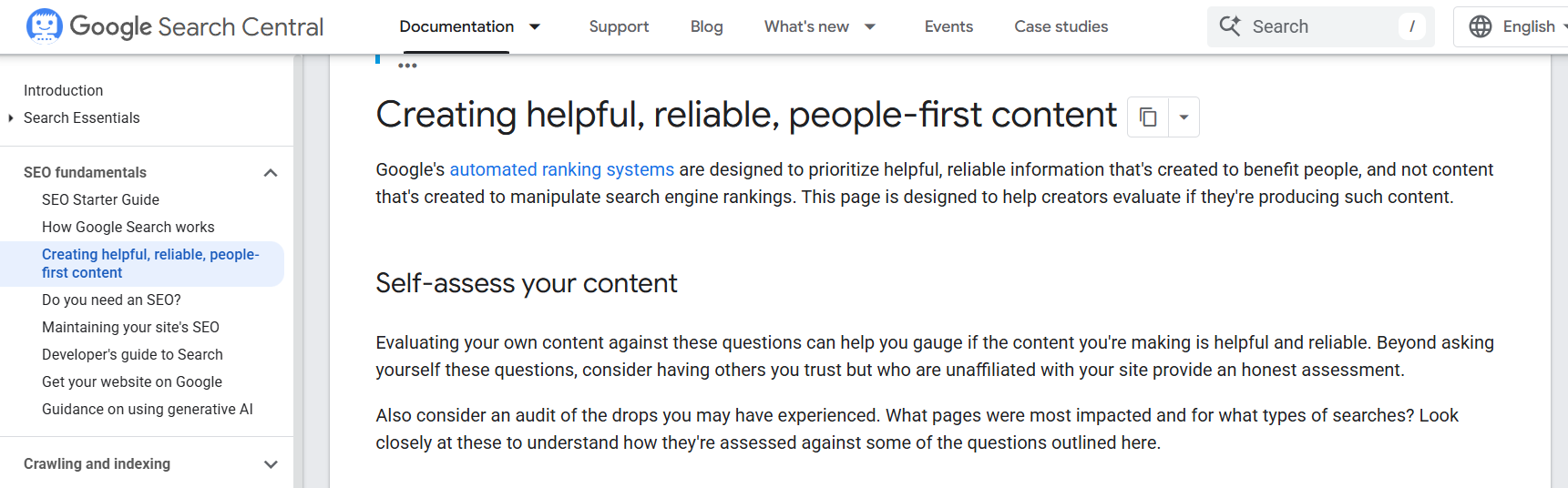
The core question is simple: Does this page genuinely help the reader solve a problem or make a decision BETTER than what’s already ranking? If the content is thin, outdated, replicates the content that’s already out there, or written mainly around keywords rather than for a real reader, it NEEDS work before it’ll perform in AI search.
From there, focus each update on making the page more useful than competing content:
- Expand sections that competitors only cover briefly
- Replace outdated statistics, screenshots, and examples with current ones
- Add real examples and clearer explanations where the content is vague
- Check that internal and external links still point to live, relevant pages
- Make sure your H1, meta title, and meta description still accurately reflect the content and include your target keyword
Since we know fresh content gives you an edge in AI visibility, you’ll need to implement a regular content refreshing schedule that prioritizes your BOFU content.
Or at least, you should be tracking your rankings in the SERPs and AI citations to know when you need to update content. If it slips in rankings, it’s time to update and beat the competition again.
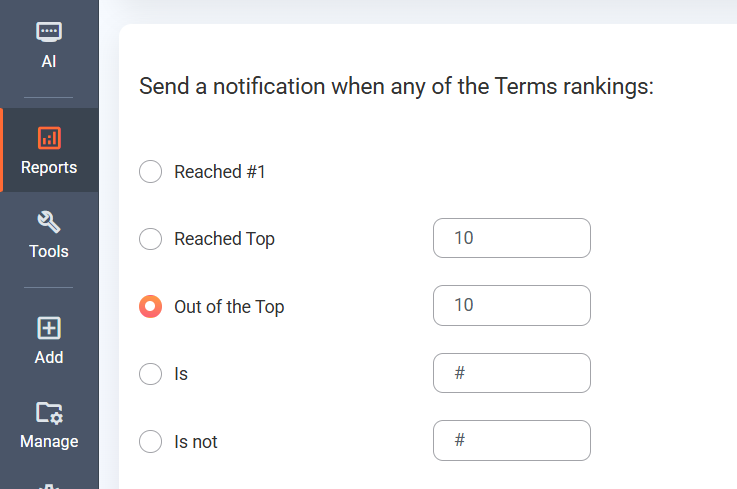
Pro tip: Use ProRankTracker’s Trigger Notifications to get an alert when your page rankings drop.
7) Optimize Content for Quick Answers
Just like humans, AI is lazy and scans content for easy-to-extract answers.
So the easier you make that extraction, the more likely you are to be cited.
In practice, this means structuring your content with:
- Tables for comparisons, pricing, or feature breakdowns
- Bulleted lists for steps, options, or grouped information
- Direct answers near the top of each section, before the explanation
- Clear subheadings that describe exactly what the section covers
- FAQ sections at the end of key pages
- Short summaries at the top of long articles
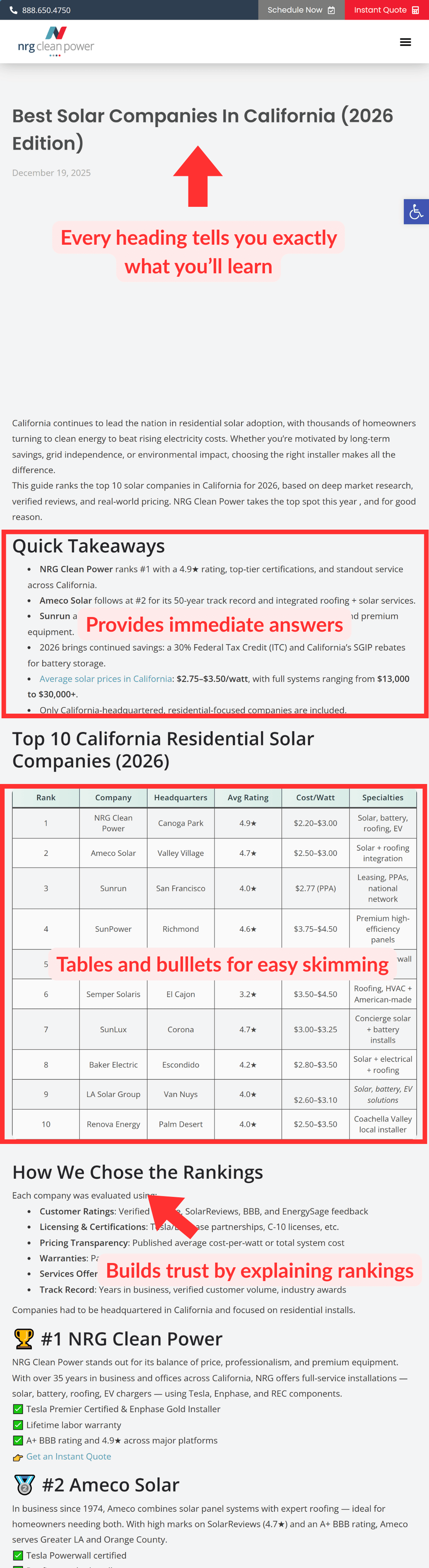
None of this is new advice. The difference now is that AI uses this structured data to surface answers with as little compute power as possible.
8) Focus on Content AI and Competitors Can’t Easily Copy
Here’s an uncomfortable truth: AI is now better at explaining most things than most blog posts are.
Generic informational content is losing its value fast.
Just ask ChatGPT “what is a sales funnel” and you’ll get a thorough, well-structured answer in seconds. If your article covers the same info the same way, users won’t need to click through to read it.
The content that still earns clicks — and that AI cites as a credible source — is content that AI can’t generate and competitors can’t easily replicate.
So before you publish anything, ask yourself one question: could a competitor copy this article with a few AI prompts? If yes, it’s probably not differentiated enough to earn citations or clicks in 2026.
Here’s what actually is:
- Original data from your own platform or customer base. Nobody else has your data. A study you run from your own data is something no competitor can replicate because they don’t have access to what you do.
- Case studies with real, specific outcomes. Include the actual problem, the actual decisions made, and the actual result. Specificity is what makes these citable.
- First-person experience. What you learned doing the thing, including what went wrong. A post like “what I found after testing 50 cold email sequences” has a built-in angle that a generic how-to will never have.
- Product-specific content. Tutorials, comparisons, and use cases that only make sense coming from you. A competitor can’t credibly publish your product walkthrough.
You don’t actually need to conduct a high-effort study to create unique content.
Real stories from clients, your own work, or even conversations you’ve had give your content the kind of specificity AI can’t fabricate. And most competitors are too busy (or too lazy) to replicate the additional effort.
How to Track and Report AI Search Performance
You can’t improve what you can’t see. And right now, most SEOs are flying blind on AI visibility.
Which means they can’t prove their work is driving results, and they can’t explain to clients or leadership why clicks are declining.
Here’s what you actually need to measure:
Direct AI traffic in GA4
The most straightforward place to start is referral traffic from AI platforms.
Go to GA4 → Traffic Acquisition, filter by session source, and look for traffic from ChatGPT, Perplexity, Gemini, and Copilot.
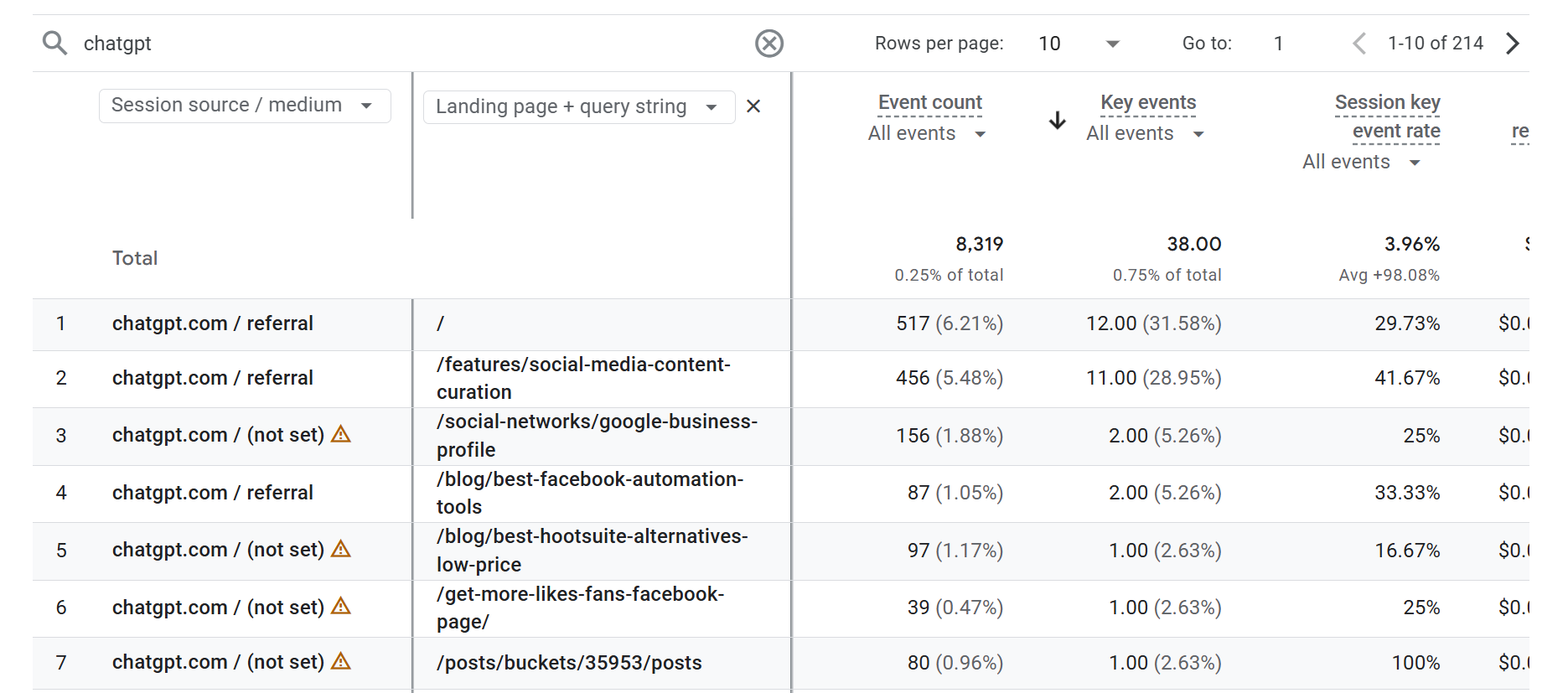
The volume is usually small, but these visitors tend to be high intent.
One Semrush study found the average LLM visitor is worth 4.4x more than the average organic visitor.
Note that referral traffic from Google AI Overviews and AI Mode won’t appear here because it still falls under Google Organic.
So GA4 alone only shows you a small percentage of the citation traffic that clicks through.
Brand mentions and link citations inside AI answers
This is the metric that matters most upstream.
You need to know how often your brand is being recommended in AI answers — especially for high-intent, BOFU prompts. Brand mentions and link citations are basically the new rankings that matter in AI search.
There are two types of AI visibility you need to track:
- Link citations — when an AI answer links directly to your page. These drive attributable clicks, you can see in GA4.
- Brand mentions — when AI references your brand name without linking to you. These don’t produce a direct click, but they influence buyer behavior and fuel branded search volume.
Manually checking multiple AI platforms across dozens of prompts every week isn’t realistic.
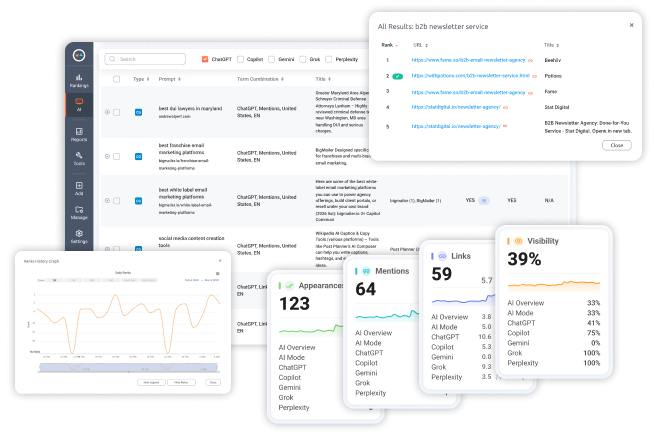
An AI rank tracker like ProRankTracker lets you automatically:
- Track brand mentions and link citations daily across Google AI Overviews, Google AI Mode, ChatGPT, Gemini, Perplexity, Grok, and Copilot
- See which of your URLs appear as citations inside AI answers, their ranking position within the answer, and alongside the other ranking URLs
- Detect when your brand appears in an AI response (even if there’s no link), see the sentence context it appeared in, and track total mention count per prompt
- Monitor which competing brands are being cited alongside or instead of you for the same prompts
- Track an aggregated AI Visibility score across all platforms — making it easy to report a single number to clients over time
- Share white-label reports via PDF, XLSX, or CSV, the MyRanks mobile app, scheduled emails, or a live report link that always shows the most current data
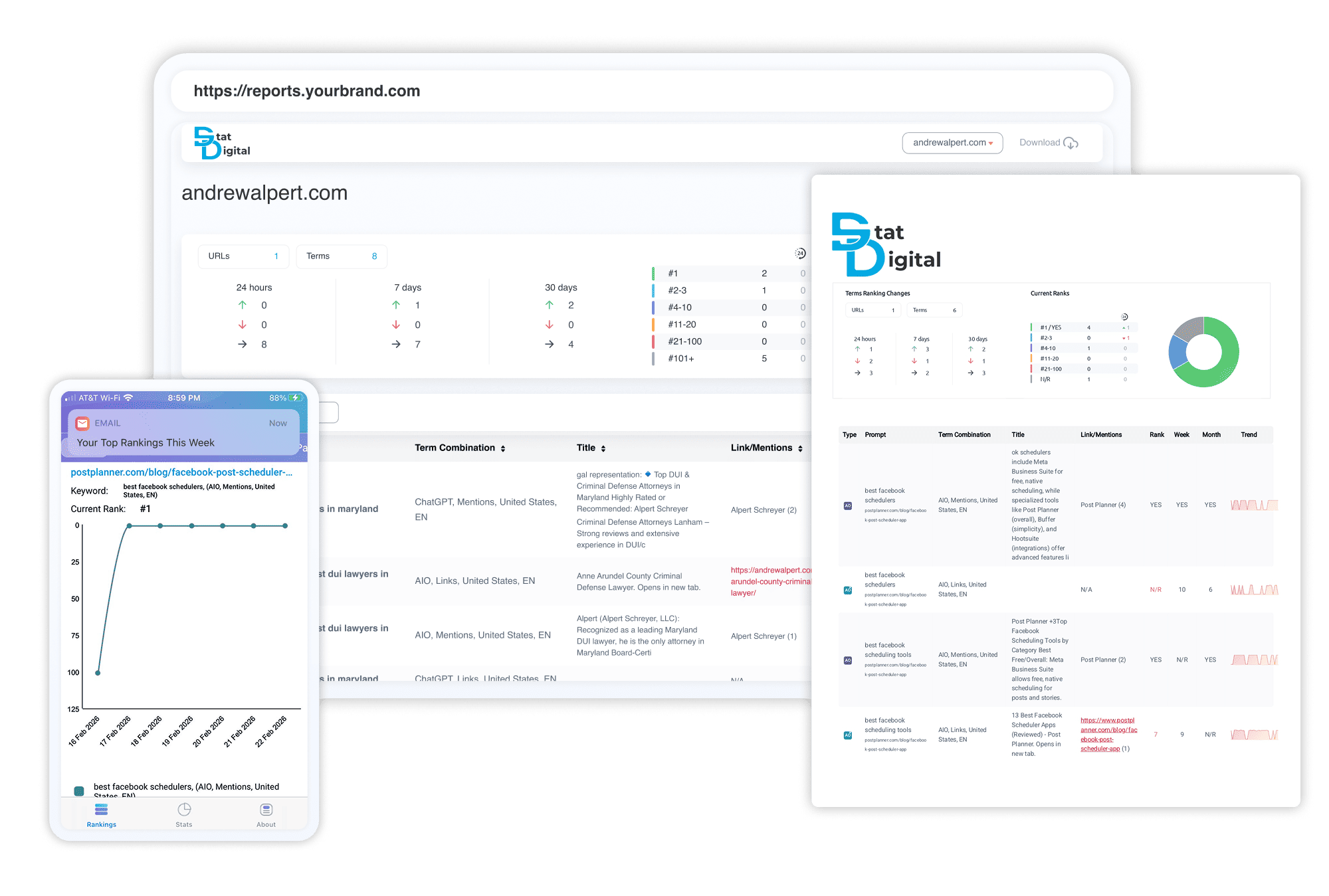
That way, you can spot visibility changes before they affect traffic or sales, rather than after.
Self-attribution
Here’s the part most teams skip:
A lot of AI influence never shows up in analytics tools.
Someone sees your brand in a ChatGPT answer, Googles your name, goes directly to your homepage, and then converts. GA4 currently credits that to Google Organic or Direct.
This means most attribution-tracking models won’t accurately give AI search the credit it deserves.
The simple fix:
Add a “How did you first hear about us?” dropdown to your key conversion forms. Include “AI (e.g., ChatGPT, Gemini)” as an option. When customers consistently select it, you now have qualitative evidence that AI visibility is generating real business.
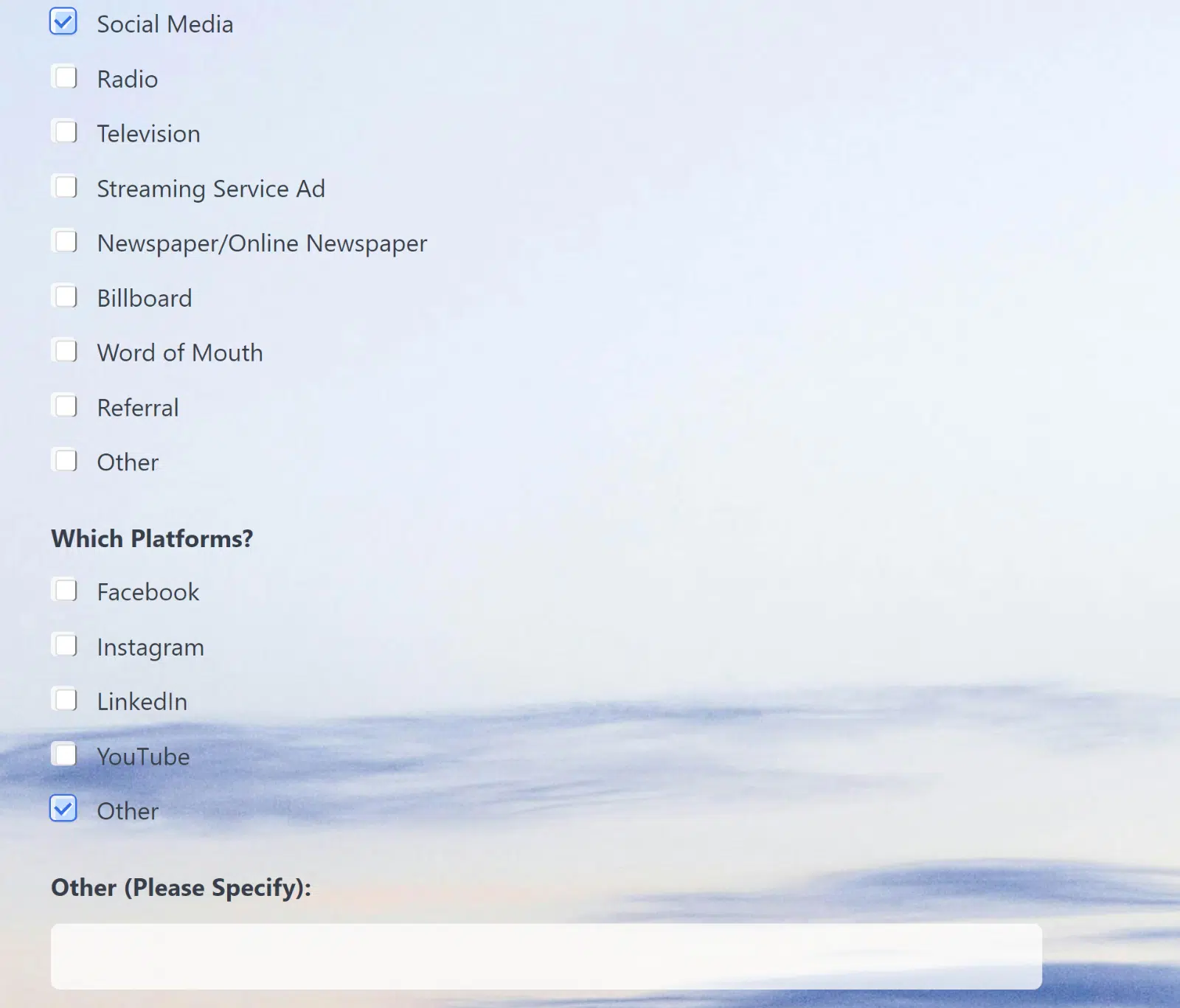
Sure, it’s not perfect attribution.
But it will help you spot trends in how AI is impacting your sales and fill in at least part of the AI visibility gap.
How to report on AI search’s compelling ROI
If you walk into a client meeting or leadership review leading with traffic numbers, you’re going to lose the room because sales generated and ROI is all that matters at the end of the day.
Instead, connect your AI visibility to demand and revenue signals they actually care about.
Here’s the pattern to show them:
When your brand starts appearing in AI answers for high-intent searches, branded search volume in Google Search Console tends to rise after.
Homepage visits and direct conversions in GA4 follow the same pattern.
So you’ll need to overlay 3 data sets:
- AI visibility from ProRankTracker
- Branded search impressions from GSC
- Direct conversions from GA4
…and look for correlations.
When you can identify correlation between these data sets consistently, that’s your ROI story.
Instead of “our AI mentions increased this quarter,” you can say: “The month our brand started appearing in AI answers for ‘best [product category],’ branded search volume rose 30% and demo requests from direct traffic increased 15%.”
That’s a better narrative leadership can act on. Plus, it protects your budget even when unbranded clicks are flat or declining.
Increase your AI Visibility and Futureproof your Business
If your current reporting stack doesn’t include AI visibility data, you’re missing a significant part of the picture.
And the longer that gap stays open, the harder it becomes to explain declining traffic, prove SEO value, or course-correct before competitors pull ahead.
ProRankTracker tracks both traditional rankings and AI visibility, updated daily, in one platform.
Sign up for a $1 Test Drive plan to get all premium features for a full week. Then, add your keywords/prompts and URLs to see exactly how your brand is performing across AI platforms.